Anal Glands
Learn about anal gland problems in dogs and cats, including common signs, when veterinary care is needed, and how to manage recurring issues.
Dr. Sofia Raldiris
DVM
🐾 ANAL GLANDS
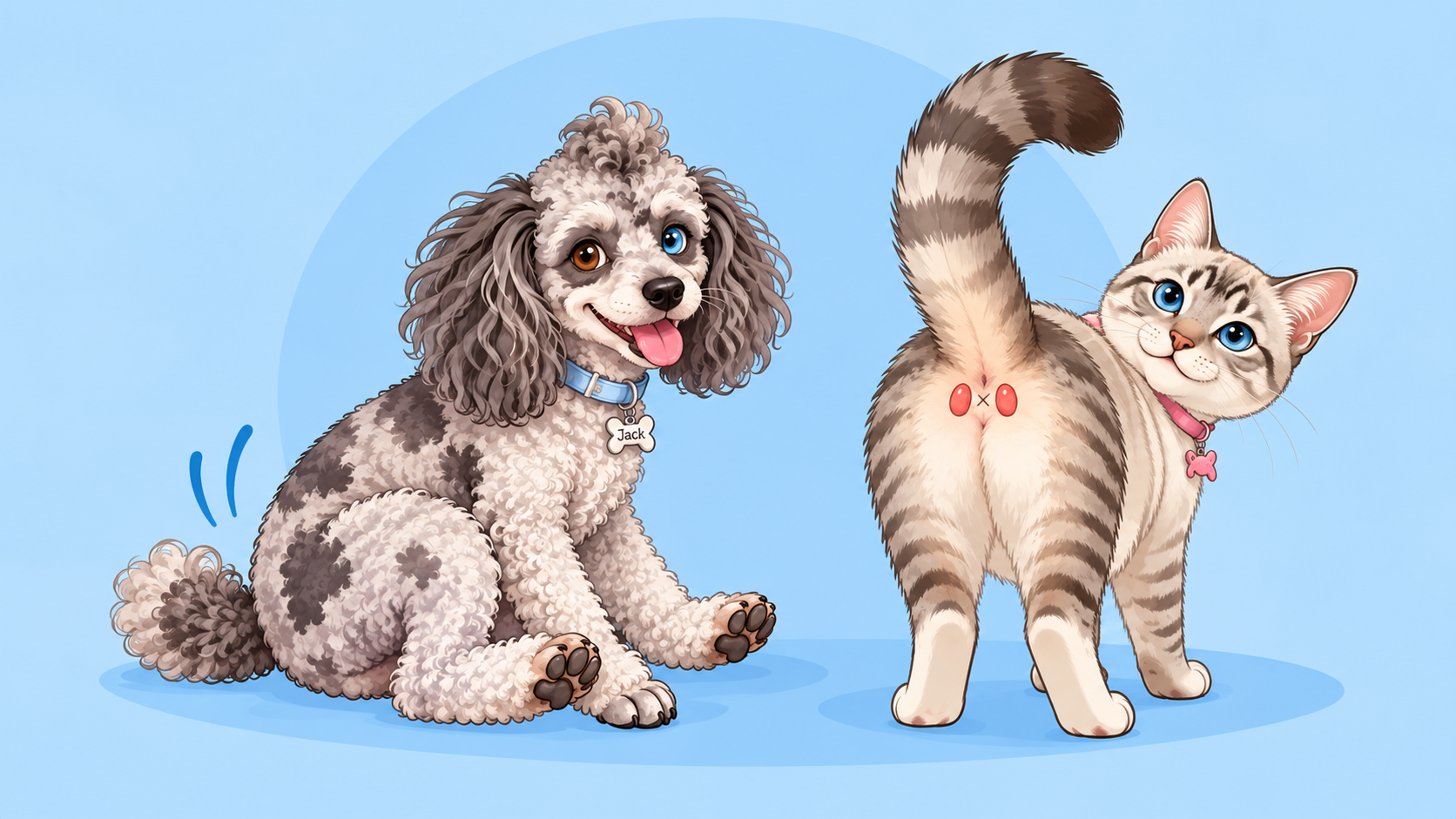
Anal glands, or anal sacs, are two small sacs on either side of your pet’s anus that release a brownish, oily, foul-smelling fluid during bowel movements.
This fluid helps with scent marking and communication but is not essential to your pet’s health.
Normally, firm stools naturally empty the glands. However, some pets have trouble expressing them, causing the material to build up and become uncomfortable.
🚨 SIGNS OF ANAL GLAND PROBLEMS
Scooting is one of the most common signs of anal gland irritation, but pets may show other symptoms:
- Scooting or rubbing their rear on the floor
- Excessive licking or chewing under the tail
- Strong, fishy odor
- Redness, swelling, discharge, or blood around the anus
- Pain, straining, or difficulty passing stool
- Hiding, decreased appetite, or lethargy in more severe cases
Cats may show subtler signs, such as excessive licking under the tail or licking the fur away from the area.
Don’t assume every scooting pet just needs their anal glands expressed.
Scooting can also be caused by allergies, parasites, gastrointestinal problems, or other conditions that irritate the area.
⚠️ When Should I See My Veterinarian?
Make an appointment if your pet has repeated scooting, excessive licking, persistent odor, or discomfort around the rear end.
Seek veterinary care promptly if you notice significant swelling, a lump, an open wound, pus, blood, obvious pain, difficulty passing stool, lethargy, or loss of appetite. Anal gland infections and abscesses can be very painful and may worsen without treatment.
🎈 IMPACTED VS. INFECTED ANAL GLANDS
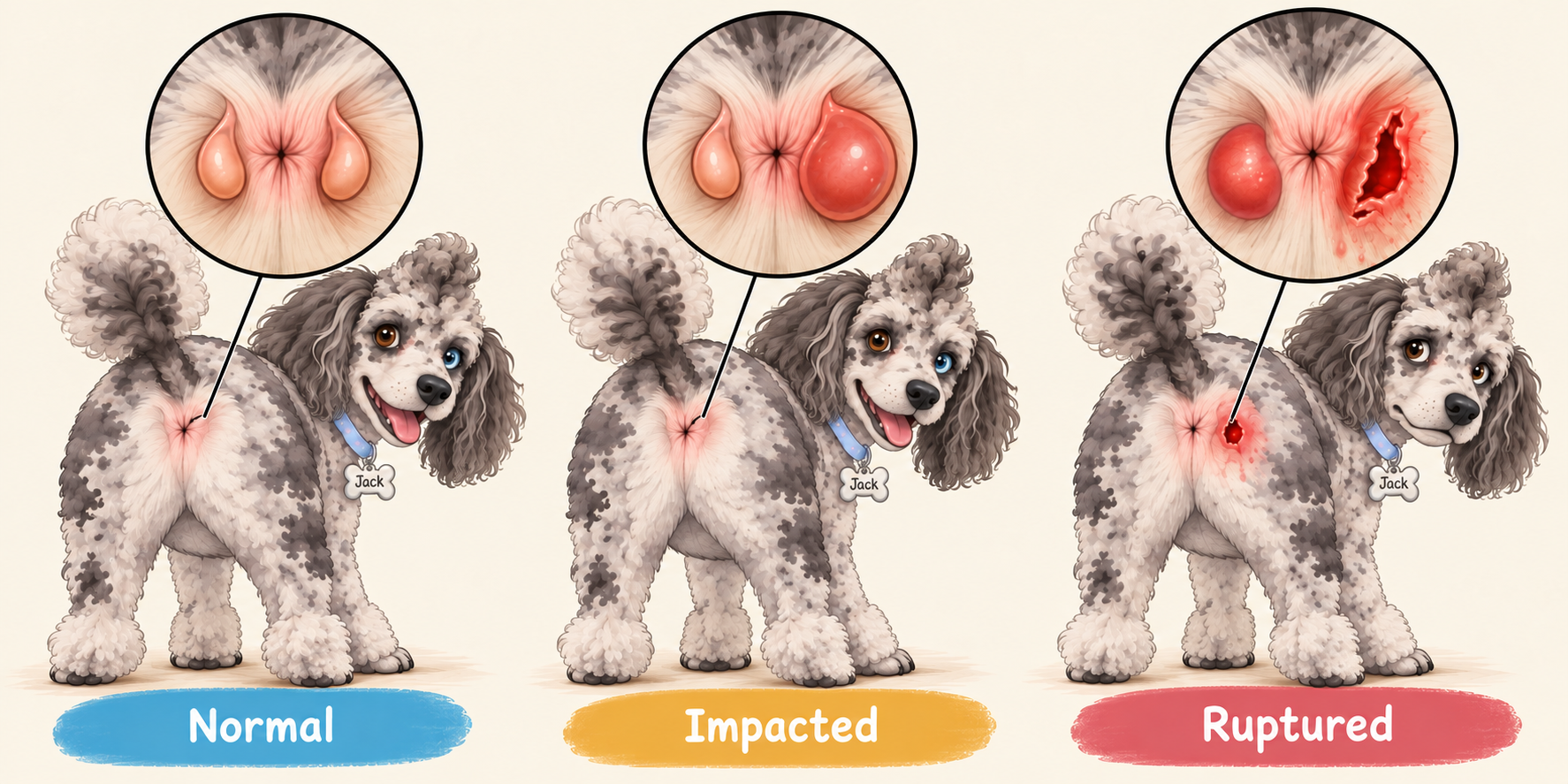
Impacted Anal Glands
An anal gland becomes impacted when thick material cannot pass normally through the duct. The gland may become enlarged, uncomfortable, and difficult to empty.
Your veterinarian can usually relieve the pressure by expressing the gland. If this happens repeatedly, it is important to look for the underlying cause rather than simply expressing the glands over and over.
Infection & Abscess
An impacted gland can become infected, causing pain, swelling, and pus buildup. In severe cases, the gland can rupture through the skin, creating a painful open wound or draining tract next to the anus.
Suspected infection or abscess should be evaluated by your veterinarian as soon as possible.
Treatment may include draining and cleaning the gland, pain medication, anti-inflammatory medication, and antibiotics when indicated. Sedation or anesthesia may be needed because the area can be extremely painful.
✋ SHOULD I EXPRESS MY PET’S ANAL GLANDS AT HOME?
While you can learn to express anal glands, I recommend having this done by a veterinary professional, especially if your pet has never had their glands expressed before.
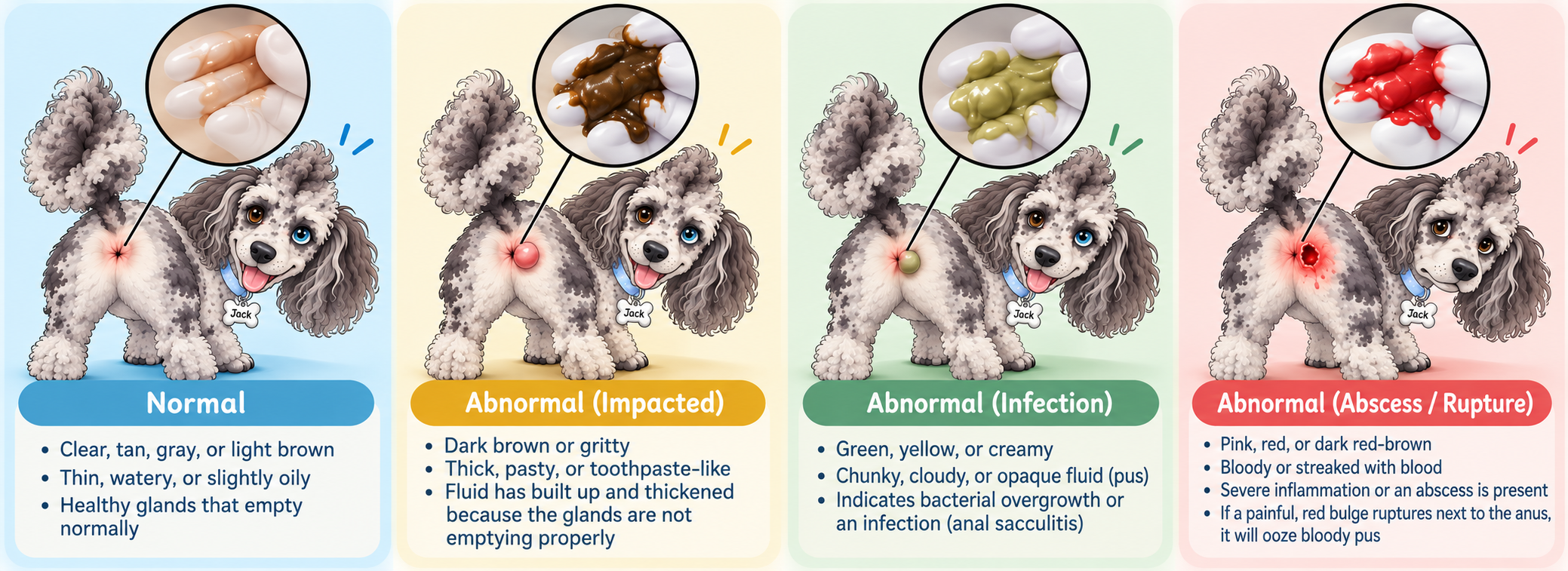
The area can also be uncomfortable, and pets may squirm or become stressed. More importantly, infected, severely impacted, ruptured, or abnormal glands should not simply be squeezed at home.
What about the groomer?
Groomers typically express the glands externally, which may not completely empty them.
At the veterinarian, we can express the glands internally, allowing us to feel the entire gland for abnormalities, fully empty the contents, and evaluate the discharge for changes such as blood, pus, or an unusual consistency.
📅 HOW OFTEN SHOULD ANAL GLANDS BE EXPRESSED?
There is no one-size-fits-all schedule for anal gland expression. Healthy pets typically empty their glands naturally when passing stool and do not need routine expression.
For pets with recurring problems, I often recommend starting with monthly expression and then re-evaluating. Depending on how your pet responds, the frequency can be adjusted or expression can be done only as needed.
The goal is to find the least frequent schedule that keeps your pet comfortable while also addressing any underlying cause of recurring problems.
🥕 CAN DIET OR SUPPLEMENTS HELP?
For some pets, high-fiber diets can produce bulkier, well-formed stools that help naturally empty the anal glands during defecation.
For pets with recurring anal gland problems, certain supplements may also help. I recommend these only after your veterinarian evaluates your pet and determines that they are appropriate.
Two options I commonly recommend include Filaquin Anal Gland Supplement for Dogs and Glandex for Dogs.
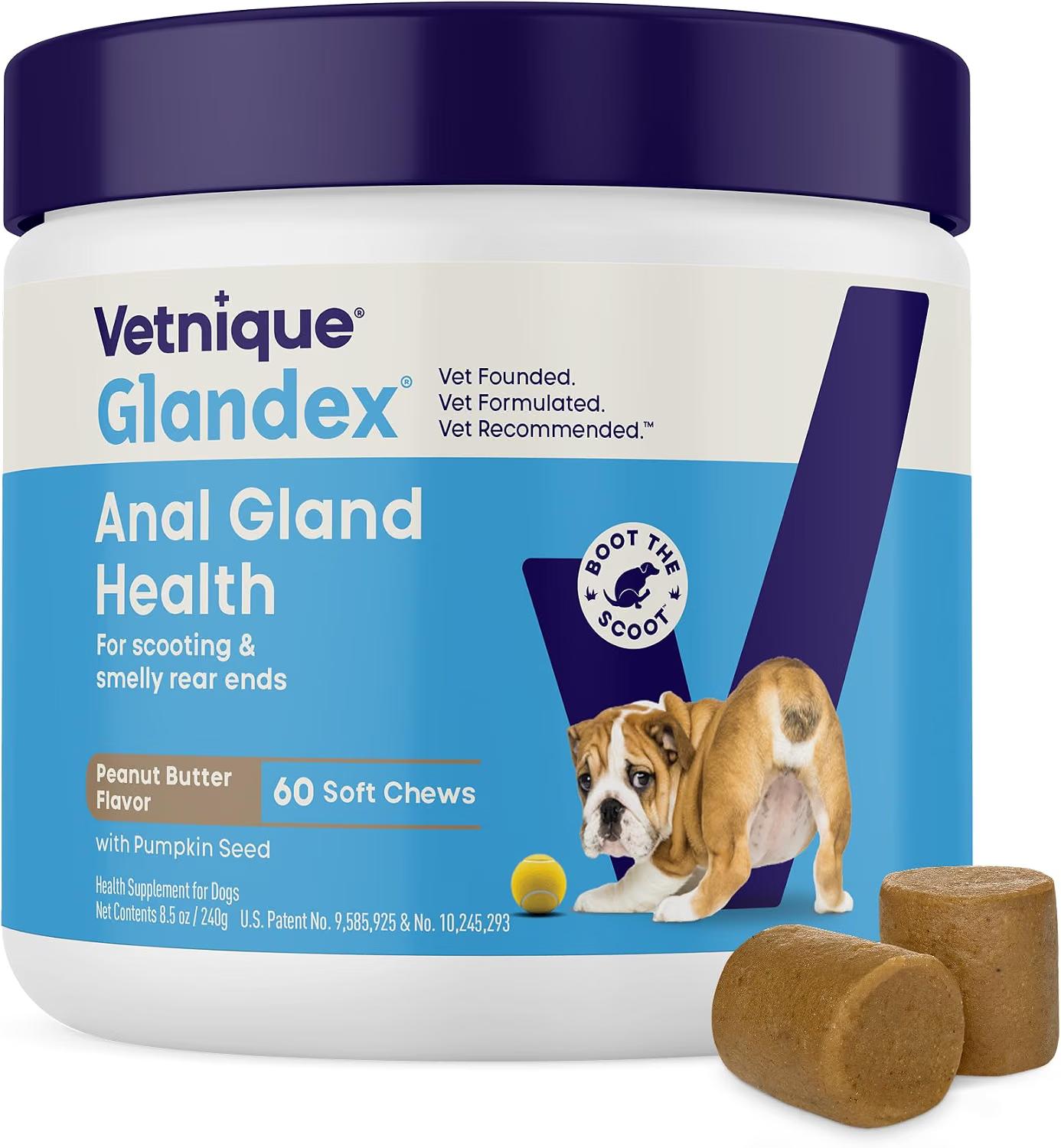
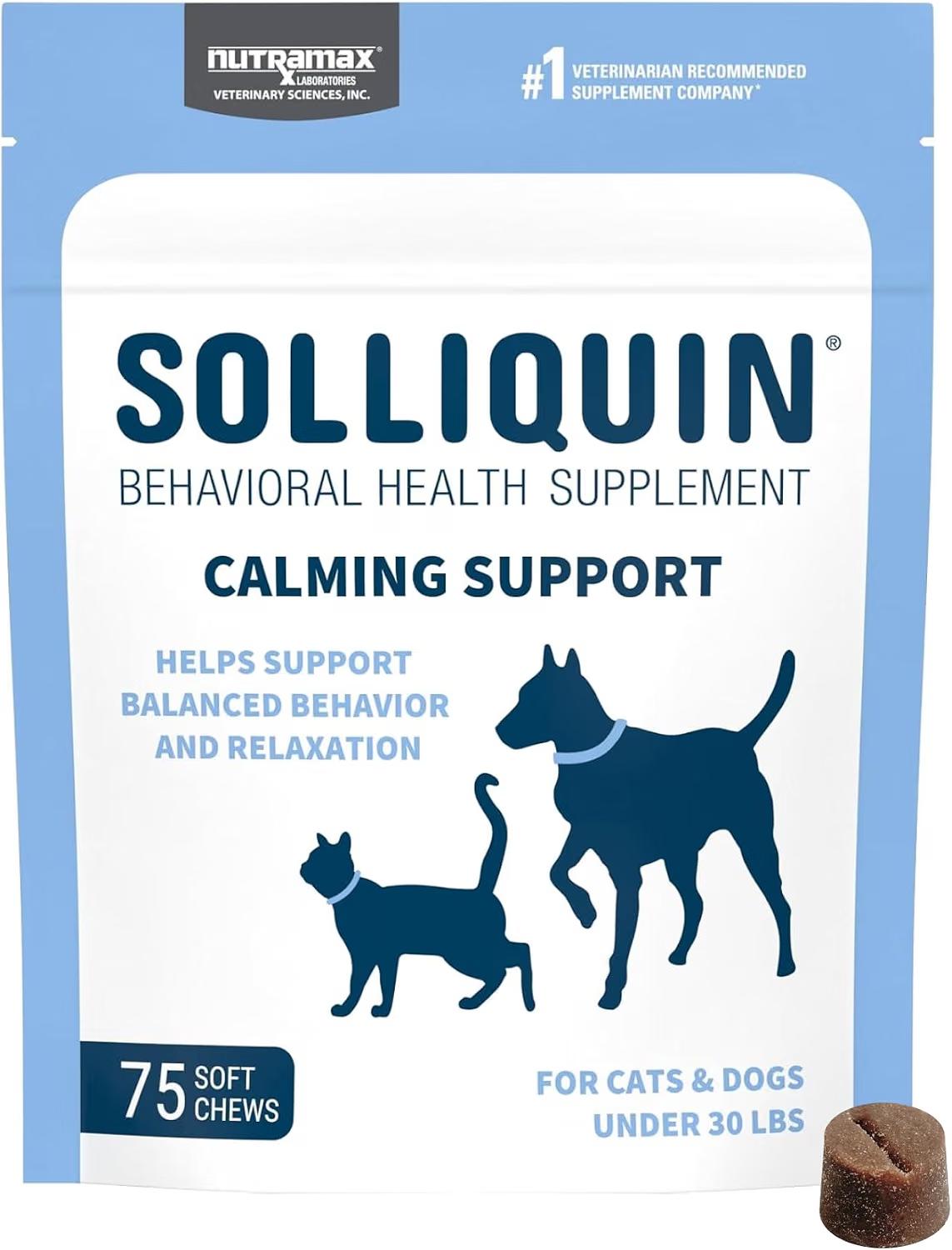
The right approach depends on why your pet is having recurring anal gland problems, so supplements should not replace a veterinary evaluation.
🐶🐱 RECURRING ANAL GLAND PROBLEMS
If your pet has recurring anal gland problems, it is important to look for the underlying cause.
Your veterinarian may evaluate for allergies, stool consistency, gastrointestinal disease, or other contributing factors and recommend dietary changes, fiber, or other treatments when appropriate.
In severe cases with repeated infections or abscesses despite proper management, surgical removal of the anal glands may be considered. This is typically reserved for chronic cases because surgery occurs near nerves and muscles that control bowel movements, and complications can include fecal incontinence.
Regular examinations are also important because not every lump or swelling near the anus is an infection. A rare tumor called apocrine gland anal sac adenocarcinoma (AGASACA) can occur, particularly in older dogs, and may cause few or no obvious signs early on.
Your veterinarian can examine the anal glands and determine whether the problem is simple impaction, infection, another condition, or something that requires further testing.
❤️ THE BOTTOM LINE
Anal glands are a normal part of your dog or cat’s anatomy, but they can become impacted, infected, or painful when they do not empty properly.
If your pet is scooting, licking under their tail, or suddenly smells very fishy, don’t ignore it. A veterinary examination can determine whether the anal glands are the problem—or whether something else is causing the irritation.
Recurring anal gland problems deserve an investigation into the underlying cause, NOT just repeated expression.
🛒 RECOMMENDED PET HEALTH PRODUCTS
Anal gland problems can be uncomfortable for pets, and proper care can help support their overall comfort and health. We’ve selected pet health products that may be helpful additions to your pet’s at-home care routine.
🌐 View Our Recommended Pet Health Products
Remember: Products can support your pet’s overall health, but they do not replace veterinary evaluation or treatment when anal gland problems occur. If your pet is scooting, excessively licking the area, or showing signs of pain or swelling, contact your veterinarian.
❓HAVE MORE QUESTIONS?
We’re here to help you keep your furbaby happy, healthy, and thriving! ❤️
For additional pet health information, visit Veterinary Partner by VIN—a trusted resource with veterinarian-written articles.
🔎 Tip: Search “VIN + your question” on Google for easier results, as the website’s search feature can be a little tricky.
📞 And remember, calling us is always free!
If you have questions or concerns about your pet, please don’t hesitate to reach out. We’re happy to help. 🐾