Anxiety & Aggression in Dogs
Learn to recognize anxiety and aggression in your dog and discover simple ways to help them feel safe, confident, and comfortable.
Dr. Sofia Raldiris
DVM
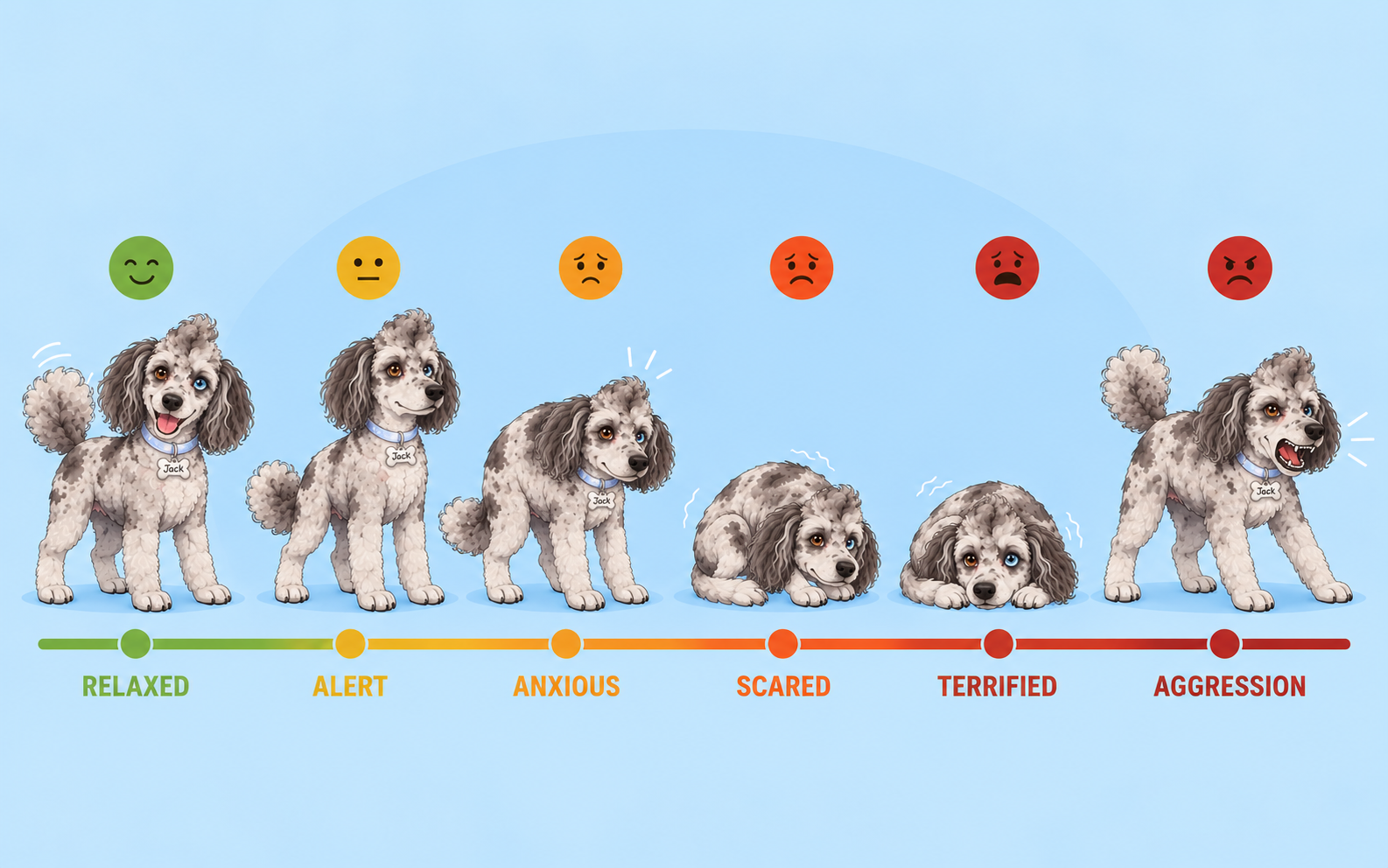
🐶ANXIETY & AGGRESSION IN DOGS
Dogs communicate through their behavior.
Fear, anxiety, frustration, pain, and other medical or behavioral problems can all affect the way your dog behaves.
Aggression is not simply "bad behavior." It is often a response to fear, stress, pain, frustration, or feeling trapped.
The goal is to understand why your dog is reacting and help them feel safer and more confident.
Aggression should always be taken seriously.
If your dog has bitten, attempted to bite, or shows unpredictable aggression, contact your veterinarian before attempting behavior modification on your own.
🛡️START WITH SAFETY
Before working on behavior, prevent situations where your dog could hurt themselves or someone else.
The first goal is to help your dog feel safe.
Try to:
- 📹 Take a video of your dog's behavior to share with your veterinarian when possible.
- Keep children and other pets separated when necessary.
- Learn your dog's triggers and body language.
- Avoid known triggers whenever possible.
- Keep a record of what happens before the behavior occurs.
- Consider working with a qualified positive-reinforcement trainer or veterinary behaviorist.
⭐ NEVER punish fear or aggression.
Yelling, hitting, physical corrections, or forcing your dog into a frightening situation can increase fear and make the behavior worse.
Instead, create distance, reduce the trigger, and reward the behavior you want.
🏠 CREATE A SAFE SPACE
Every dog should have a quiet place where they can relax without being disturbed.
This could be:
- A quiet room
- A comfortable bed
- A covered kennel, if your dog enjoys being in a crate
- A designated mat or bed
Add things your dog enjoys, such as:
- Favorite toys
- Long-lasting treats
- Puzzle toys or food dispensers
- Meals or enrichment activities
- Soft music or white noise
Make it a positive place.
Use the safe space regularly—not only when something scary is happening.
Your dog should learn that this is a place where good things happen and they can always retreat without being bothered.
A portable mat or bed can also become a familiar "safe place" for travel, veterinary visits, boarding, or other new environments.
🛒 Looking for products to help support your dog’s comfort and stress management? Explore some of our recommended options below.
❤️ BUILD TRUST & GIVE YOUR DOG CHOICES
Fear can quickly turn into anxiety or aggression when a dog feels trapped.
Whenever possible:
- Let your dog approach people instead of having people approach them.
- Never force interactions with people or other animals.
- Respect your dog's personal space.
- Avoid hugging, kissing, or touching your dog when they are uncomfortable.
- Toss treats nearby instead of forcing your dog to take them from your hand.
- Watch their body language and give them more space when they become uncomfortable.
Respect their "no."
If your dog becomes tense, freezes, hides, growls, or tries to move away, listen to what they are telling you.
Giving your dog control over interactions helps build trust and confidence.
🎯 IMPROVE COMMUNICATION
Teaching predictable behaviors gives your dog a clear way to communicate with you make stressful situations easier to manage.
Useful foundation behaviors include:
- 👀 Eye contact
- 🖐️ Hand targeting
- 🐶 Chin rest
- 🛏️ "Go to your mat"
- 😌 Relaxing on a bed or mat
⭐Reward calm behavior and the choices you want your dog to repeat.
If your dog begins showing unwanted behavior, safely create distance or redirect them rather than punishing them.
🐕 WALKS, EXERCISE & MENTAL STIMULATION
If your dog is afraid to walk, leave the yard, get into the car, or explore new places, do not force them.
Start somewhere your dog feels comfortable and gradually introduce new experiences while keeping them below their anxiety threshold.
Try:
- Quiet walks where your dog can sniff and explore
- Play and enrichment in the yard
- Puzzle toys
- Searching games with hidden treats
- Short training sessions
- Gradual exposure to new environments
🧠Mental stimulation is just as important as physical exercise.
⛈️ NOISE PHOBIAS
Common triggers include:
- Fireworks
- Thunderstorms
- Construction
- Doorbells
- Loud neighbors
- Delivery people
For everyday noise triggers:
- Close windows and curtains when possible.
- Use a television, radio, or white noise to help mask outside sounds.
- Placing a speaker near doors or windows can help mask outside noises.
- Encourage your dog to use their safe space.
- Offer treats or enrichment if your dog is comfortable eating.
🚨 Severe noise phobias may require medication.
If your dog becomes extremely fearful during fireworks, thunderstorms, or other predictable events, talk to your veterinarian before the stressful event occurs.
Medication can be part of a larger plan to keep your dog safe and comfortable.
🩺 VETERINARY VISIT ANXIETY
Your dog may be sweet, relaxed, and completely comfortable at home—but the veterinary hospital can feel like a completely different world.
Imagine being taken somewhere unfamiliar, surrounded by people you don't know, with unfamiliar smells, sounds, other animals, and people touching, restraining, examining, or performing procedures on you.
Even a dog who has never shown aggression at home may become fearful, defensive, or reactive at the veterinary hospital
🧠 Fear —> Fight or Flight —> Aggression
When a dog feels trapped or unable to escape, their fight-or-flight response can take over. Growling, snapping, struggling, or biting may be their way of saying, "I'm scared. Please make this stop."
This is why we don't want to wait until your dog is completely overwhelmed before addressing their anxiety.
💊 Pre-Visit Medication
Your veterinarian may recommend medication before a veterinary visit to help reduce fear and anxiety.
The goal is not to make your dog unconscious or "drug" them so we can force a procedure. It is to help them arrive calm enough to participate in their care without becoming overwhelmed.
Your dog may seem very sleepy or relaxed at home, but this does not necessarily mean the medication is too strong. Once at the hospital, unfamiliar smells, sounds, people, animals, and handling can quickly trigger their fight-or-flight response, making the calming effect seem much less noticeable.
Our goal is to reduce fear and minimize excessive restraint—not simply make your dog sleepy enough to complete the appointment.
Reducing fear today can help prevent defensive aggression and make future veterinary visits easier.
We use the least stressful approach possible, including time, treats, distraction, gentle handling, choices when possible, and medication or sedation when medically appropriate.
Sometimes the kindest and safest choice is to pause, change our approach, use additional medication, or reschedule rather than force a procedure.
🌿 The Goal Is A Positive Experience
We want your dog to leave the hospital thinking, "That wasn't so bad."
Every positive experience helps. Reducing fear today can help prevent defensive aggression and make future veterinary visits easier.
Pre-visit medication, gentle handling, treats, environmental changes, and sedation when needed are tools to reduce fear—not failures.
😷 MUZZLE TRAINING
For dogs with a history of aggression or who may bite when frightened, muzzle training can be an important safety tool.
A basket-style muzzle allows your dog to pant, breathe, drink, and receive treats while helping protect everyone involved.
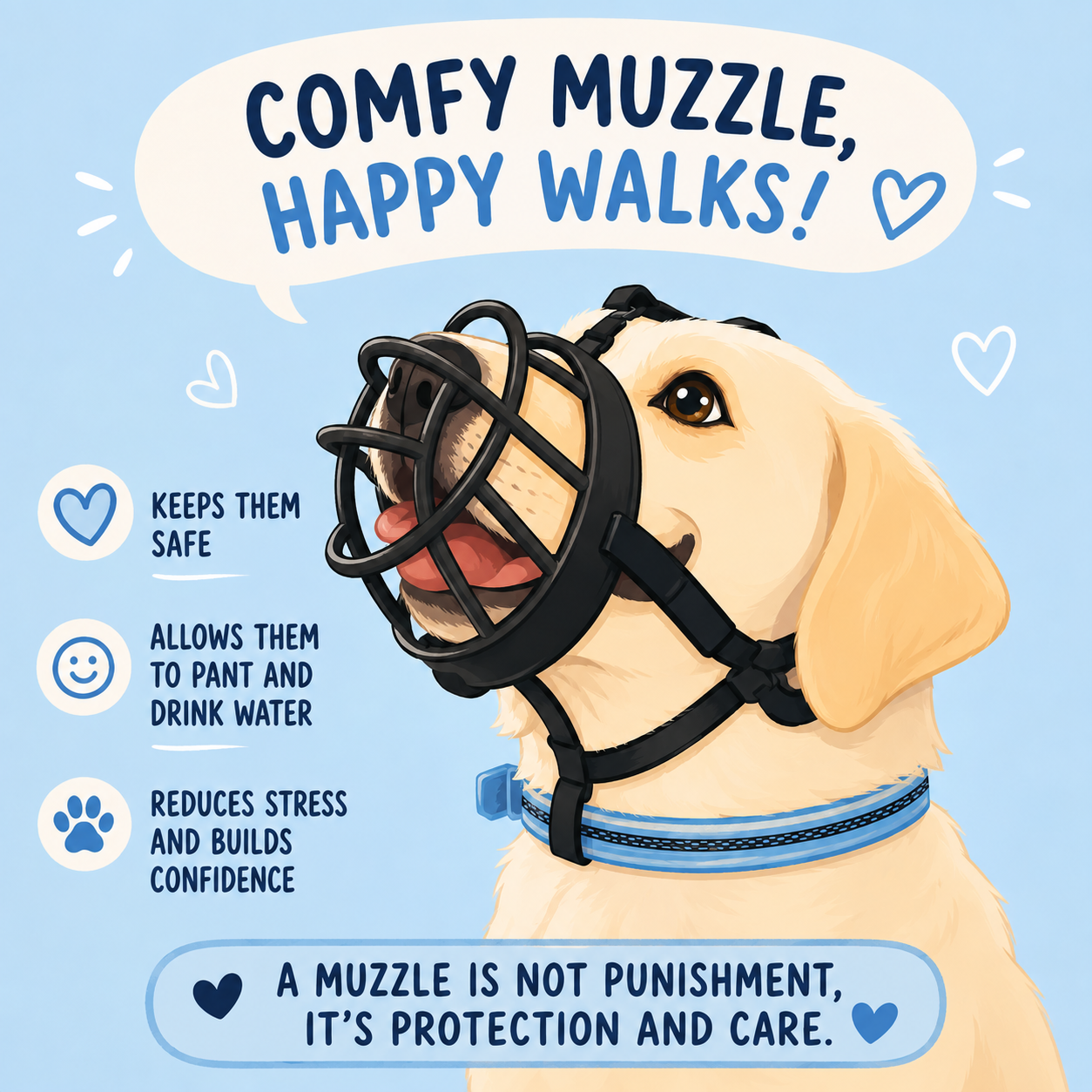
⭐ Teach the muzzle—don’t force it.
Start slowly:
- Let your dog investigate the muzzle.
- Reward them for approaching it.
- Gradually reward placing their nose inside.
- Gradually increase the amount of time they wear it.
- Always work at your dog's pace.
- Always allow your dog to voluntarily move toward the muzzle.
- Never force a muzzle onto a frightened or struggling dog.
A properly trained dog can learn that wearing a muzzle is simply another normal part of life, making veterinary visits, grooming, nail trims, and other handling safer and less stressful.
🛒 Looking for products to help support your dog’s comfort and stress management? Explore some of our recommended options below.
🏠 SEPARATION ANXIETY
Separation anxiety can be severe and often requires a combination of behavior modification and medication.
📹 Use a camera to see what your dog does when left alone.
A video can help understand what your dog does when left alone. Share it with your veterinarian or qualified trainer.
⭐ Practice gradual departures.
The goal is to help your dog learn that being alone is safe.
Start with absences that are short enough that your dog remains comfortable, then gradually increase the time.
You can also practice departure cues without actually leaving:
- Pick up your keys.
- Put on your shoes.
- Prepare to leave.
- Then stay home.
This can help reduce the anxiety associated with these cues.
Whenever possible, avoid leaving your dog alone longer than they can comfortably tolerate. A pet sitter, trusted friend, or appropriate daycare may help when needed.
⚠️ Don’t “let them cry it out”.
Repeatedly leaving a severely anxious dog alone while they are extremely distressed can make the problem worse.
The goal is to gradually build confidence—not force your dog to endure overwhelming fear.
Crates Ar Not For Every Dog
A crate can be a wonderful safe space for some dogs, but it is not appropriate for every dog.
If your dog panics when confined or tries to escape, do not use the crate as a solution.
Some dogs can seriously injure themselves trying to escape.
🌿 PHEROMONES & CALMING SUPPLEMENTS
Pheromones, such as Adaptil, may help reduce anxiety as part of a larger behavior plan.
Calming Supplements
Calming supplements may also provide additional support for some dogs, including:
- Purina Por Plan Calming Care Probiotic
- VetriScience Composure Pro Chews
- VetNova Multiva Calming
- Zylkene
⏳ Be patient.
These products are generally slow-acting and may take 4–8 weeks to show their full benefit.
Pheromones and supplements are supportive therapies. They do not replace behavior modification or appropriate medical treatment.
Avoid concentrated essential oils or strongly scented products around pets unless recommended by your veterinarian. Some essential oils can be harmful to animals.
🛒 Looking for products to help support your dog’s comfort and stress management? Explore some of our recommended options below.
💊 MEDICATIONS
Some dogs are too anxious or fearful to learn effectively without medication.
Medication can lower anxiety enough for your dog to participate in behavior modification and learn new coping skills.
⭐ Medication is not a replacement for training.
It works best when combined with behavior modification and environmental management.
💊 Daily / Maintenance Medications
Daily medications may be considered for dogs with:
- Generalized anxiety
- Frequent anxiety
- Unpredictable triggers
- Chronic fear or anxiety
Common options include:
- Fluoxetine (Prozac)
- Sertraline
- Paroxetine
- Clomipramine
- Other medications selected specifically for your dog
⏳ Be patient.
These medications are slow-acting and generally require 4–8 weeks to reach their full effect.
💊 Situational Medications
These are used for predictable stressful events such as:
- 🩺 Veterinary visits
- 🚗 Car rides
- 🎆 Fireworks
- ⛈️ Thunderstorms
- 👥 New visitors
- 🏨 Boarding
- 🏠 Confinement
- ✂️ Grooming
Common options may include:
- Gabapentin
- Trazodone
- Melatonin
- Clonidine
- Other medications selected based on your dog's individual needs
⭐ Test medications ahead of time.
A situational medication should ideally be tested at home before a major stressful event so you know how your dog responds.
Never start, stop, combine, or change the dose of a behavior medication without veterinary guidance.
⭐ Give the medication before the stressful event begins.
Once your dog is already very anxious, the medication may not work as well, so it is important to administer it early enough for it to take effect before the stress starts.
🩺 WHEN SHOULD YOU CONTACT YOUR VETERINARIAN?
Contact your veterinarian if:
- Your dog's behavior suddenly changes
- Aggression is increasing
- Your dog has bitten or attempted to bite
- Your dog seems painful
- Fear or anxiety interferes with normal activities
- Your dog cannot be left alone
- Your dog is hurting themselves trying to escape
- Your dog is unable to participate in training because of fear
- Behavior modification at home is not improving the problem
⚠️ Behavior changes can have a medical cause.
Pain and other medical conditions can contribute to anxiety, irritability, and aggression.
An unexpected behavior change should always be evaluated by your veterinarian.
❤️ THE GOAL
The goal is NOT to make your dog “obey” through fear.
The goal is to help your dog:
- Feel safe
- Build confidence
- Understand what is expected
- Develop healthier ways to cope with stressful situations
With the right combination of safety, positive training, environmental management, enrichment, behavior modification, and medication when needed, many dogs can significantly improve their behavior and quality of life.
🐾 A safer, more confident dog is a happier dog.
🛒 RECOMMENDED ANXIETY & STRESS SUPPORT PRODUCTS
There are many products available to help support dogs experiencing stress or anxiety, but not every product is appropriate for every dog. We’ve selected options that may be helpful additions to your dog’s overall stress-management routine.
🌐 View Our Recommended Anxiety & Stress Support Products
Remember: These products are intended to support your dog’s comfort and stress management, but they do not replace veterinary evaluation or a comprehensive behavior or anxiety-management plan when needed.
❓HAVE MORE QUESTIONS?
We’re here to help you keep your furbaby happy, healthy, and thriving! ❤️
For additional pet health information, visit Veterinary Partner by VIN—a trusted resource with veterinarian-written articles.
🔎 Tip: Search “VIN + your question” on Google for easier results, as the website’s search feature can be a little tricky.
📞 And remember, calling us is always free!
If you have questions or concerns about your pet, please don’t hesitate to reach out. We’re happy to help. 🐾