Cat Asthma
Learn about feline asthma, including common signs, emergency symptoms, treatment options, inhaler and AeroKat use, and ways to reduce asthma triggers at home.
Dr. Sofia Raldiris
DVM
🐱 FELINE ASTHMA
Feline asthma is a chronic inflammatory disease of the lower airways that causes the airways to become narrowed, overly reactive, and filled with excess mucus, making it especially difficult for cats to exhale.
Asthma can range from occasional coughing to life-threatening respiratory distress.
🔍 COMMON SIGNS OF ASTHMA
Cats with asthma may have:
- Coughing or repeated hacking
- Wheezing, especially when breathing out
- Rapid or labored breathing
- Increased abdominal effort (abdominal “push”) when exhaling
- Crouching low with the neck extended
- Episodes that come and go
Some cats are only mildly affected and may appear completely normal between episodes.
🚑 Severe Astham is an Emergency
Open-mouth breathing, blue or gray gums, severe breathing effort, or collapse are emergencies. Do not attempt to manage severe respiratory distress at home.
🩺DIAGNOSIS
Diagnosis is based on the cat’s history, physical examination, and chest radiographs, along with the response to treatment.
Chest X-rays are especially important. Cats with asthma often have a bronchial pattern, where the airway walls appear thickened and create “donuts” when seen in cross-section or “tram lines” when seen lengthwise. Some cats may also have areas of lung hyperinflation.
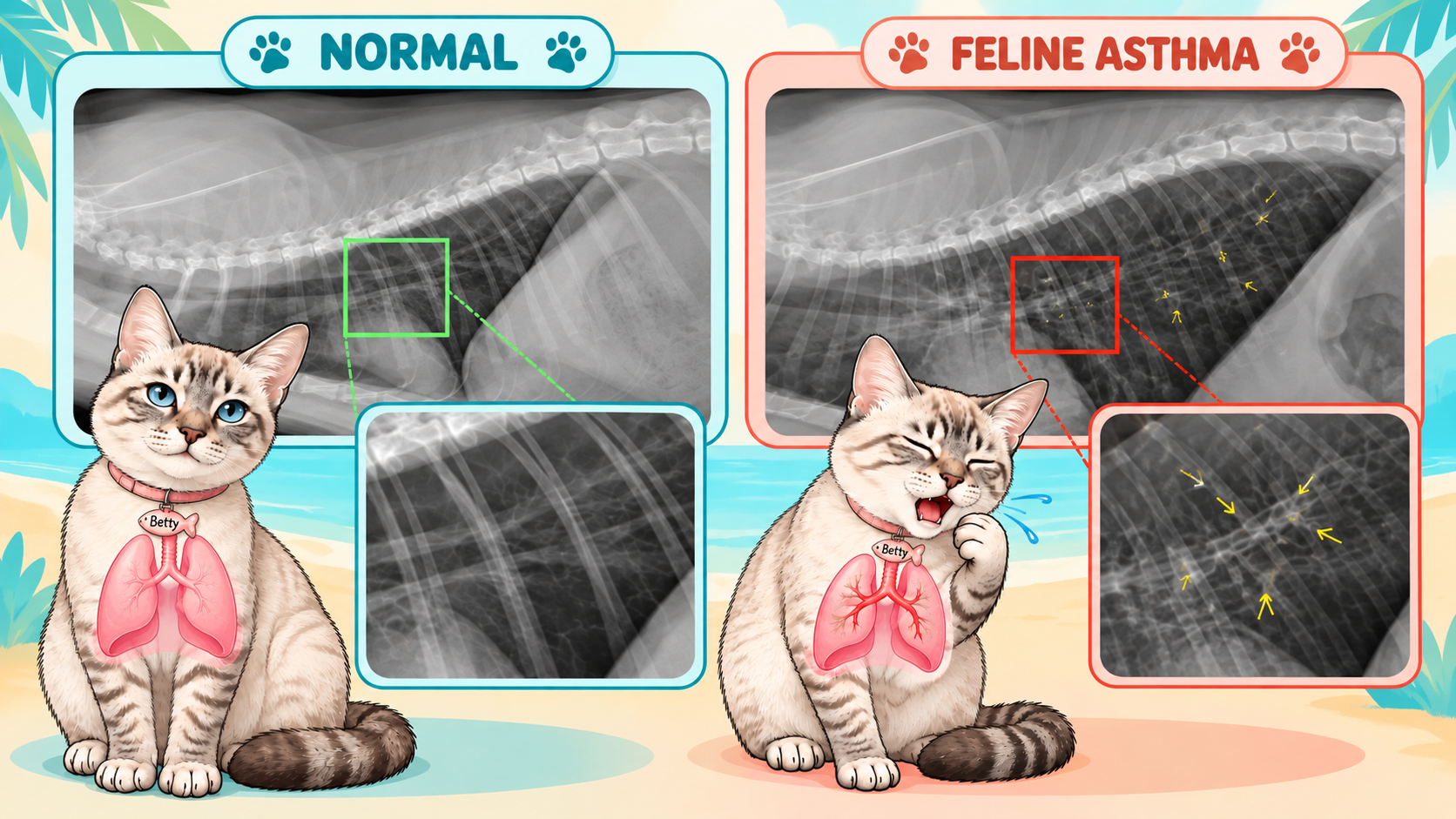
Other conditions can look similar, so lungworms, heartworm-associated respiratory disease, pneumonia, and other causes of lower airway disease should also be considered.
In some cases, additional testing such as fecal/parasite testing, heartworm testing, airway sampling, or bronchoscopy may be recommended to rule out other causes.
💊 TREATMENT
There is no simple cure for feline asthma, but many cats can be successfully managed for years.
The goals: Control Inflammation → Open the Airways → Reduce Triggers → Prevent Flare- Ups
Treatment generally includes:
1. Anti-inflammatory medication to control the underlying airway inflammation.
2. Bronchodilators to relax the airway muscles and improve airflow.
Bronchodilators should not be used alone for long-term control because they do not treat the underlying inflammation.
💨 The AeroKat
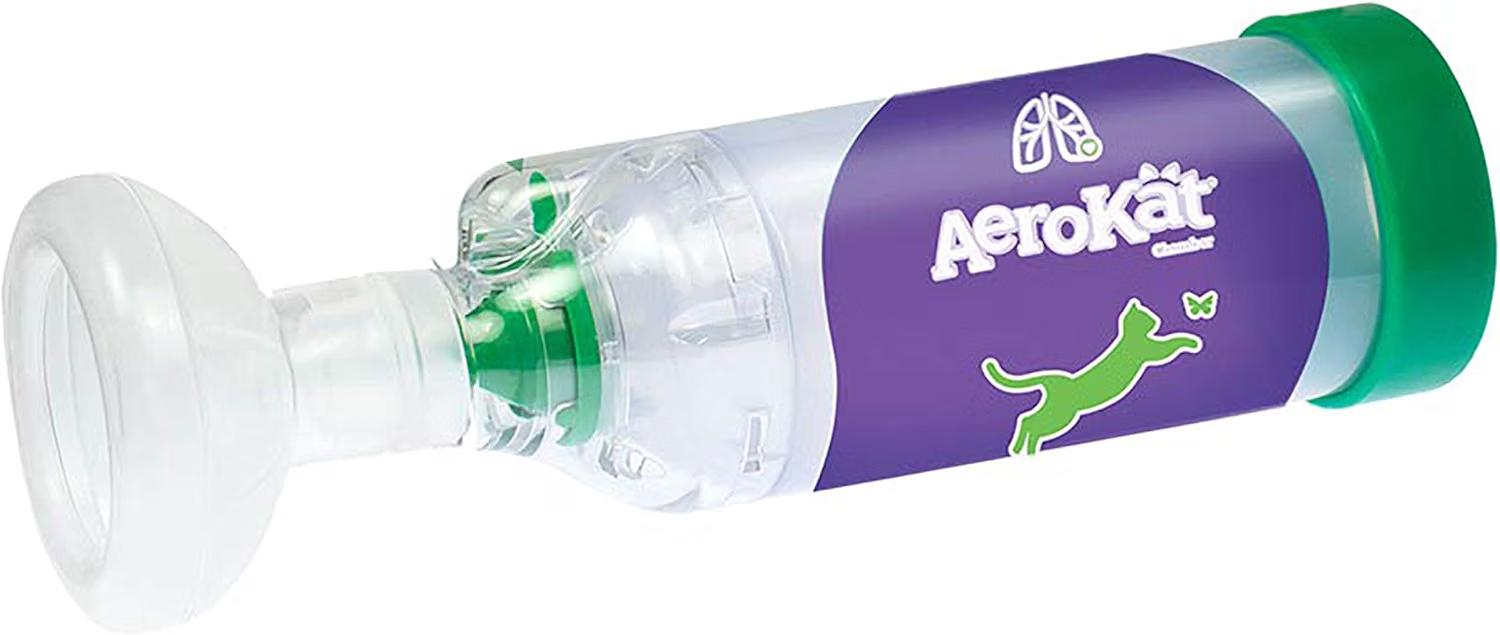
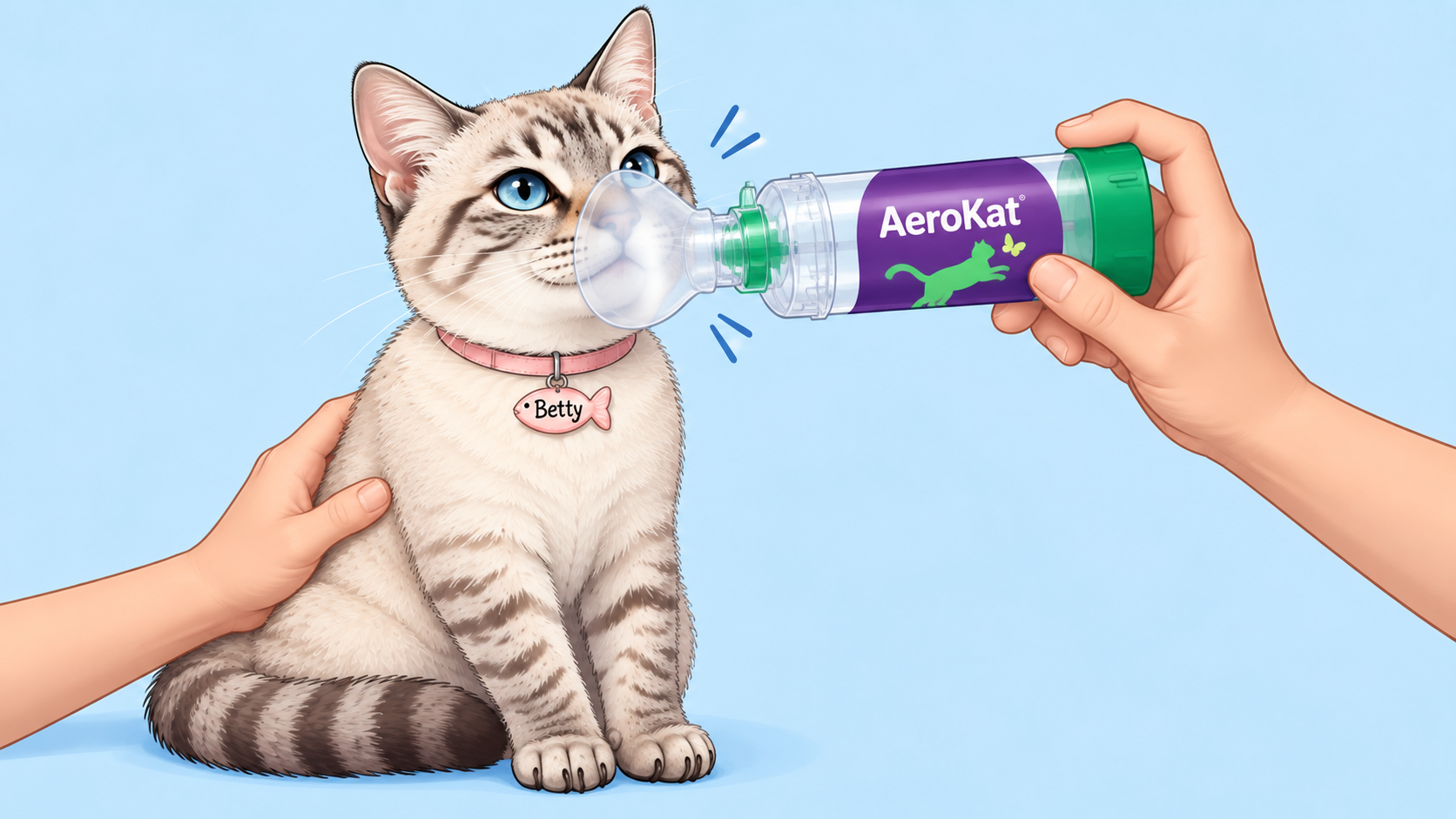
An AeroKat or similar feline spacer allows inhaled medication to reach the lungs through a face mask.
Getting your cat comfortable with the mask is extremely important.
I often recommend starting with the AeroKat and albuterol first.
This allows the family to practice the technique and see whether the cat will tolerate the mask before investing in long-term inhaled steroid therapy.
🚨 Albuterol - Rescue Medication
Albuterol is a short-acting bronchodilator used to quickly relieve bronchoconstriction during an asthma episode.
My recommmended protocol:
AeroKat / Inhaler
- 1–2 puffs (90 mcg/puff)
- Allow 7–10 breaths through the mask after each puff.
Nebulizer
- Using 2.5 mg/3 mL albuterol solution: give 0.5 mL diluted with 3.5 mL saline.
Rescue: May be repeated every 30 minutes for 4–6 hours during an acute flare-up, or as directed based on the patient's response.
Maintenance: May be used every 6–24 hours as needed, based on the individual patient's treatment plan.
Important: Albuterol is a rescue medication that provides rapid relief of bronchoconstriction, but it does not control the underlying airway inflammation and should not replace long-term anti-inflammatory therapy.
Increasing or frequent use may indicate poorly controlled asthma and should prompt a reassessment of the treatment plan.
🌿 Fluticasone—Long-Term Control
Fluticasone is an inhaled corticosteroid that treats the underlying airway inflammation.
My recommended protocol:
- 110–220 mcg every 12 hours
- Allow approximately 7–10 breaths through the AeroKat after each treatment
Published studies have evaluated 44, 110, and 220 mcg every 12 hours, with all three doses reducing eosinophilic airway inflammation.
Fluticasone is preferred for many cats requiring long-term therapy because it delivers the steroid directly to the lungs while minimizing systemic steroid exposure.
Important: Fluticasone is a controller medication and does not provide immediate relief during an asthma attack.
💊 Oral Prednisolone
For cats with more significant clinical signs or very infrequent flare-ups, oral corticosteroids may be used initially or as needed, depending on the individual treatment plan.
My recommended protocol:
- By mouth every 24 hours initially for 3–5 days —> then every 24 hours for another 3–5 days —> followed by every 48 hours for 3–5 treatments, with adjustments based on clinical response.
- If symptoms return during the taper, return to the last effective dose and restart the taper more gradually.
- If clinical signs persist or return despite repeating the taper, contact your veterinarian, as your cat may need a different or additional long-term treatment strategy.
Possible side effects include increased thirst, urination, and appetite. Avoid overfeeding while your cat is taking steroids.
Whenever possible, the goal is to transition to inhaled therapy and the lowest effective systemic steroid exposure.
🏠 REDUCE ASTHMA TRIGGERS AT HOME
Environmental irritants can worsen airway inflammation.
Try to minimize:
- Cigarette or vaping smoke
- Aerosol sprays
- Strong perfumes and fragrances
- Dusty environments
- Dust-producing cat litter
- Scented candles and air fresheners
- Household cleaning fumes
🌫️ Steam Therapy
Steam may help temporarily soothe and loosen airway secretions.
You can sit with your cat in a bathroom while taking a hot shower, allowing the room to become comfortably steamy for 10–15 minutes, twice daily.
Keep your cat safely away from the hot water and stop if they become stressed or have increased breathing difficulty.
Prevention
Consistent parasite prevention is also important because heartworm and other parasites can cause respiratory disease that may mimic or worsen asthma.
🌐 Learn More About Year-Round Prevention for Pets
⭐ THE TAKEAWAY
Feline Astham = Ariway Inflammation + Bronchconstriction
- Fluticasone or another corticosteroid controls inflammation.
- Albuterol provides rapid bronchodilation during flare-ups.
- AeroKat makes inhaled treatment possible for cats.
- Bronchodilators should not replace anti-inflammatory therapy for long-term management.
- Severe breathing difficulty is an emergency.
With the right treatment plan and environmental management, many asthmatic cats can enjoy a comfortable, active life.
❓HAVE MORE QUESTIONS?
We’re here to help you keep your furbaby happy, healthy, and thriving! ❤️
For additional pet health information, visit Veterinary Partner by VIN—a trusted resource with veterinarian-written articles.
🔎 Tip: Search “VIN + your question” on Google for easier results, as the website’s search feature can be a little tricky.
📞 And remember, calling us is always free!
If you have questions or concerns about your pet, please don’t hesitate to reach out. We’re happy to help. 🐾