Collecting Urine & Fecal Samples from Your Dog or Cat at Home
Learn how to collect urine and fecal samples from your dog or cat at home with less stress. Follow these simple tips for collecting, storing, and bringing samples to your veterinary visit.
Dr. Sofia Raldiris
DVM
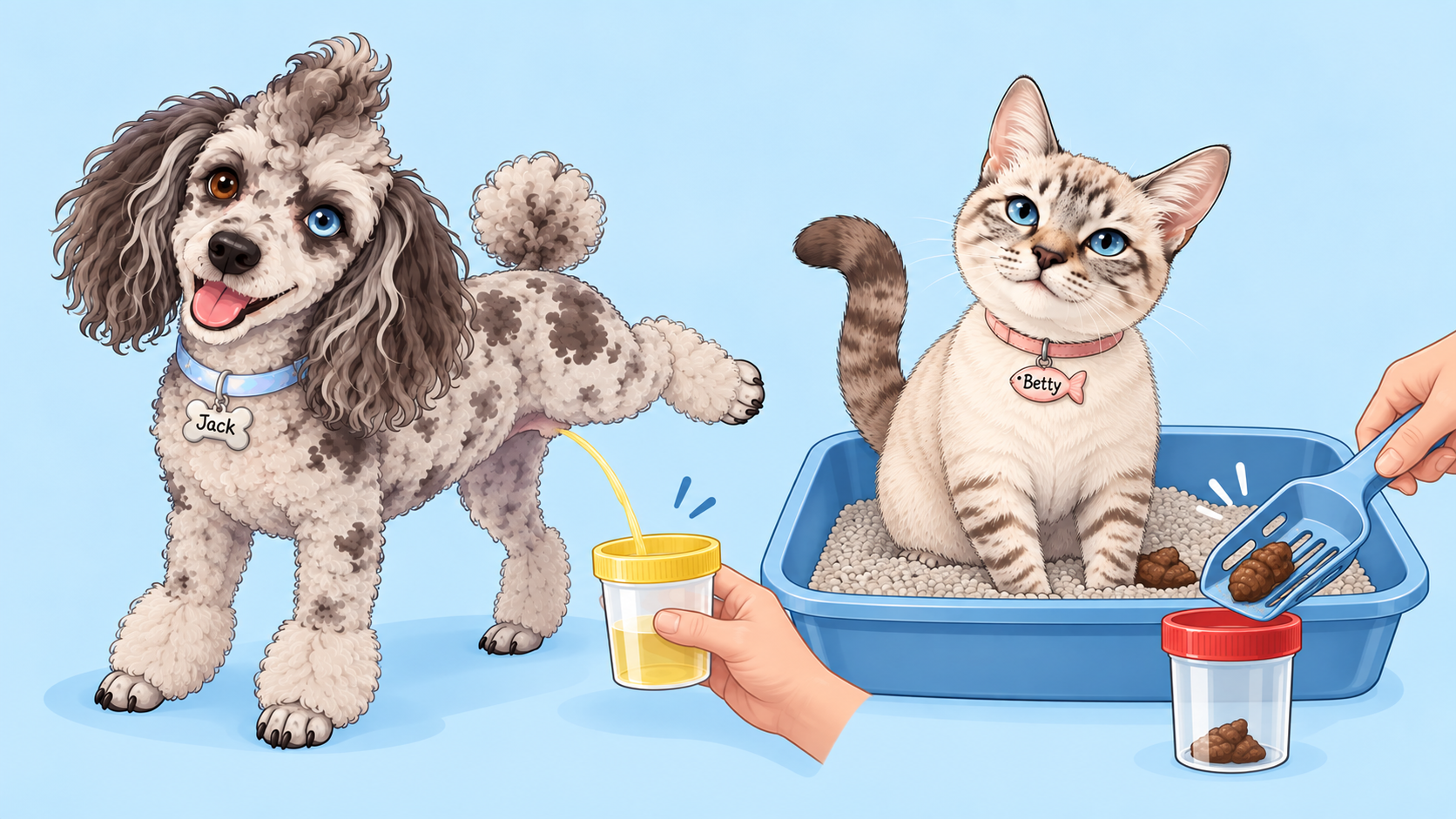
COLLECTING URINE & FECAL SAMPLES FROM YOUR DOG OR CAT AT HOME
🧪 WHY COLLECT SAMPLES AT HOME?
Urine and fecal testing can provide valuable information about your pet’s health.
Collecting samples at home can also be less stressful for your pet and may help us avoid more invasive collection methods when they are not necessary.
Ask your veterinary team for a specific collection container before your appointment if needed.
The key is to collect the sample correctly and bring it to us as soon as possible.
A urine sample collected at home works for many tests, but some tests require a sterile sample.
For example, when checking for a urinary infection, your veterinarian may recommend cystocentesis, which collects urine directly from the bladder with a needle. Your veterinarian will let you know which type of sample is best.
If you prefer for the veterinary team to collect the sample, that is completely fine!
Try not to let your pet urinate or defecate before the appointment so we have a better chance of collecting a sample at the hospital.
💧 URINE SAMPLE
Morning urine is ideal because it is usually more concentrated, but a sample collected at another time of day can still be useful.
If your veterinarian has requested a urine sample, ask when and how they would like you to collect it.
🐶 Dogs
The easiest method is a free-catch sample:
- Take your dog outside as usual, preferably on a leash.
- Have a clean, shallow container, ladle, or sterile urine cup ready.
- As your dog urinates, gently place the container under the urine stream without touching your pet.
- Transfer the urine to the collection container and close it tightly.
Tip: Some dogs stop urinating when they realize you are watching. Stay calm and give them space.
🐱 Cats
For cats, use non-absorbent litter in a clean, dry litter box.
- Clean and dry the litter box.
- Add a small amount of non-absorbent litter.
- Allow your cat to urinate normally.
- Use a clean syringe or pipette to collect the urine.
- Place it in a clean, sealed container.
❄️ Storing Urine
Bring urine to the hospital within 45 minutes whenever possible.
If you need more time:
- Keep the sealed sample refrigerated.
- Refrigerated urine can generally be used for testing for up to 24 hours, depending on the test.
- Do not freeze it.
- Tell us when it was collected and whether it was refrigerated.
💩 FECAL SAMPLE
Fecal testing can help detect intestinal parasites and other gastrointestinal problems.
Bringing a fresh fecal sample to your veterinary visit is always a good habit, especially for routine wellness exams.
🐶 Dogs
Collect a fresh sample as soon as possible after your dog has defecated.
- Use a disposable glove, plastic bag, or disposable utensil.
- Collect approximately ½ teaspoon or a sugar-cube-sized piece of stool.
- Place it in a clean, sealed container or bag.
- Bring it to the hospital as soon as possible, ideally the same day.
🐱 Cats
Start with a clean litter box so you know which stool belongs to your cat.
If you have multiple cats, collect a sample from each cat when requested.
A small amount of litter stuck to the stool is okay, but avoid heavily contaminated samples.
❄️ Storing Fecal Samples
Fresh is best!
If you cannot bring the sample in right away:
- Place it in a sealed container or bag.
- Keep it refrigerated.
- Try not to use a routine fecal sample that has been refrigerated for more than 4 hours, unless your veterinary team gives you different instructions.
- Do not freeze it.
Wash your hands thoroughly with soap and water after handling feces.
⭐ QUICK TIPS
- Fresh is best.
- Use a clean container and avoid contamination.
- Label the sample with your pet’s name and collection date/time.
- Keep samples sealed and refrigerated when necessary.
- Tell us when and how the sample was stored.
- If you are having trouble collecting a sample, don’t stress your pet. Contact your veterinary team for help.
Collecting samples at home can make veterinary testing easier and less stressful for everyone.
🐾 BEFORE YOU BRING IT IN
Urine
COLLECT → SEAL → REFRIGERATE IF NEEDED → BRING ASAP
Feces
COLLECT FRESH → SEAL → REFRIGERATE IF NEEDED → BRING THE SAME DAY
If you are unsure whether your sample is still usable, call us before throwing it away and collecting another one.
❓HAVE MORE QUESTIONS?
We’re here to help you keep your furbaby happy, healthy, and thriving! ❤️
For additional pet health information, visit Veterinary Partner by VIN—a trusted resource with veterinarian-written articles.
🔎 Tip: Search “VIN + your question” on Google for easier results, as the website’s search feature can be a little tricky.
📞 And remember, calling us is always free!
If you have questions or concerns about your pet, please don’t hesitate to reach out. We’re happy to help. 🐾