Dementia/Cognitive Dysfunction in Pets
Learn to recognize the signs of cognitive dysfunction in senior dogs and discover simple ways to support their brain health, comfort, and quality of life.
Dr. Sofia Raldiris
DVM
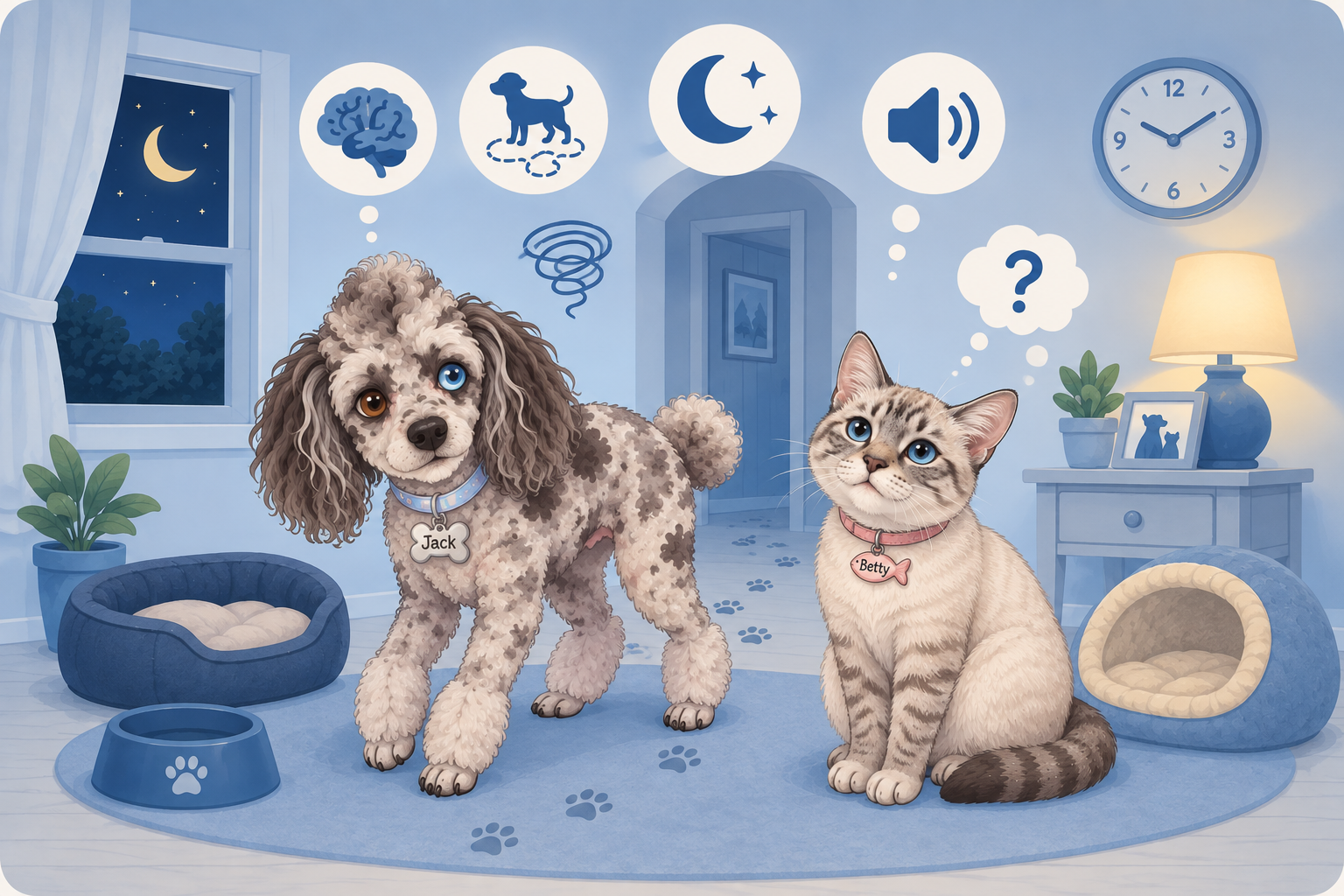
🧠 Dementia/Cognitive Dysfunction in Senior Pets
Cognitive Dysfunction Syndrome (CDS) is an age-related change in the brain that can affect your pet's memory, sleep, behavior, and awareness.
CDS is sometimes referred to as dementia because it shares similarities with dementia in people.
While some changes are a normal part of aging, significant changes in your pet’s behavior should not simply be dismissed as “old age.”
Pain, vision or hearing loss, urinary problems, metabolic disease, and other medical conditions can cause similar signs.
A veterinary evaluation is important to determine what is causing the changes.
🔍 SIGNS OF COGNITIVE DYSFUNCTION
You may notice:
- Confusion or disorientation
- Getting stuck in corners or becoming lost in familiar places
- Pacing or wandering, especially at night
- Changes in sleep patterns
- Increased anxiety or vocalization, especially at night
- Less interest in people, play, or other pets
- Forgetting familiar routines or commands
- House-training or litter box accidents
These changes may develop gradually and can vary from pet to pet.
❤️ HOW CAN WE HELP?
There is no cure for cognitive dysfunction, but early recognition and treatment can help manage symptoms and support your pet’s comfort and quality of life.
Treatment is individualized and may include:
🥣 Brain-Supportive Nutrition
Some senior diets contain antioxidants and/or medium-chain triglycerides (MCTs) that may help support brain function.
Veterinary diets may include:
- Hill’s Prescription Diet — b/d Brain Care
- Royal Canin — Mature Consult
- Purina Pro Plan Veterinary Diets — NC NeuroCare
Your veterinarian can help determine which diet is appropriate for your pet.
🛒 Looking for products to support your senior pet’s health and well-being? Explore some of our recommended options below.
🐟 Omega-3 Fatty Acids
DHA and EPA support healthy brain function and may be included as part of a senior-care plan.
Your veterinarian may recommend products such as:
Royal Canin
- Joint Dog Supplement Soft Chews for Adult Dogs
Welactin
- Welactin Advanced 3TA for dogs
- Welactin Omega-3 Soft Chews for dogs
- Welactin Canine Omega-3 Soft Gels for dogs
- Welactin Feline Omega-3 Fish Oil for cats
- Welactin Tidbits Chews for cats
Nordic Naturals
- Nordic Naturals Omega-3 Soft Gels for dogs
- Nordic Naturals Omega-3 Fish Oil for dogs
🛒 Looking for products to support your senior pet’s health and well-being? Explore some of our recommended options below.
🌿 Supplements
Some senior pets may benefit from additional cognitive-support supplements such as Senilife.
Supplements are supportive and work best as part of a complete treatment plan.
🛒 Looking for products to support your senior pet’s health and well-being? Explore some of our recommended options below.
💊 Medications
Medications may be recommended when cognitive changes are accompanied by anxiety, nighttime restlessness, or sleep disturbances.
Depending on your pet’s needs, treatment may include:
- Anipryl® (selegiline) — specifically used for canine cognitive dysfunction
- Trazodone or Gabapentin — may be used in some pets when anxiety, restlessness, or sleep disturbances need additional management
Your veterinarian will determine which medication is safest and most appropriate for your pet.
🧩 Mental & Physical Enrichment
Mental and physical enrichment can help support senior pets.
Try:
- Gentle daily exercise
- Puzzle or food toys
- Simple training exercises
- Regular interaction and play
- Safe opportunities to explore
Keep activities appropriate for your pet’s age, mobility, and medical conditions.
🛒 Looking for toys, enrichment, or other products to help your pet stay active? Explore our recommended options below.
🏠 SUPPORTING YOUR SENIOR PET AT HOME
Keep your pet's routine—feeding, exercise, bedtime, and daily activities—predictable and consistent to help reduce confusion and anxiety.
Make sure your pet has easy access to:
- Food and water
- Comfortable resting areas
- Safe walking areas
- A quiet, familiar environment
Avoid making unnecessary changes to your pet’s environment when possible. Familiar furniture, bedding, food and water locations, and daily routines can help your pet feel more secure.
Keep track of new or worsening behaviors so your veterinary team can monitor your pet’s progress and adjust treatment when needed.
🚨 WHEN SHOULD YOU CONTACT YOUR VETERINARIAN?
Contact your veterinarian if your senior pet:
- Becomes suddenly confused or distressed
- Stops eating or drinking
- Has difficulty walking
- Develops a rapid or significant change in behavior
Not every behavior change is part of normal aging. Early evaluation can help identify medical conditions that may be contributing to the problem and provide your pet with the support they need.
The goal is not simply to add more years—it is to help your senior pet remain comfortable, engaged, and happy for as long as possible.
🛒 RECOMMENDED PRODUCTS FOR SENIOR PET
There are many products available to support senior pets, but not every product is appropriate for every pet. We’ve selected options that may be helpful additions to your senior pet’s overall health, nutrition, and daily care routine.
🌐 View Recommended Pet Health Products
🌐 View Recommended Nutrition & Supplement Products
🌐 View Our Recommended Skin & Coat Products
🌐 View Our Recommended Enrichment & Exercise Products
Remember: These products are intended to support your senior pet’s overall health and well-being, but they do not replace veterinary evaluation or treatment. Your veterinarian can help determine which options are appropriate for your pet’s individual needs.
❓HAVE MORE QUESTIONS?
We’re here to help you keep your furbaby happy, healthy, and thriving! ❤️
For additional pet health information, visit Veterinary Partner by VIN—a trusted resource with veterinarian-written articles.
🔎 Tip: Search “VIN + your question” on Google for easier results, as the website’s search feature can be a little tricky.
📞 And remember, calling us is always free!
If you have questions or concerns about your pet, please don’t hesitate to reach out. We’re happy to help. 🐾