Heart Murmurs and Congestive Heart Failure (CHF) in Dogs and Cats
Learn the about heart murmurs and congestive heart failure (CHF) in dogs and cats, recognize warning signs, and discover how early detection can help protect your pet’s heart health.
Dr. Sofia Raldiris
DVM
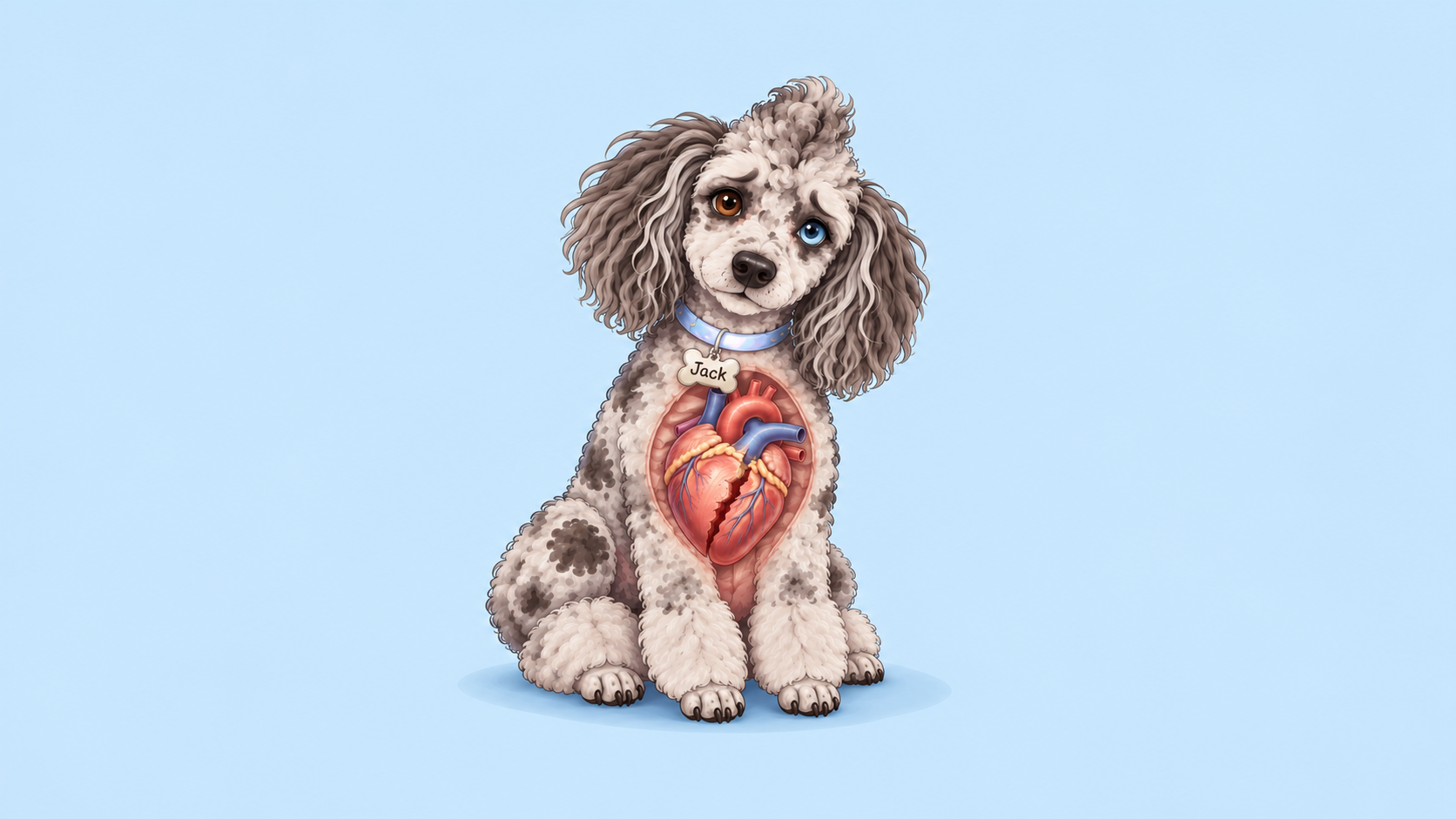
❤️ HEART MURMURS AND CONGESTIVE HEART FAILURE (CHF)
A heart murmur does not automatically mean your pet has heart failure.
However, it may be an early indication of an underlying heart condition that requires further evaluation.
🔍 WHAT IS A HEART MURMUR?
A heart murmur is an abnormal sound your veterinarian hears when listening to your pet's heart with a stethoscope.
Normally, blood flows smoothly through the heart, producing the familiar "lub-dub" sound of a heartbeat. A heart murmur occurs when blood flow becomes turbulent, creating an additional "whooshing" or "swishing" sound.
This turbulence may occur when a heart valve does not open or close properly, when the heart's structure is abnormal, or when another condition changes the way blood flows through the heart.
Some murmurs are harmless, while others indicate underlying heart disease.
A heart murmur is a finding, not a diagnosis.
Further examination and, when indicated, diagnostic testing can help determine its cause and whether treatment or ongoing monitoring is needed.
Can a Pet Have a Heart Murmur Without Heart Disease?
Yes! Some heart murmurs are considered innocent or benign, meaning they occur without significant underlying heart disease. Puppies and kittens may develop innocent murmurs that disappear as they grow.
Murmurs can also develop for reasons unrelated to structural heart disease, such as anemia or other conditions that alter blood flow.
The loudness of a murmur does not always reflect the severity of the underlying heart condition.
A soft murmur can be associated with significant heart disease, while a louder murmur does not necessarily mean the condition is more severe.
Your veterinarian may recommend additional testing to determine the cause of the murmur and whether your pet needs further monitoring or treatment.
💔 WHAT IS CONGESTIVE HEART FAILURE (CHF)?
Congestive heart failure (CHF) occurs when heart disease becomes severe enough to cause fluid to accumulate in the lungs or other parts of the body.
When the heart cannot function effectively, pressure can build up in blood vessels, causing fluid to leak into surrounding tissues or body cavities. This fluid accumulation can interfere with normal breathing and other bodily functions.
Depending on which side of the heart is affected, fluid may accumulate in different areas:
- Left-sided heart failure: Fluid commonly accumulates within the lungs (pulmonary edema), making breathing difficult.
- Right-sided heart failure: Fluid may accumulate in the abdomen (ascites), causing swelling, or around the lungs (pleural effusion), making breathing difficult.
CHF is a serious condition that requires veterinary treatment.
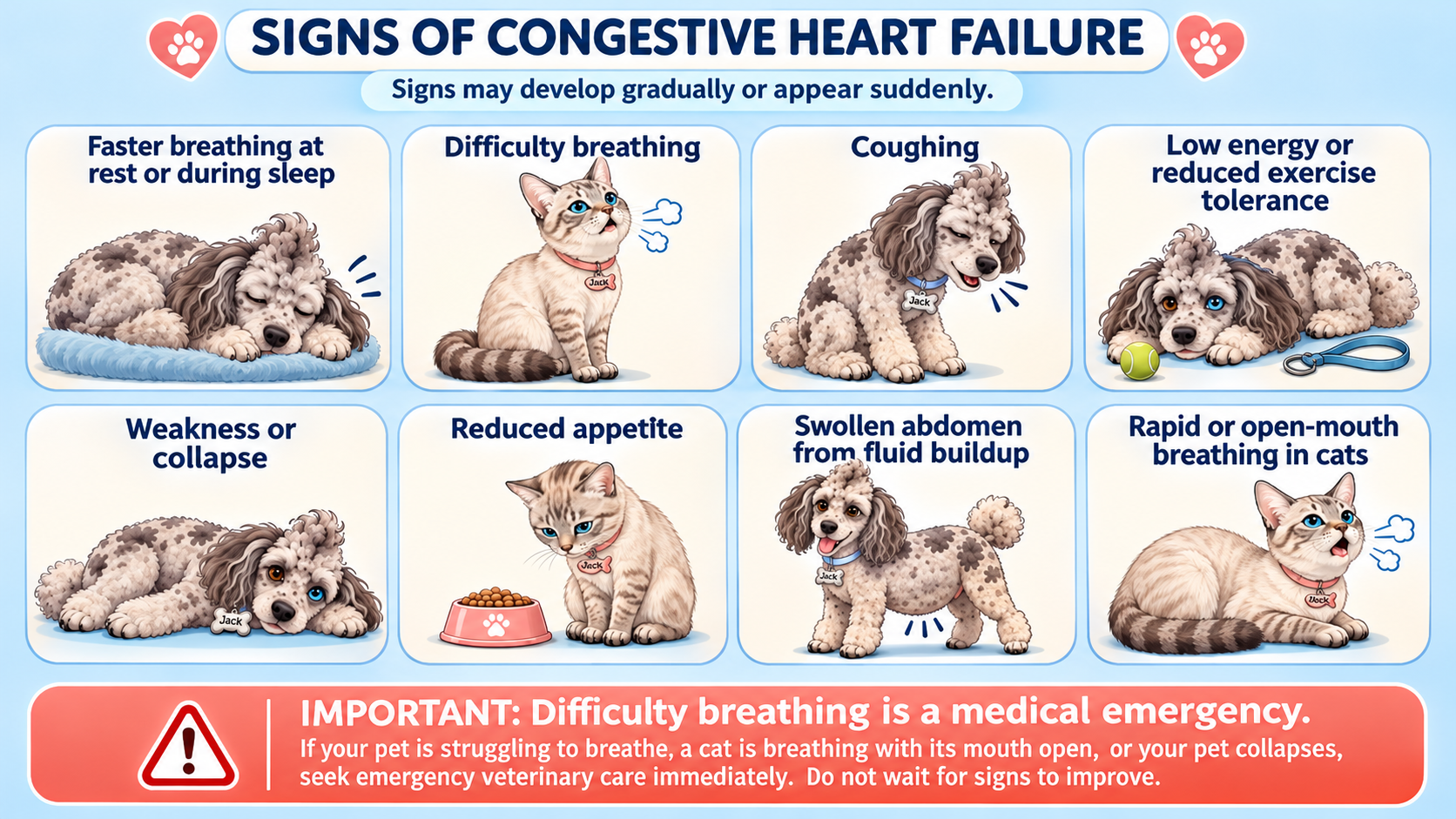
🚨 SIGNS OF CONGESTIVE HEART FAILURE
Signs of congestive heart failure may develop gradually or appear suddenly, and they can vary between dogs and cats.
The infographic below highlights common warning signs.
When Is It an Emergency?
Difficulty breathing is a medical emergency.
If your pet is struggling to breathe, breathing with its mouth open (especially a cat), or experiencing collapse, seek emergency veterinary care immediately. Do not wait for symptoms to improve on their own.
🩺 HOW IS CHF DIAGNOSED?
Testing may be recommended to determine the cause of the murmur and whether heart disease is present.
Diagnostic tests may include:
- Echocardiogram (heart ultrasound): Evaluates the heart's chambers, valves, muscle function, and blood flow. This is one of the most useful tests for identifying structural heart disease and assessing how the heart is functioning.
- Chest X-rays: Help evaluate heart size and identify fluid accumulation in or around the lungs.
- Blood tests: Help assess overall health, identify possible contributing conditions, and evaluate organ function before and during treatment.
- NT-proBNP testing: Measures a marker associated with heart muscle stress and may help determine whether heart disease is contributing to respiratory signs, particularly in cats, but it does not replace imaging or a complete clinical evaluation.
- Blood pressure measurement and electrocardiogram (ECG): May be recommended to evaluate blood pressure or abnormal heart rhythms.
Not every pet needs every test. Your veterinarian will recommend the appropriate diagnostics based on your pet's symptoms, examination findings, and medical history.
💊 HOW IS CHF TREATED?
Treatment depends on the underlying heart condition, its severity, and your pet's individual needs.
Once the heart is damaged, it generally cannot be repaired. Treatment acts like a “crutch,” helping the heart function more effectively, managing symptoms, and slowing disease progression while maintaining your pet's quality of life.
Treatment focuses on relieving fluid buildup, reducing the heart's workload, and supporting heart function whenever possible.
Depending on the diagnosis, medications may include:
- Diuretics, such as furosemide: Help the body remove excess fluid that accumulates in the lungs or other areas.
- Pimobendan: Helps the heart pump more effectively.
- ACE inhibitors, such as enalapril, and other cardiac medications: May be prescribed depending on the underlying disease and your pet's individual needs.
Some pets may also require oxygen therapy or hospitalization, particularly during an episode of respiratory distress.
Never start, stop, or adjust heart medications without veterinary guidance.
Treatment requires individualized dosing and ongoing monitoring. Your veterinarian may recommend periodic bloodwork to assess kidney function and electrolyte levels and ensure treatment remains appropriate.
🏠 MONITORING YOUR PET AT HOME
One of the most useful measurements is your pet's sleeping respiratory rate—the number of breaths your pet takes per minute while asleep. Tracking this regularly helps you establish a baseline and recognize changes that may indicate worsening heart disease or fluid accumulation.
Use the infographic below to learn how to measure your pet's sleeping respiratory rate.
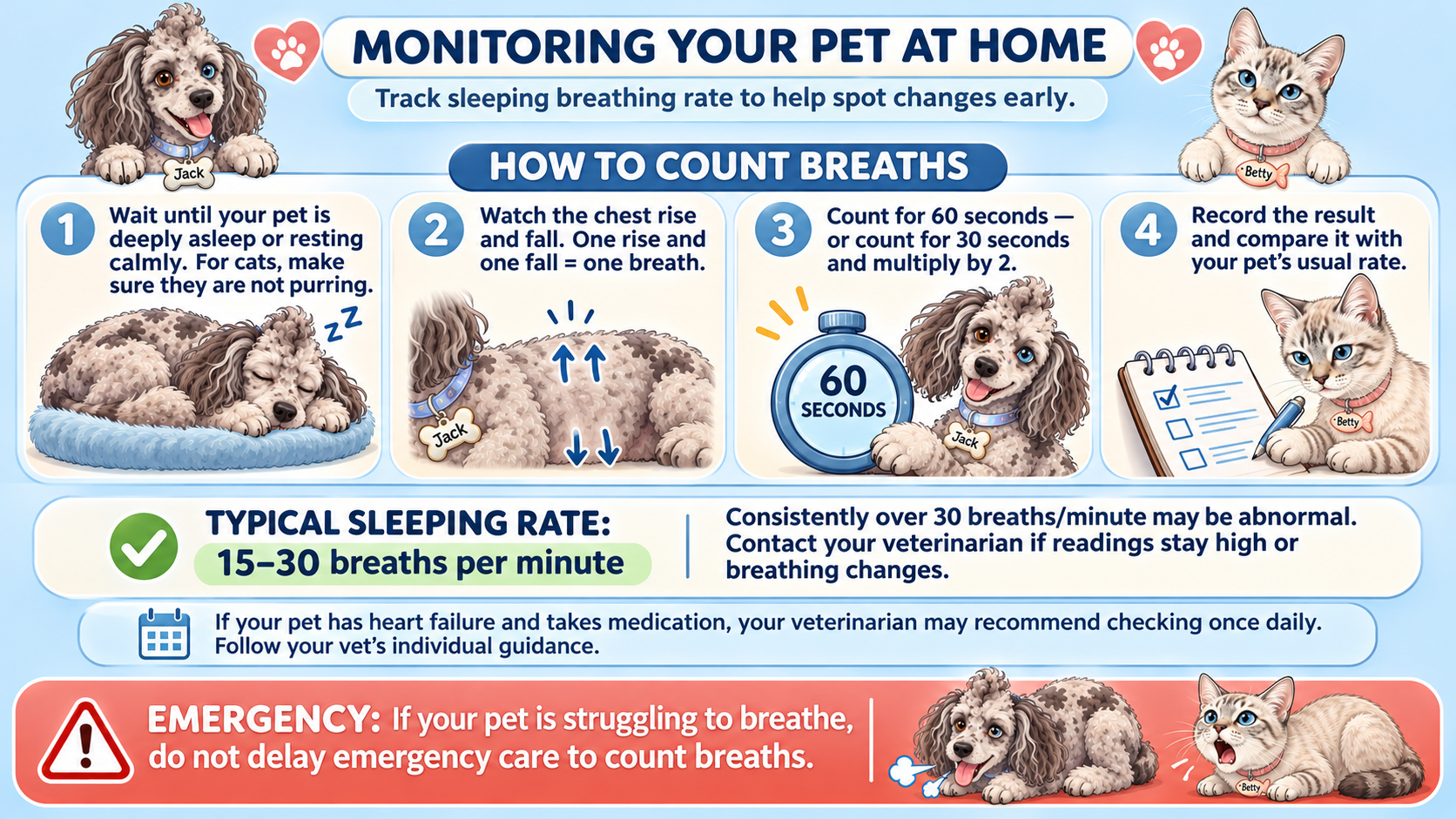
A typical rate is 15–30 breaths per minute. Consistently elevated readings, especially above 30 or your pet's normal baseline, may indicate worsening heart disease. Contact your veterinarian if you notice persistent increases.
If your pet is struggling to breathe, seek emergency care immediately. Do not delay care to count breaths.
🌐 Learn more about caring for pets with heart disease through the Cardiac Education Group's educational resources.
❤️ CAN PETS LIVE WITH HEART DISEASE?
Yes! Many pets with heart disease can enjoy a good quality of life with appropriate treatment, monitoring, and veterinary care. Some never develop CHF, while others may progress to heart failure despite treatment.
Although CHF is generally progressive, medications can help manage symptoms and maintain comfort. If your pet's quality of life declines despite treatment, your veterinarian can help you evaluate comfort, discuss options, and make compassionate decisions.
Quality of life should guide care throughout the disease, not just in its final stages.
Our goal is to keep your pet comfortable and active for as long as possible, with regular reassessment and treatment adjustments as needed.
🐾 WHEN SHOULD YOU CONTACT YOUR VETERINARIAN?
Schedule an appointment if your pet develops a new heart murmur, persistent cough, reduced activity, or changes in breathing rate.
Seek emergency veterinary care immediately if your pet struggles to breathe, breathes with its mouth open, collapses, or develops sudden, severe weakness.
Early detection and consistent monitoring can make a meaningful difference in your pet's comfort and quality of life. If you have concerns, the team at IslaVet Puerto Rico is here to help guide you through the next steps.
❓HAVE MORE QUESTIONS?
We’re here to help you keep your furbaby happy, healthy, and thriving! ❤️
For additional pet health information, visit Veterinary Partner by VIN—a trusted resource with veterinarian-written articles.
🔎 Tip: Search “VIN + your question” on Google for easier results, as the website’s search feature can be a little tricky.
📞 And remember, calling us is always free!
If you have questions or concerns about your pet, please don’t hesitate to reach out. We’re happy to help. 🐾