How to Give Your Dog or Cat a Pill
Learn how to safely and confidently give your dog or cat pills and liquid medications. From hiding medication in treats to giving it directly by mouth, these simple tips can make medication time easier and less stressful for both you and your pet.
Dr. Sofia Raldiris
DVM
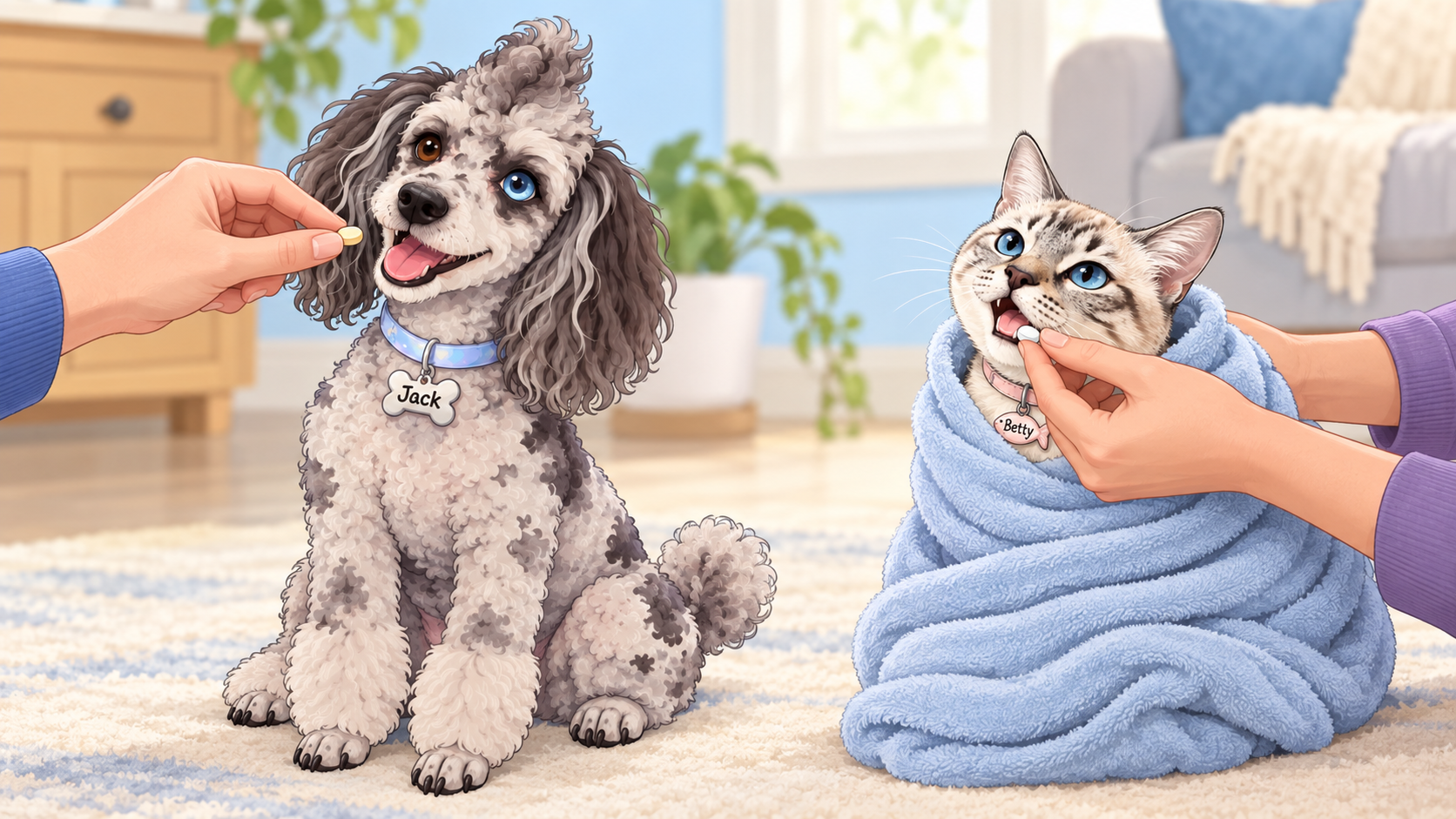
💊 HOW TO GIVE YOUR DOG OR CAT A PILL
Giving medication can be challenging, especially when your pet knows exactly what you are trying to do!
With the right technique, however, medication time can be safer, faster, and much less stressful.
Always follow your veterinarian’s instructions for the dose, schedule, and how the medication should be given.
Some medications need to be given with food, while others require an empty stomach.
Never crush, split, or open a medication unless your veterinarian says it is safe.
🐶🐱 START WITH THE EASIEST METHOD
If your pet will take the medication in food, this is usually the simplest and least stressful option.
Try hiding the pill in:
- A small amount of canned dog or cat food
- A soft treat or commercial pill pocket
- A small piece of boiled chicken, cheese, cream cheese, marshmallow, or whipped cream
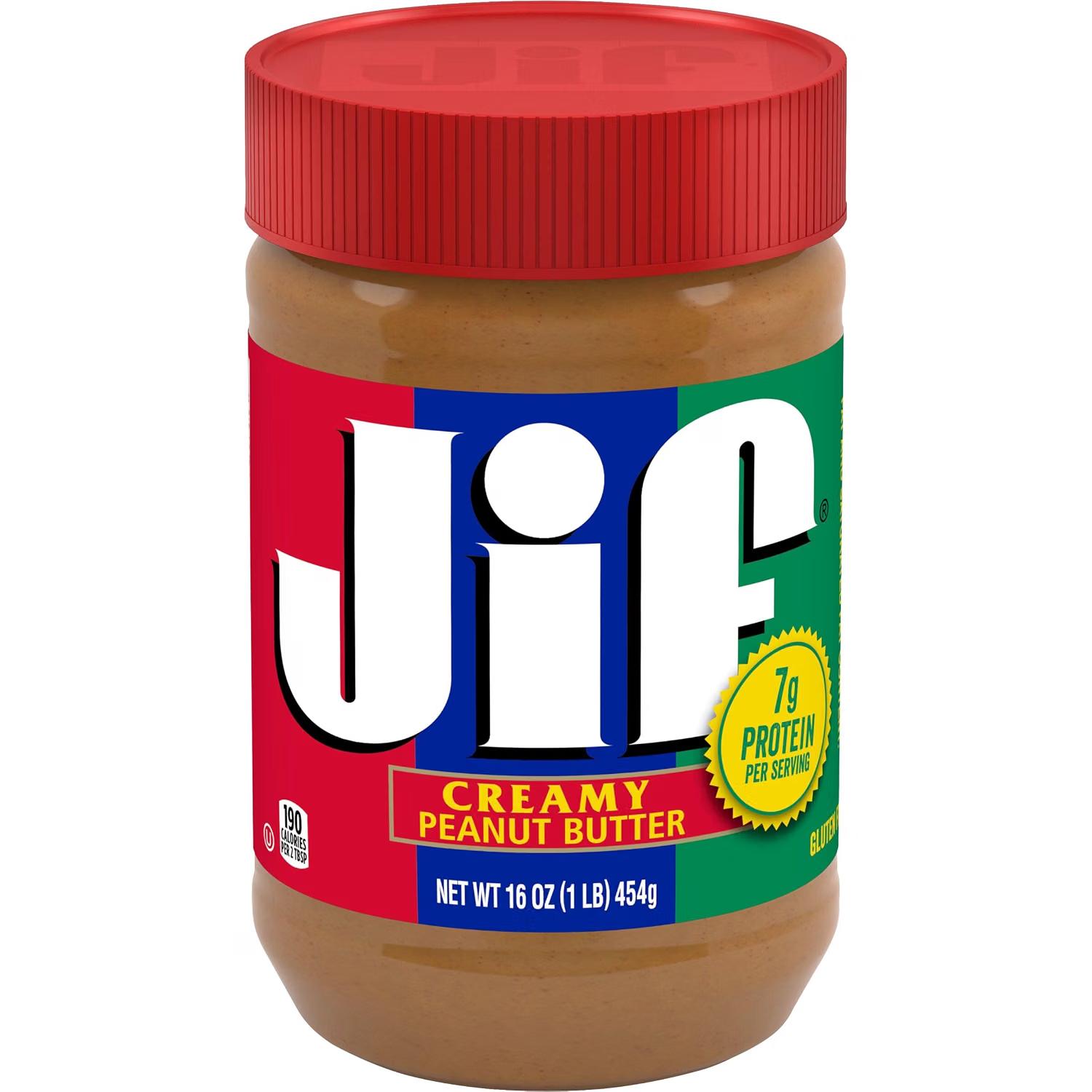
- A small amount of peanut butter for dogs and cats
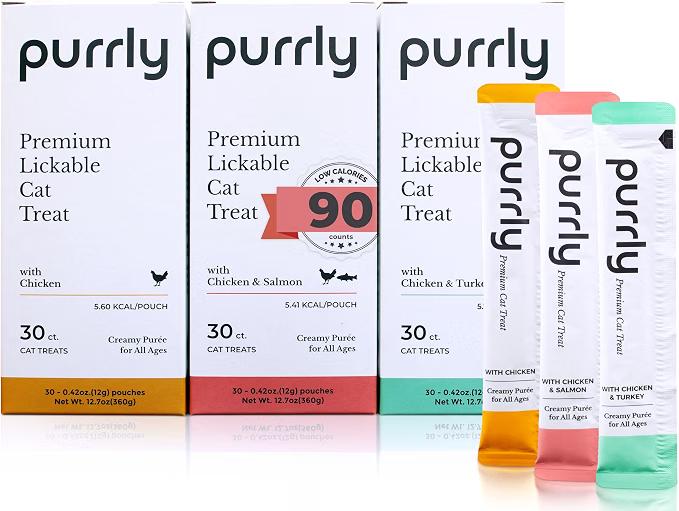
- Churu, Purrly, or another favorite lickable treat for cats
Use only a small amount of food so you can be sure your pet eats the entire dose.
Watch closely to make sure the pill was not spit back out.
If using peanut butter, make sure it does NOT contain xylitol, which is toxic.
For some dogs, a little reverse psychology works: pretend you accidentally dropped the pill and try to take it away—many dogs will quickly gobble it up because they think they’re about to lose a tasty treat!
If your pet repeatedly detects and spits out the pill, you may need to give it directly by mouth.
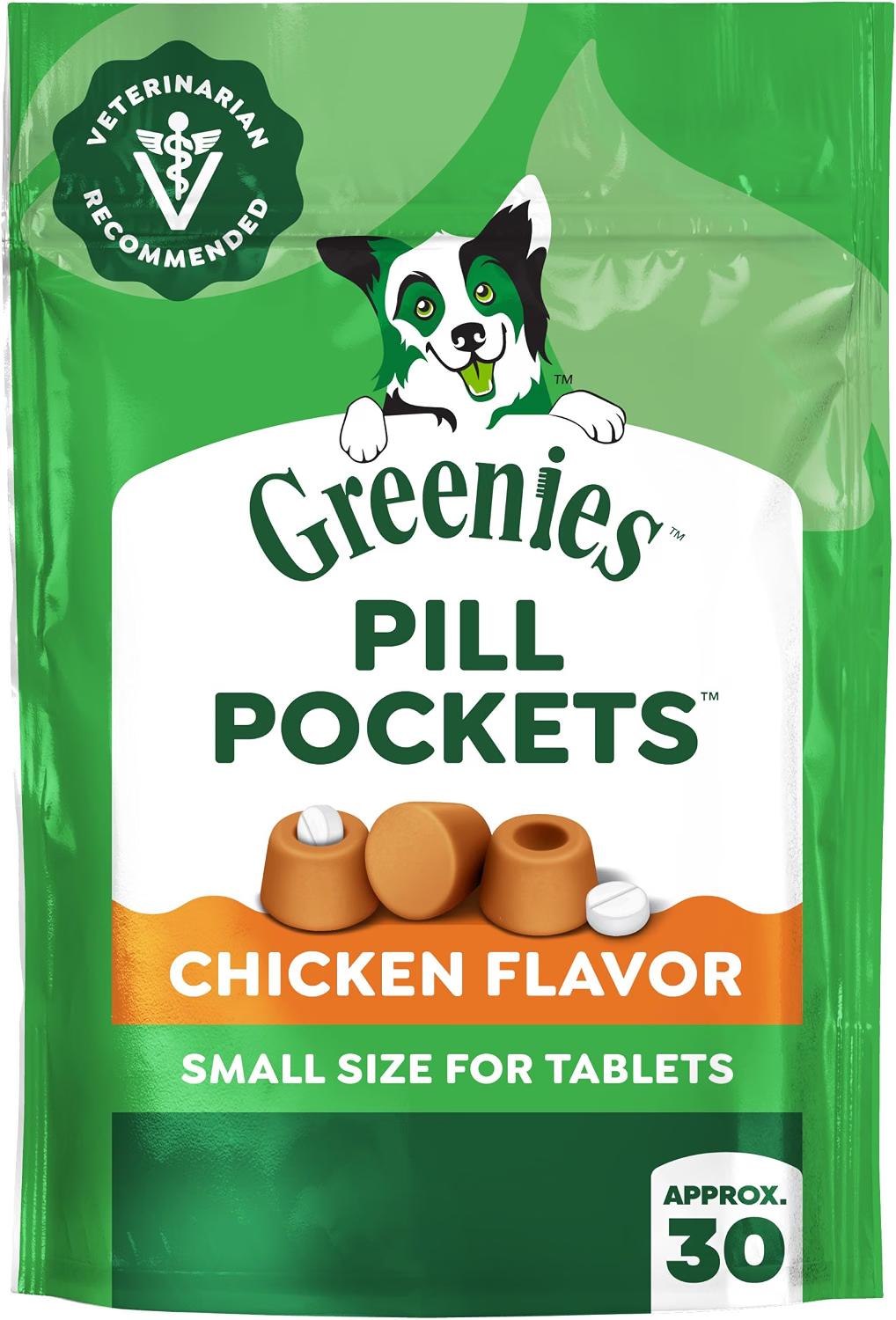
Pill Pockets for Dogs
Soft, shapeable treats with a built-in pocket for hiding your dog’s tablets or capsules. A convenient way to make medication time easier.
Amazon affiliate link
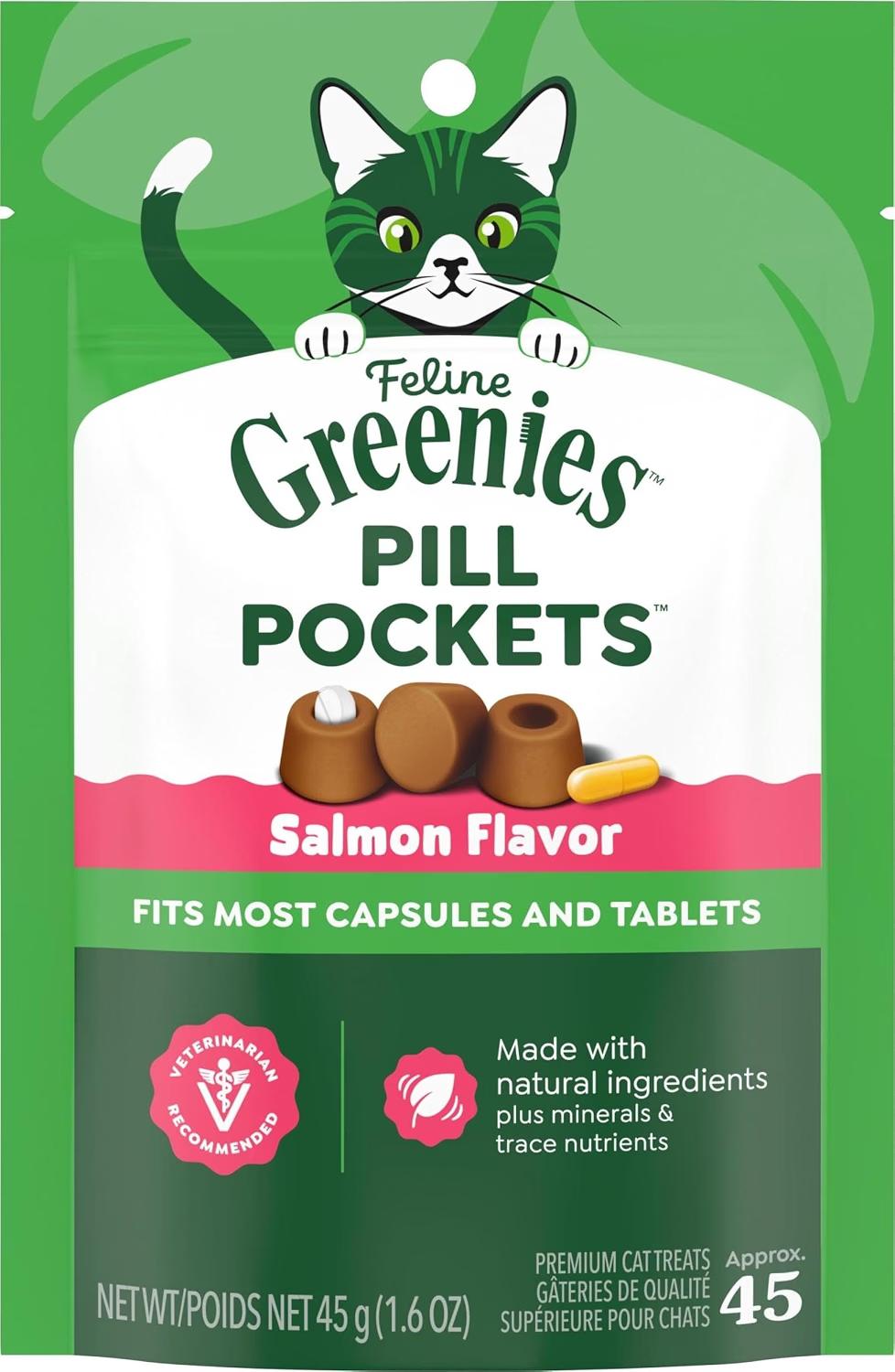
Pill Pockets For Cats
Soft, chewy treats with a built-in pocket designed to hide most tablet- and capsule-sized medications, making it easier to give your cat their medicine. Available in several flavors, including chicken, salmon, catnip, and tuna & cheese
Amazon affiliate link
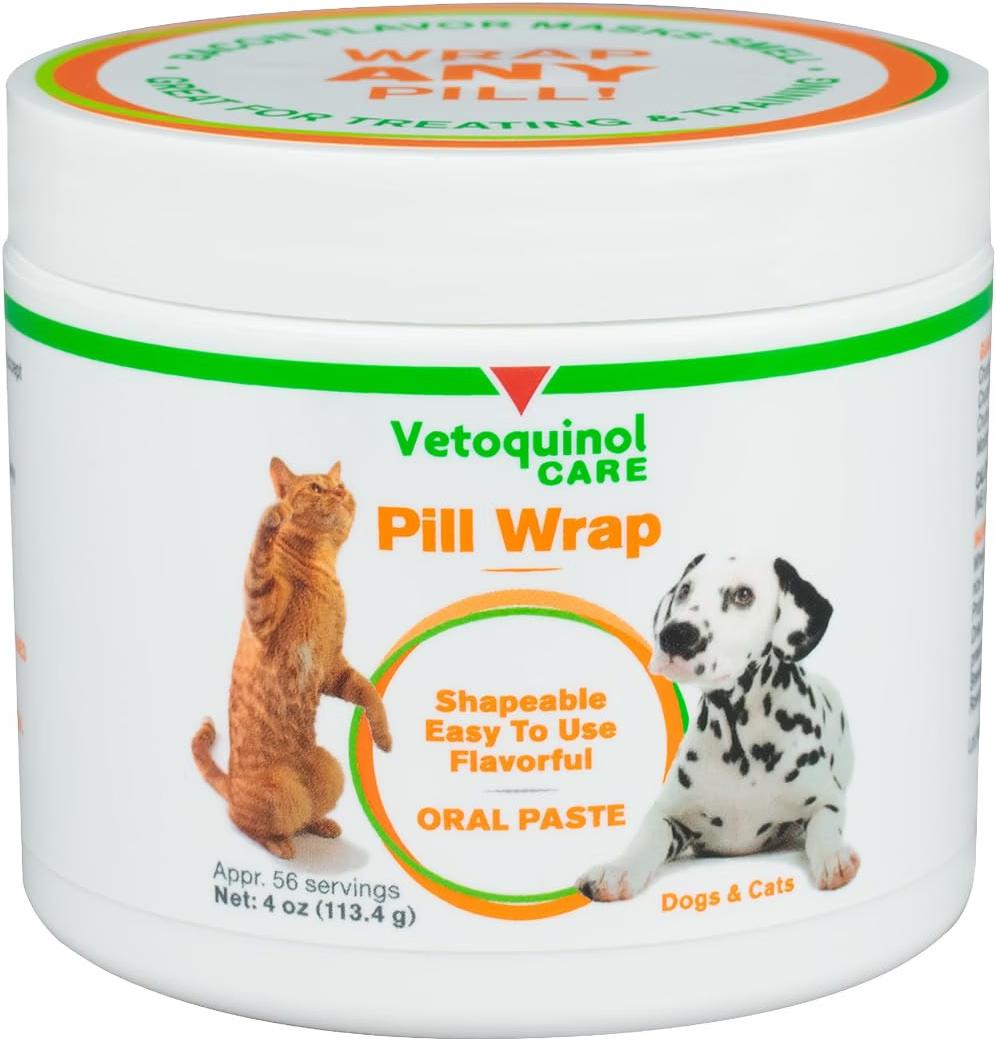
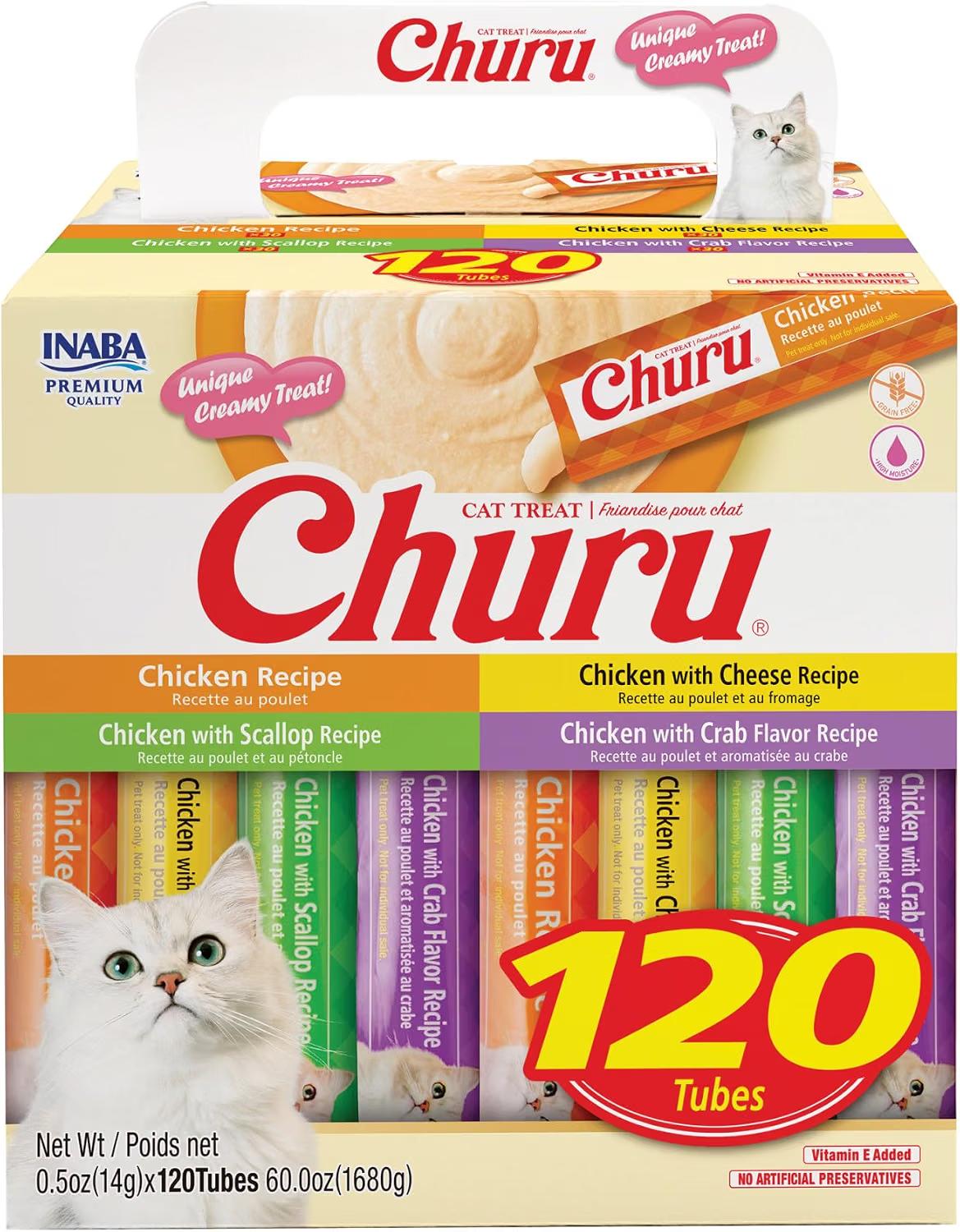
Churu Cat Treats
Lickable, squeezable creamy purée cat treats with high moisture and low calories. The chicken variety comes in convenient individual tubes and can be hand-fed, used as a treat, or added as a food topper.
Amazon affiliate link
🧘 BEFORE YOU START
A little preparation can make a big difference.
- Have the medication and a favorite reward ready.
- Choose a quiet area with minimal distractions.
- Stay calm and confident. Your pet can pick up on your stress.
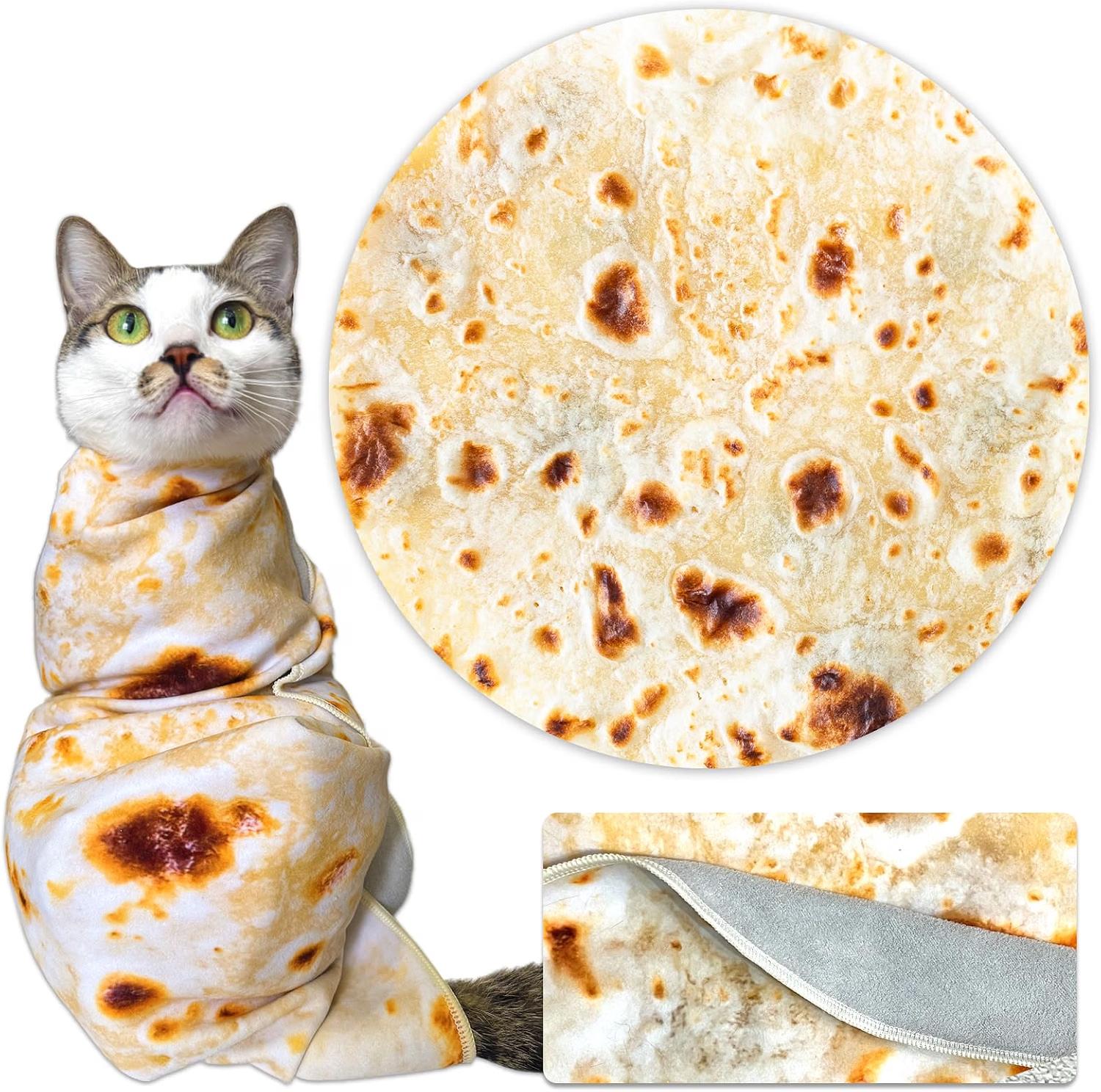
- For cats, use a towel or cat wrap if needed to safely control the legs.
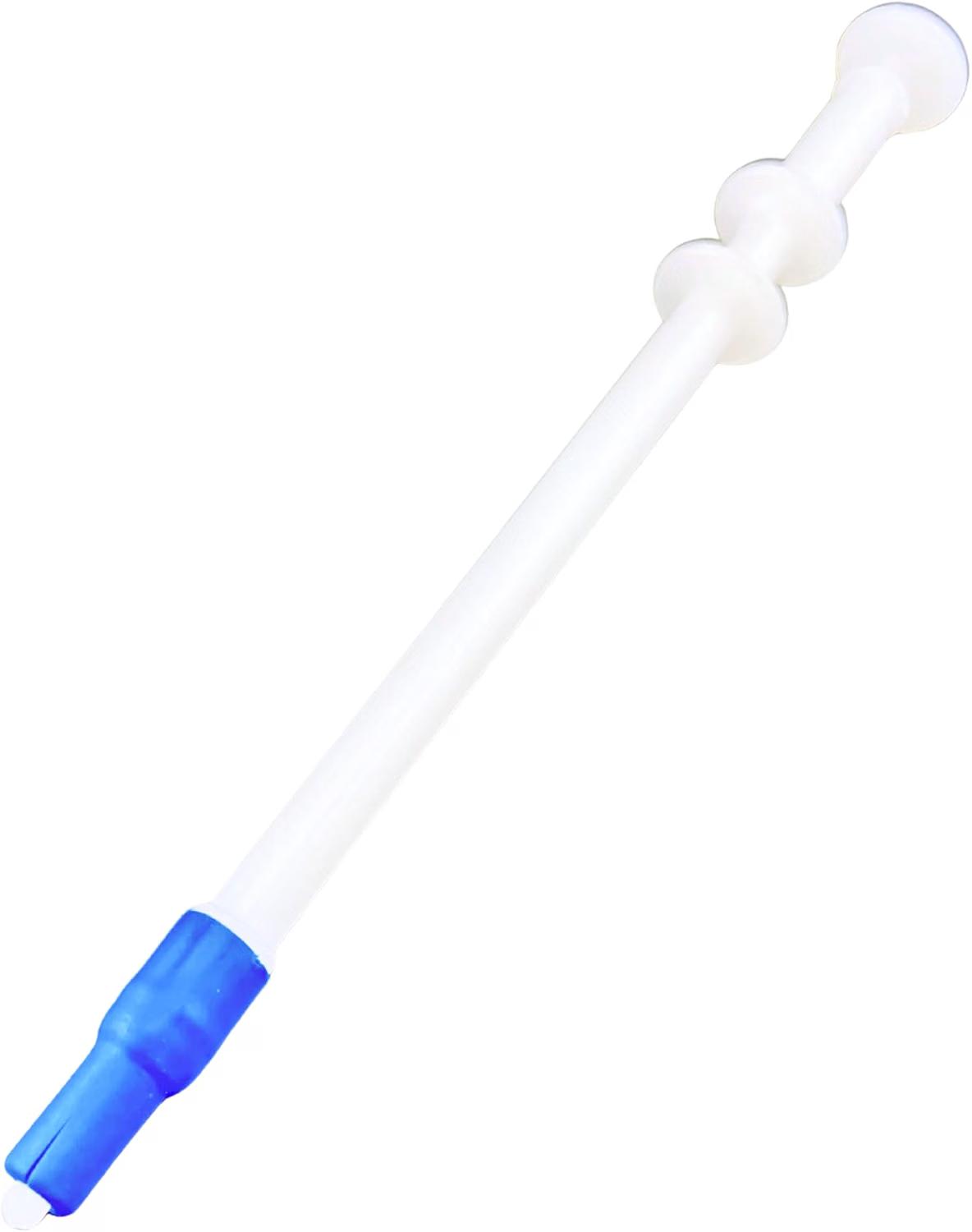
- A pill gun/pill dispenser can help you place the medication farther back in the mouth and reduce the risk of being bitten.
- Never force the process if your pet becomes extremely stressed or aggressive. Ask your veterinary team for help instead.
Avoid interrupting your pet while they are eating, grooming, sleeping, or using the bathroom.
🐕 HOW TO GIVE A PILL TO A DOG
If your dog is wiggly, strong, or difficult to handle, have someone help you or use a leash for gentle restraint. Proper restraint helps keep both you and your dog safe.
- Hold the pill between your thumb and index finger. If appropriate, lightly coat it with a small amount of soft food.
- With your other hand, gently grasp the muzzle from above, behind the canine teeth.
- Tilt the nose upward to gently open the mouth.
- Open the lower jaw and place the pill as far back on the tongue as safely possible.
- Close and hold the mouth closed and return the head to a normal position.
- Gently rub the throat or nose to encourage swallowing. A nose lick is often a good sign.
- Reward immediately with a favorite treat, praise, or affection.
The Goal: Quick, calm, and conficetmn— NOT a Struggle!
🐱 HOW TO GIVE A PILL TO A CAT
- Have the pill ready and position your cat on your lap or a secure surface. Use a towel or cat wrap if needed.
- Hold the pill between your thumb and index finger.
- Gently hold the top of your cat's head and tilt the nose upward.
- Open the lower jaw and place the pill toward the back third of the tongue.
- Close and hold the mouth closed and return the head to a normal position.
- Gently rub the throat or nose to encourage swallowing.
- Watch for a swallow or nose lick, then reward immediately with a favorite treat, food, or affection.
💧 FOLLOWING A PILL WITH WATER
Some medications, particularly tablets and capsules given to cats, should be followed by a small amount of water or liquid treat to help move the medication into the stomach.
Ask your veterinarian whether your pet's medication should be followed with water or food.
💧 WHAT ABOUT LIQUID MEDICATION?
Liquid medications are usually given with an oral syringe.
If the medication can be given with food, mix it into a small amount of food that your pet will completely eat.
Never mix medication into a full bowl because you may not know how much was actually consumed.
If giving it directly:
- Measure the exact dose into the syringe.
- Place the syringe into the side of the mouth, not straight toward the throat.
- Give the medication slowly, allowing your pet time to swallow.
- Never force a large amount of liquid into the mouth at once.
Follow the medication instructions carefully. Some liquids need to be shaken, refrigerated, or given with food.
🚫 WHAT NOT TO DO
- Do not guess or change the dose.
- Do not double the next dose if you are unsure whether your pet swallowed the medication. Contact your veterinarian first.
- Do not crush, split, or open pills unless your veterinarian says it is safe.
- Do not hide medication in food if it needs to be given on an empty stomach.
- Do not repeatedly chase or wrestle with your pet to give medication.
- Never give human medication unless it was specifically prescribed for your pet.
🩺 IF YOU'RE STRUGGLING, ASK FOR HELP
Some pets simply cannot tolerate being given medication by mouth. That does not mean you have failed!
Your veterinarian may be able to:
- Demonstrate the technique with you.
- Recommend a pill gun/pill dispenser.
- Change the medication to a flavored liquid, treat, or another formulation.
- Recommend another route of administration when appropriate.
Compounding pharmacies can prepare some medications in different formulations, but not every medication can safely be changed.
If medication has become a daily battle, talk to your veterinary team. There may be an easier option for you and your furbaby.
⭐ THE BIG TAKEAWAY
PREPARE → STAY CALM → GIVE THE MEDICATION QUICKLY → CONFIRM YOUR PET SWALLOWED IT → REWARD → REPEAT
With the right technique and a little practice, medication can become a simple part of your pet's routine instead of a daily battle.
🛒 RECOMMENDED PET HEALTH PRODUCTS
Giving medication at home can be challenging, especially when your pet is reluctant to take it. We’ve selected pet health products that may help make medication administration and at-home care easier.
🌐 View Our Recommended Pet Health Products
Remember: Always follow your veterinarian’s instructions for your pet’s medication, including the prescribed dose and schedule. If you are having difficulty giving a medication safely, contact your veterinary team for guidance.
❓HAVE MORE QUESTIONS?
We’re here to help you keep your furbaby happy, healthy, and thriving! ❤️
For additional pet health information, visit Veterinary Partner by VIN—a trusted resource with veterinarian-written articles.
🔎 Tip: Search “VIN + your question” on Google for easier results, as the website’s search feature can be a little tricky.
📞 And remember, calling us is always free!
If you have questions or concerns about your pet, please don’t hesitate to reach out. We’re happy to help. 🐾