Seizures in Dogs
Learn how to recognize a seizure, keep your dog safe during an episode, know when it is an emergency, and track seizures to help guide treatment.
Dr. Sofia Raldiris
DVM
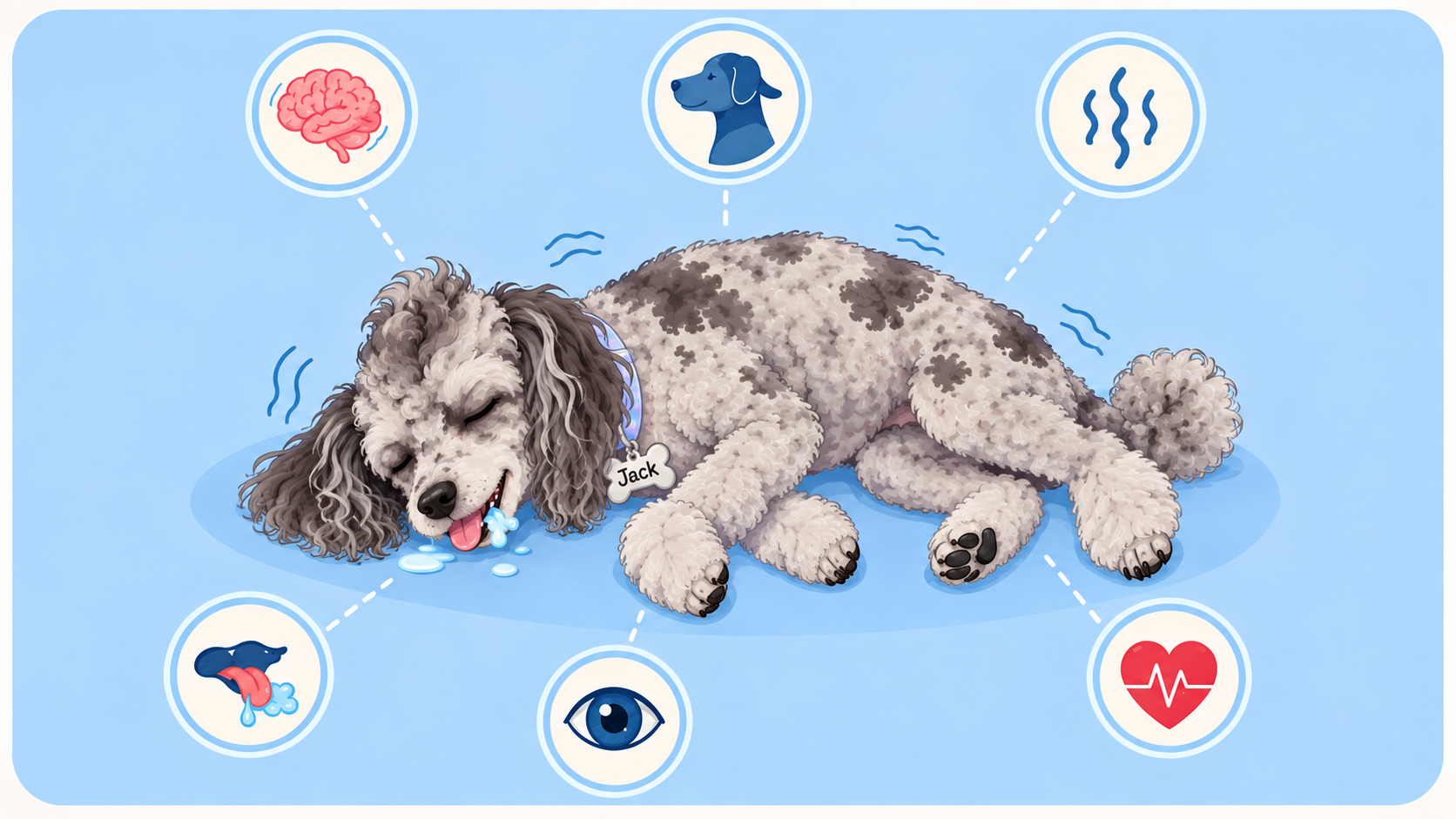
🧠 SEIZURES IN DOGS & CATS
A seizure is caused by abnormal electrical activity in the brain. They can be frightening to watch, but many dogs and cats with seizure disorders can have a good quality of life with appropriate treatment and monitoring.
The first step is determining whether the episode was actually a seizure and why it happened.
If your pet has an episode, record a video if it is safe to do so. A video can give your veterinarian valuable information about what happened.
🔍WHAT DOES A SEIZURE LOOK LIKE?
A seizure usually occurs in three stages:
1. Before The Seizure
Some pets show changes in behavior minutes to hours before a seizure, such as:
- Acting unusually clingy or restless
- Hiding or appearing anxious
- Staring into space
- Seeking attention
- Vomiting or other unusual behavior
2. During The Seizure
Most seizures are brief, often lasting 30–120 seconds. A generalized seizure may include:
- Sudden loss of awareness or responsiveness
- Dilated pupils
- Falling and becoming stiff, sometimes with the head arched backward
- Rhythmic paddling or jerking of the legs
- Jaw chomping or chewing movements
- Drooling or increased salivation
- Urination or defecation
3. After The Seizure
Afterward, your pet may be confused or act differently for several minutes to several hours. They may:
- Become aware and respond to noise
- Appear restless or disoriented
- Pace or bump into things
- Have difficulty walking
- Seem unusually hungry or thirsty
- Gradually return to their normal behavior
⚡SEIZURE VS. SYNCOPE VS. OTHER EVENTS
Not every collapse or abnormal movement is a seizure.
Syncope (fainting) is usually caused by a temporary decrease in blood flow or oxygen to the brain.
Pets may suddenly collapse, become briefly unconscious, and then recover quickly—often without the prolonged confusion seen after a seizure.
Other conditions can also look like seizures, including:
- Vestibular episodes
- Abnormal movements or tremors
- Low blood sugar
- Cardiac arrhythmias
- Toxin exposure
- Severe metabolic abnormalities
- Sleep-related movements
- Pain or behavioral episodes
This is why describing the event—and especially recording a video—is so important.
🩺 WHY DID MY PET HAVE A SEIZURE?
The age at which seizures begin, medical history, physical and neurologic examination, and diagnostic testing help determine the most likely cause.
Causes generally fall into three categories:
🐾 Idiopathic Epilepsy
Idiopathic epilepsy is a common cause of recurrent seizures in dogs and cats that are 6 months to 6 years of age and the pet is otherwise neurologically normal between episodes.
In these cases, no underlying structural or metabolic cause can be identified.
🧪 Metabolic Or Toxic
Problems outside the brain can trigger seizures, including:
- Low blood sugar
- Liver disease
- Kidney disease
- Electrolyte abnormalities
- Certain medications
- Toxin exposure
🧠 Structural Brain Disease
A problem directly affecting the brain can cause seizures, including:
- Brain tumors
- Inflammation or infection
- Stroke
- Previous brain injury
- Congenital abnormalities
🔬 DIAGNOSIS: WE HAVE TO RULE OUT EVERYTHING WE CAN
Before diagnosing epilepsy, we need to rule out other causes of seizures first.
The goal is to determine whether the problem is coming from outside the brain, inside the brain, or both.
Your veterinarian may recommend:
- Physical and neurologic examination
- Complete blood count and blood chemistry
- Blood glucose and electrolytes
- Urinalysis
- Blood pressure measurement
- Heartworm testing when appropriate
- Parasite and infectious disease testing when indicated
- Additional liver or kidney testing
- Evaluation for possible toxin exposure
If these tests do not identify a cause—or if there are concerning neurologic findings—advanced diagnostics such as MRI and cerebrospinal fluid (CSF) testing may be recommended.
🔄 SEIZURES CAN BECOME A PATTERN
One seizure does not necessarily mean your pet has epilepsy.
However, recurrent seizures should not be ignored. Seizures can become more frequent over time, and repeated or prolonged seizures can become increasingly difficult to control.
The goal is to prevent seizures from becoming a frequent pattern.
💊 WHEN SHOULD WE START SEIZURE MEDICATION?
Not every pet needs medication after one isolated seizure.
Treatment is generally considered when a pet has:
- 2 or more seizures within 6 months
- Multiple seizures within 24 hours
- A seizure lasting 5 minutes or longer
- Seizures that are becoming more frequent or severe
- Severe or prolonged recovery periods
- An identified brain abnormality or another condition that increases seizure risk
A simple way to remember the frequency guideline:
Three strikes and you're out. The first two seizures may not require lifelong medication, but recurrent seizures are a reason to seriously discuss treatment with your veterinarian.
The decision is individualized based on your pet's age, seizure frequency, severity, underlying cause, recovery, and quality of life.
💊 COMMON SEIZURE MEDICATIONS
Several medications can be used to control seizures in dogs and cats.
Common options include:
- Keppra (levetiracetam)
- Phenobarbital
- Zonisamide
- Potassium bromide in dogs
- Other anticonvulsant medications when appropriate
Some pets require more than one medication.
Possible side effects include:
- Sleepiness or sedation
- Wobbliness or difficulty walking
- Increased thirst and urination
- Increased appetite
- Weight gain
These effects may improve as your pet adjusts to treatment.
Never stop an anti-seizure medication suddenly unless specifically instructed by your veterinarian. Abruptly stopping medication can trigger more frequent or severe seizures.
🎯 THE GOAL OF TREATMENT
The goal is not always to eliminate every seizure.
Our goals are to:
- Reduce seizure frequency
- Reduce seizure severity and duration
- Prevent cluster seizures and seizure emergencies
- Improve your pet's quality of life
- Minimize medication side effects
🩺 MONITORING
Regular monitoring helps us make sure your dog's medication is both safe and effective.
Depending on the medication, your veterinarian may recommend:
- Medication blood levels
- CBC and blood chemistry
- Liver or kidney monitoring
- Dose adjustments
For some medications, blood levels are checked within the first few weeks after starting treatment or changing the dose and then periodically during long-term treatment.
The monitoring schedule depends on the medication and your pet's individual needs.
🦟 HEARTWORM PREVENTION
Heartworm prevention is still important for pets with seizure disorders.
For dogs with a history of seizures, I generally prefer discussing topical heartworm prevention or ProHeart 12 rather than automatically choosing an oral preventive, based on the individual patient's history and risk factors.
For cats, heartworm prevention is also important because heartworm disease can be serious, and there is no approved treatment to eliminate adult heartworms in cats.
Do not stop prevention because your pet has seizures. Ask your veterinarian which product and route of administration is best for your pet.
🌐 Learn More About Year-Round Flea & Parasite Prevention
🚨 WHAT SHOULD I DO DURING A SEIZURE?
Say Calm & Keep Your Pet Safe
- Start a timer. Knowing exactly how long the seizure lasts is extremely important.
- Move furniture and other objects away from your pet.
- Keep your pet away from stairs and other hazards.
- Keep children and other pets away.
- If needed, gently support your dog’s head with a soft pillow or folded towel to help prevent injury.
- You may gently steady your dog, but do not restrain their body or try to stop the seizure movements.
- Keep the room quiet and reduce stimulation.
- If possible, record a video.
- Allow your pet to recover in a quiet, safe area afterward.
Do Not
- Do not restrain your pet.
- Do not put your hands near or inside your pet's mouth.
- Do not try to pull out or hold the tongue.
- Do not attempt to give food, water, or oral medication during an active seizure.
Pets cannot swallow their tongues, but they can bite unintentionally.
If your veterinarian has prescribed a rescue medication or emergency seizure plan, follow those instructions exactly.
🚨 WHEN IS A SEIZURE AN EMERGENCY?
Seek emergency veterinary care immediately if:
⏱️ The Seizure Last 5 Minutes Or Longer
A prolonged seizure can become life-threatening and requires emergency treatment.
🔄 Your Pet Has Multiple Seizures
Multiple seizures within 24 hours can indicate cluster seizures and may progress to a seizure emergency.
🧠 Abnormal Recovery
Seek emergency care if your pet does not regain consciousness, continues having abnormal seizure activity, or does not return toward normal between episodes.
Early treatment of prolonged or repeated seizures is important because they can become increasingly difficult to control.
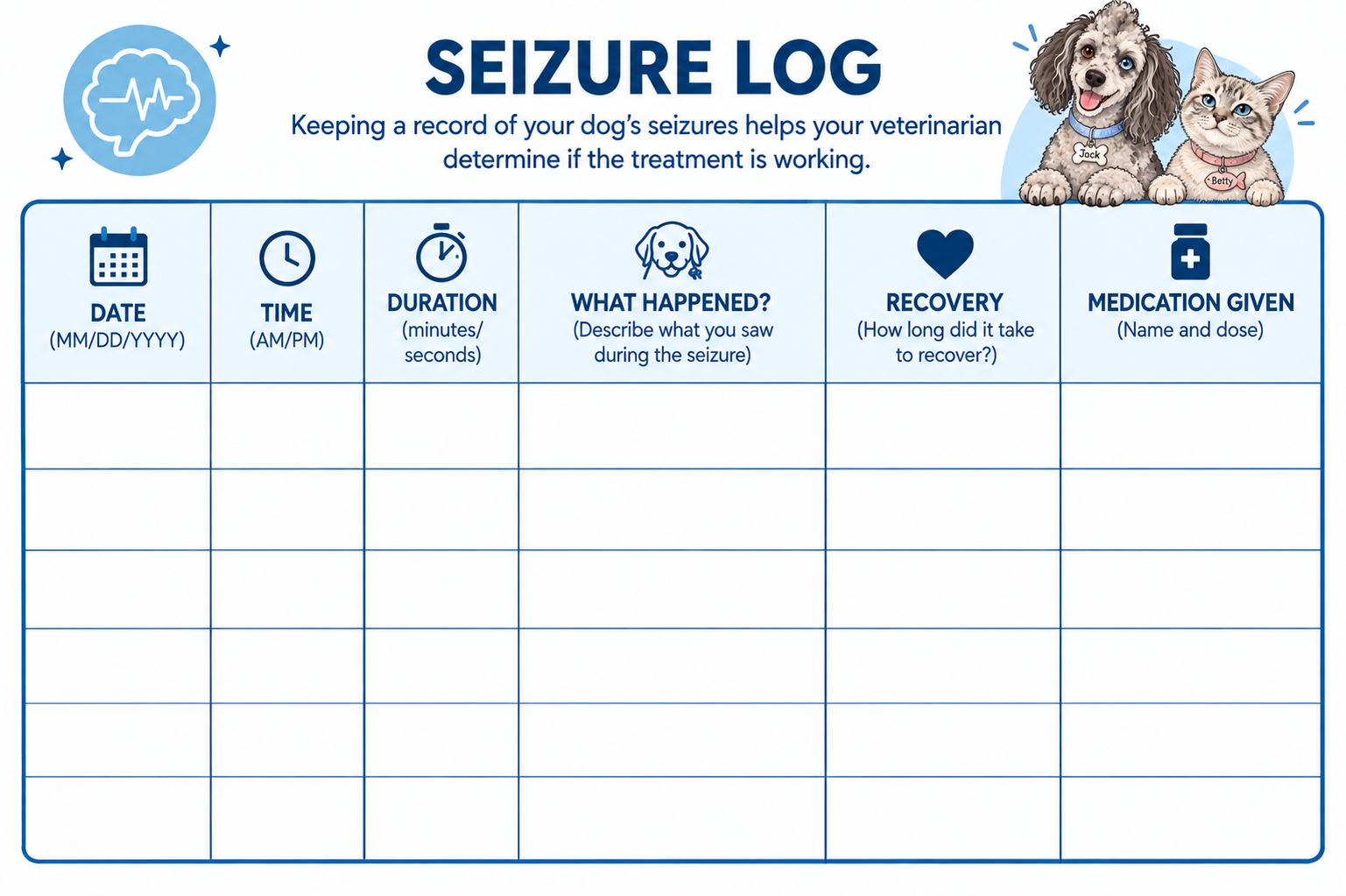
📹 VIDEO + SEIZURE LOG = VALUABLE INFORMATION
A video can help your veterinarian determine whether an episode looks more like a seizure, syncope, tremor, vestibular episode, or another condition.
Keep a simple seizure log with:
- Date and time
- Duration
- What happened before and during the episode
- Recovery time
- Medications given or changed
- Possible triggers or unusual events
A video and seizure log can make a big difference when deciding whether treatment is needed.
SEIZURE LOG
⭐ REMEMBER
Seizures can be scary, but staying calm and knowing what to do can help keep your pet safe.
Start a timer, protect your pet from injury, record a video if possible, and contact your veterinarian about recurrent seizures.
Our goal is simple: fewer seizures, shorter seizures, safer recoveries, and the best possible quality of life.
❓HAVE MORE QUESTIONS?
We’re here to help you keep your furbaby happy, healthy, and thriving! ❤️
For additional pet health information, visit Veterinary Partner by VIN—a trusted resource with veterinarian-written articles.
🔎 Tip: Search “VIN + your question” on Google for easier results, as the website’s search feature can be a little tricky.
📞 And remember, calling us is always free!
If you have questions or concerns about your pet, please don’t hesitate to reach out. We’re happy to help. 🐾