Spay Surgery Recovery in Dogs and Cats
Learn how to care for your dog or cat after spay surgery, including incision care, activity restrictions, feeding, and warning signs to watch for during recovery.
Dr. Sofia Raldiris
DVM
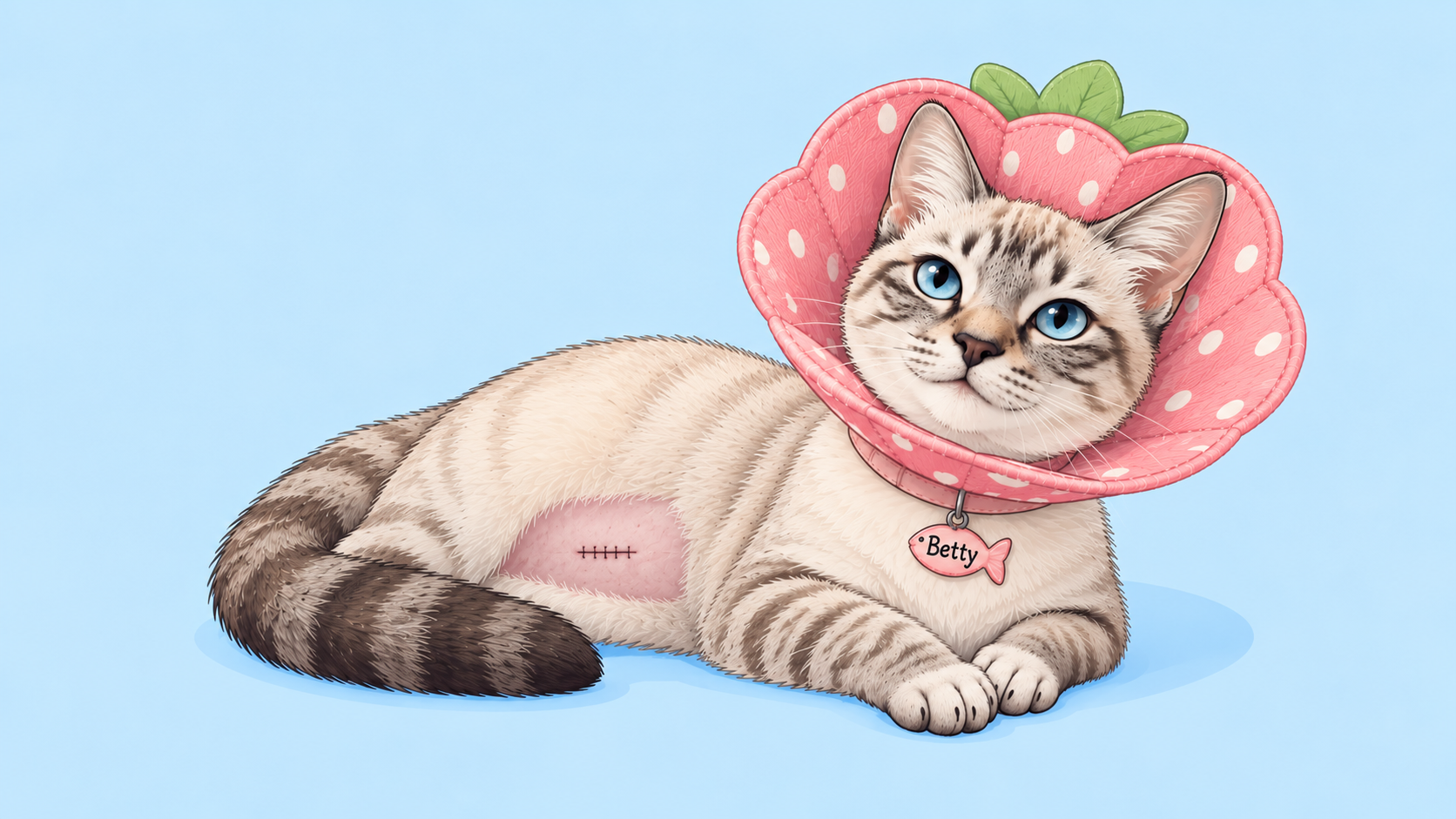
🐶🐱 RECOVERY AFTER SPAY SURGERY IN DOGS AND CATS
A spay surgery (ovariohysterectomy) is a procedure that prevents pregnancy by removing the reproductive organs.
After surgery, your pet may feel sore, tired, or drowsy for several hours or days. Drowsiness from anesthesia should improve within 12–24 hours.
Keep your pet indoors, warm, and comfortable during the first night. Follow the instructions below to help your pet recover safely.
🏡 HOME CARE INSTRUCTIONS
🛏️ Activity Restriction
Restrict activity for 14 days after surgery. The first 24 hours are often the most uncomfortable.
- Keep your pet quiet and rested. No running, jumping, stairs, rough play, or playing with other pets.
- When you cannot supervise your pet, confine them to a crate or small, quiet area.
- Take dogs outside on a short leash for bathroom breaks.
- Cats may need to be confined to a small room to prevent jumping and climbing.
- If your pet is too active to rest, contact your veterinarian to discuss whether medication may be needed.
⚠️ Excessive activity can damage the incision, cause complications, and potentially require additional surgery and veterinary cost.
🩹 Incision Care
- Keep the incision clean and dry. Do not bathe your pet for 14 days after surgery.
- Do not apply ointments, creams, or other products unless directed by your veterinarian.
- Mild bruising may occur after surgery.
- Check the incision daily for redness, swelling, discharge, opening, or excessive licking.
Contact your veterinarian promptly if you notice any concerning changes to the incision.
🛡️ E-Collar: Why It’s Essential!
Sutures and surgical glue are not foolproof.
Licking, chewing, or scratching can damage the incision, introduce bacteria, reopen the wound, and lead to complications requiring additional treatment or surgery.
⚠️ Even brief licking can cause complications and increase veterinary costs. We ALWAYS recommend an e-collar (cone) after surgery.
- Keep it on AT ALL TIMES for 10–14 days, or as directed by your veterinarian.
- Your pet may feel uncomfortable or panic at first, but most pets adjust to the e-collar within a few hours.
- You may remove it briefly for meals and drinking if you supervise your pet closely and ensure they cannot reach the incision. Replace it immediately afterward.
- Never leave your pet unattended without the e-collar.
📏 HOW TO MEASURE AN E-COLLAR
The cone must extend beyond your pet’s nose to prevent access to the incision.
- Length: With the cone positioned at the base of the neck and pushed all the way back, your pet’s nose should not extend beyond the cone’s outer edge.
- Fit: It should be secure enough that your pet cannot slip out, with room for approximately two fingers between the collar and neck.
- Test: Watch your pet move to ensure they cannot reach the incision.
⚠️ If your pet’s nose extends beyond the cone’s edge, you need a longer size.
🐾 E-COLLAR OPTIONS
- Traditional plastic cone: Preferred because it provides reliable protection when properly fitted.
- Soft cone: Flexible, but some pets can bend it or reach around it to lick the incision.
- Inflatable collar: May be more comfortable but may not prevent your pet from reaching the surgical site.
- Recovery suit: May be suitable for certain incisions but does not replace an e-collar in every situation.
🛒 Preparing for your pet’s recovery? Explore some of our recommended surgery care products below.
🍽️ Feeding and Water
- Offer small amounts of food and water several times during the first 24–48 hours, then return to your pet's regular feeding schedule as tolerated.
- If your pet has a poor appetite, try offering a small amount of their usual canned food or another veterinarian-approved food.
- If your pet refuses to eat for 24–48 hours after surgery, contact your veterinarian.
💊 Medications
Give all prescribed medications exactly as directed.
If your pet experiences repeated or excessive vomiting, diarrhea, or refuses medication, contact your veterinarian.
⚠️ Never give human pain medications unless specifically instructed by your veterinarian.
🚨 WHEN TO CONTACT YOUR VETERINARIAN
Contact your veterinarian if you notice:
- Increasing redness, swelling, discharge, bleeding, or opening of the incision.
- Persistent licking or chewing at the surgical site.
- Repeated vomiting or diarrhea.
- Refusal to eat for 24–48 hours.
- Severe lethargy, worsening pain, or any other concerning changes.
Seek urgent veterinary care if your pet collapses, has difficulty breathing, develops pale gums, or experiences significant bleeding.
🩺 FOLLOW-UP APPOINTMENT
Schedule an incision recheck or suture removal in 10–14 days, as directed by your veterinarian. Continue restricting activity until your veterinarian confirms that your pet can safely return to normal activities.
Questions or concerns? Contact your veterinary team for guidance. Every pet recovers at their own pace, and early attention to potential complications can make a difference.
🛒 RECOMMENDED SURGERY CARE PRODUCTS
Preparing for surgery or helping your pet recover at home? We’ve selected surgery care products that may help keep your pet comfortable and support recovery.
🌐 View Our Recommended Surgery Care Products
Remember: These products can support your pet’s recovery but do not replace your veterinarian’s post-operative instructions. If you notice swelling, discharge, an opening incision, or other concerning changes, contact your veterinary team.
❓HAVE MORE QUESTIONS?
We’re here to help you keep your furbaby happy, healthy, and thriving! ❤️
For additional pet health information, visit Veterinary Partner by VIN—a trusted resource with veterinarian-written articles.
🔎 Tip: Search “VIN + your question” on Google for easier results, as the website’s search feature can be a little tricky.
📞 And remember, calling us is always free!
If you have questions or concerns about your pet, please don’t hesitate to reach out. We’re happy to help. 🐾