Vaccines & Preventive Care for Dogs & Cats
Learn about the vaccines and preventive care your dog or cat needs to stay healthy, protected, and up to date.
Dr. Sofia Raldiris
DVM
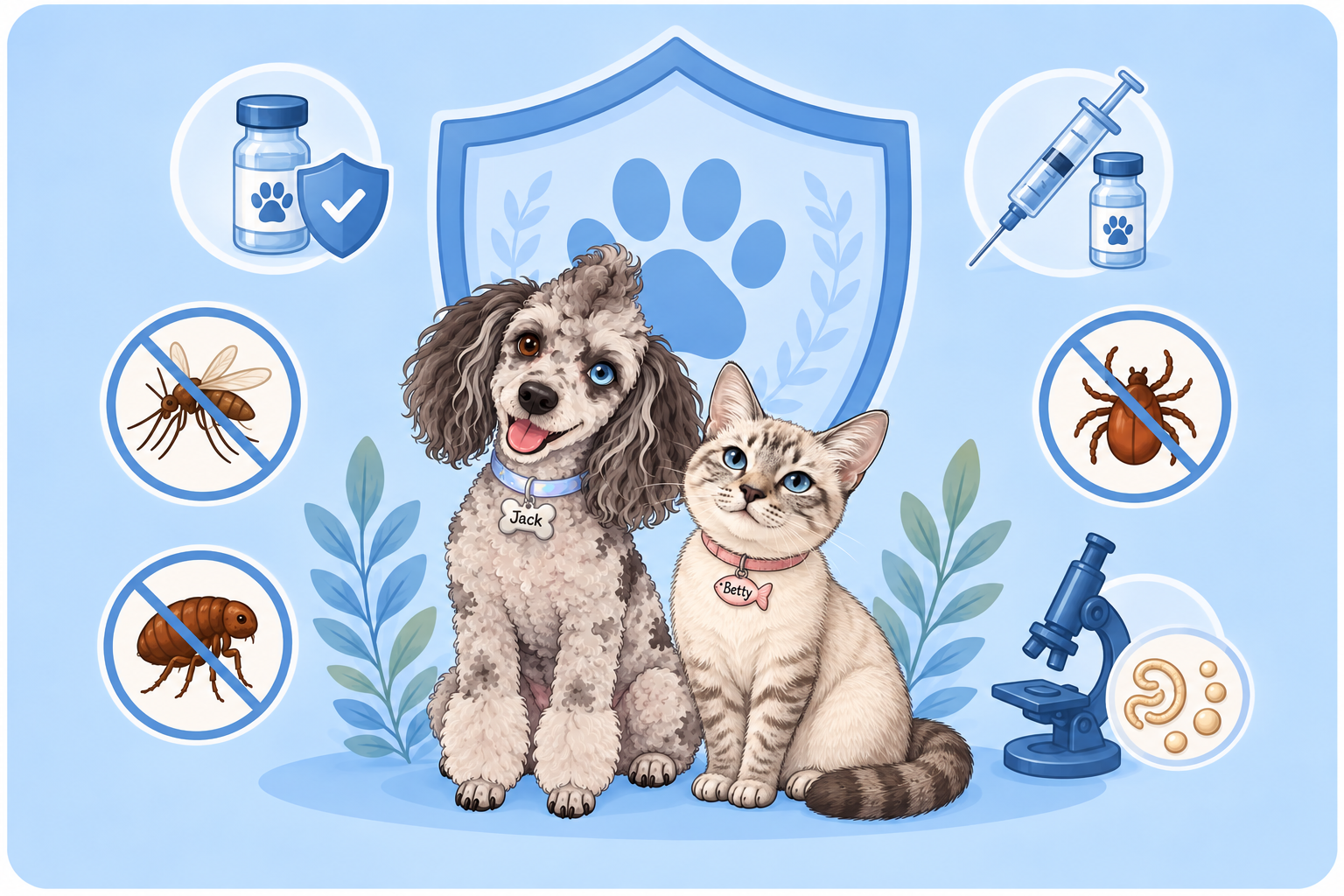
💉 VACCINES & PREVENTIVE CARE FOR DOGS & CATS
Vaccination is one of the most important parts of preventive healthcare.
Vaccines help protect your pet from serious and potentially life-threatening diseases—and some also protect against diseases that can affect people.
Not every pet needs exactly the same vaccines.
Your veterinarian will consider your pet's age, lifestyle, travel, exposure to other animals, health history, and individual risk when creating a vaccination plan.
🐶 DOG VACCINES
🛡️ Core Vaccines
DHLPP
Protects against:
- Distemper
- Hepatitis/Adenovirus
- Parvovirus
- Parainfluenza
- Leptospirosis
Leptospirosis is an important bacterial disease that can be life-threatening and can also infect people. The updated AAHA guidelines classify leptospirosis as a core vaccine for dogs.
🦠 Rabies
Rabies vaccination is an essential part of preventive care and is required by law annually. The initial vaccine is generally given at approximately 12 weeks of age, with subsequent vaccination based on local law and the vaccine used.
🐾 Puppy Series
DHPP: Start at approximately 6–8 weeks of age, then give additional doses every 2–4 weeks until at least 16 weeks of age.
DHLPP/Leptospirosis: Start at approximately 12 weeks of age, with 2 doses 2–4 weeks apart.
🪱 Don't Forget Fecal Testing
Fecal testing is an important part of puppy and adult preventive care. Parasites can be present even when your pet looks completely healthy, and testing may need to be repeated based on your pet's age and risk.
🐕 Lifestyle-Based Vaccines
Some vaccines are especially important depending on your dog's lifestyle and exposure risk.
Bordetella
Recommended for dogs with increased exposure to other dogs, including:
- Boarding
- Daycare
- Grooming
- Dog parks
- Training classes
- Frequent social activities
- Veterinary visits
The frequency of vaccination depends on your dog's individual risk and the vaccine used.
Other lifestyle-based vaccines may include canine influenza and lyme disease, depending on your dog's exposure and geographic location.
🩺 YOUR DOG'S ANNUAL WELLNESS VISIT
An annual wellness visit is much more than just vaccines.
For a healthy adult dog, we commonly recommend:
💉 Rabies
💉 DHLPP
💉 Bordetella — based on lifestyle
🦟 Heartworm testing ± tick-borne disease testing
🪱 Fecal testing
🧪 Dogs 7 Years & Older
For dogs 7 years and older, we recommend annual senior bloodwork to help detect changes before they become obvious.
🐱 CAT VACCINES
🛡️ Core Vaccines
RCP / FVRCP
Protects against:
- FHV-1 — Feline Herpesvirus
- FCV — Feline Calicivirus
- FPV — Feline Panleukopenia Virus
These are core vaccines recommended for cats because these diseases can cause significant illness and are widely distributed.
🦠 Rabies
Rabies vaccination is an essential part of preventive care and is required by law annually. The initial vaccine is generally given at approximately 12 weeks of age.
🦠 Feline Leukemia Virus—FeLV
FeLV vaccination is considered a core vaccine for cats up to 1 year of age because young cats are particularly susceptible to infection.
For adult cats, FeLV vaccination is based on lifestyle and exposure risk, such as outdoor access or contact with cats of unknown FeLV status.
🐾 Kitten Series
RCP/FVRCP: Start at approximately 6 weeks of age and repeat every 3–4 weeks until at least 16-20 weeks of age.
The exact number of doses depends on when vaccination begins.
FeLV testing should be performed before vaccination to determine whether the kitten is already infected or has been exposed to FeLV.
FeLV vaccination can begin as early as 8 weeks of age, with 2 doses 3–4 weeks apart.
In my practice, I typically recommend FeLV/FIV testing at approximately 12 weeks of age, when the kitten is old enough for a more reliable assessment.
I then typically recommend:
- FeLV vaccine at 12 weeks
- Booster at 16 weeks
Some veterinarians recommend testing before vaccination at 8 weeks and repeating the test at 12 weeks, particularly when early exposure is a concern. Your veterinarian can determine the appropriate testing schedule based on your kitten's risk.
🪱 Don't Forget Fecal Testing
Fecal testing is an important part of kitten and adult preventive care. Parasites can be present even when your pet looks completely healthy, and testing may need to be repeated based on your pet's age and risk.
🩺 YOUR CAT'S ANNUAL WELLNESS VISIT
For a healthy adult cat, we commonly recommend:
💉 Rabies
💉 RCP/FVRCP
🦠 FeLV — based on lifestyle and risk
🦟 Heartworm, FIV, and FeLV testing — when appropriate
🪱 Fecal testing
🧪 Cats 7 Years & Older
For cats 7 years and older, we recommend annual senior bloodwork to help detect age-related or underlying disease early.
Even indoor cats benefit from preventive care. Lifestyle can change, and exposure to infectious diseases can occur unexpectedly.
⚠️ Feline Injection-Site Sarcomas
A rare but serious complication associated with vaccination and other injections in cats is an injection-site sarcoma.
These tumors are uncommon, but because they can be aggressive, we take injection sites seriously.
🐱 What Should You Watch For?
After a vaccine or injection, a small lump can occur and may simply represent local inflammation.
However, follow the 3-2-1 rule:
🚨 3 — The lump is still present 3 months after the injection
🚨 2 — The lump is larger than 2 cm
🚨 1 — The lump is increasing in size 1 month after the injection
If any of these occur, contact your veterinarian. Further evaluation, including a biopsy, may be recommended.
Do not be alarmed by this risk. Injection-site sarcomas are uncommon, and vaccination remains an important part of protecting cats from serious disease.
🧪 WHY DO WE RECOMMEND BLOODWORK STARTING AROUND 7 YEARS?
Pets age faster than people, and many diseases can develop before your pet shows obvious symptoms.
Annual senior bloodwork can help detect problems involving:
- Kidneys
- Liver
- Blood cells
- Blood sugar
- Electrolytes
- Other metabolic changes
Early detection gives us more options and often allows us to treat problems before they become advanced.
💉 VACCINE REACTION GUIDELINES
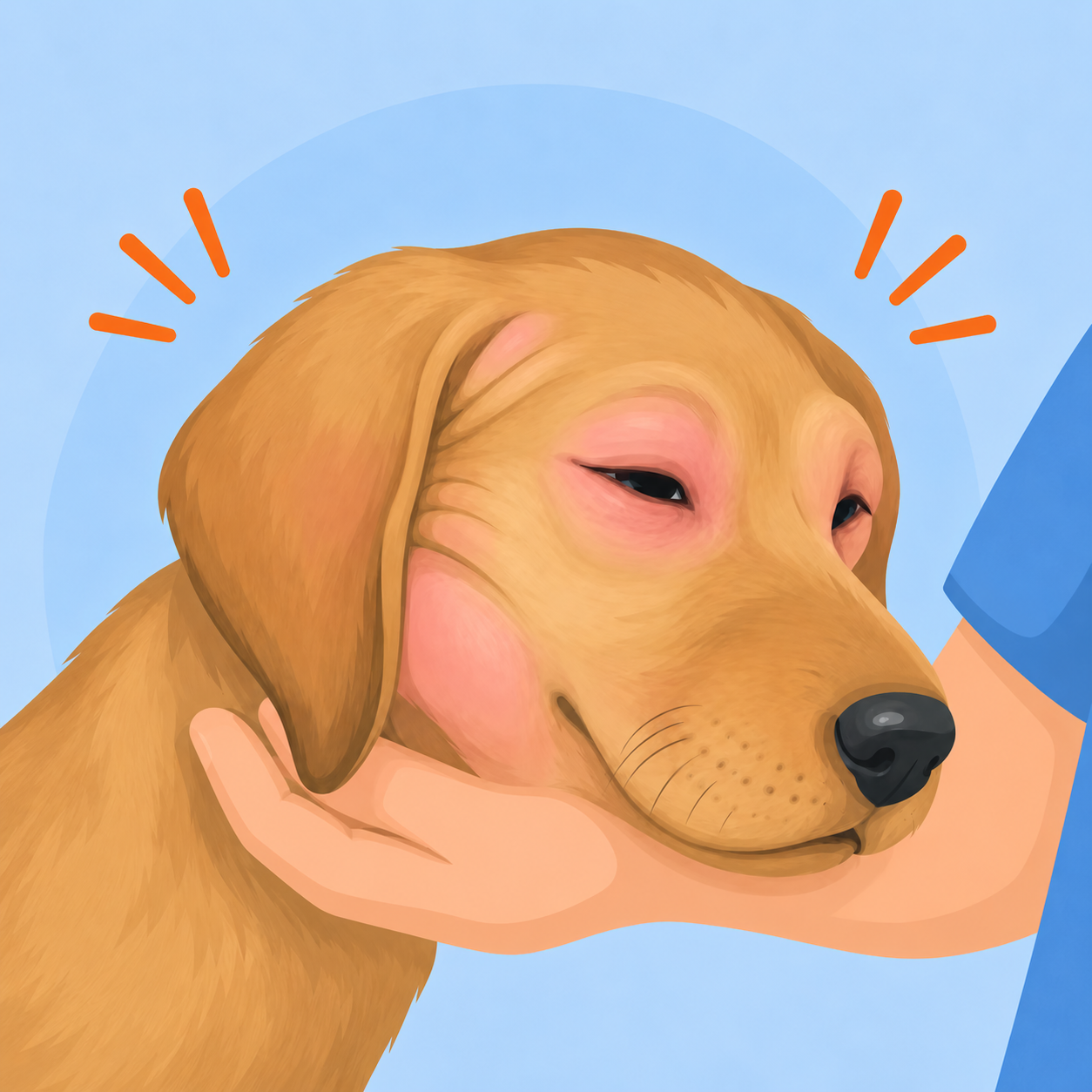
Vaccines are an important part of protecting your pet from serious and potentially life-threatening diseases.
Most pets tolerate vaccines well, but mild, short-term reactions can occur.
Common Mild Reactions
These reactions are usually temporary and may occur within the first several hours after vaccination:
- Injection site: Mild tenderness, swelling, redness, itching, or sensitivity.
- Mild fever: Low-grade fever that resolves on its own.
- Lethargy: Decreased activity, tiredness, or sleeping more than usual.
- Appetite: Mildly decreased appetite or temporary reluctance to eat.
- Respiratory signs: Mild coughing, sneezing, or nasal discharge, particularly after an intranasal vaccine.
These mild reactions should generally improve within 24–48 hours.
When to Contact Your Veterinarian
Contact your veterinarian if:
- Redness, swelling, pain, or discharge at the injection site gets worse rather than better
- Your pet remains very lethargic or is not improving
- Your pet refuses food for an extended period
- You are concerned about any reaction or your pet is acting unusually
🚨 Signs of a Serious Vaccine Reaction
Serious allergic reactions are uncommon but can occur, usually within minutes to several hours after vaccination.
Seek immediate veterinary care if your pet develops:
- Facial swelling or swelling around the eyes or muzzle
- Hives or widespread itching
- Difficulty breathing
- Repeated vomiting or diarrhea
- Weakness, collapse, or severe lethargy
- Pale gums or other signs of poor circulation
What to Do
If your veterinarian has previously instructed you to use Benadryl for your pet during a vaccine reaction:
Benadryl (diphenhydramine) — 1 mg per pound of body weight is the commonly used dose.
- Use only diphenhydramine without additional active ingredients.
Contact your veterinarian immediately or go to the nearest veterinary hospital for evaluation. Do not delay veterinary care, even if Benadryl is given.
🛡️ Preventing Future Reactions
If your pet has previously experienced a vaccine reaction or is considered higher risk, your veterinarian may recommend:
- Premedication with an antihistamine before vaccination
- Separating vaccines into different visits, typically 1–2 weeks apart
- Monitoring your pet in the hospital for a period of time after vaccination
Your veterinarian will determine the safest vaccination plan based on your pet's medical history, age, lifestyle, and previous vaccine reactions.
Mild vaccine reactions are usually temporary and resolve on their own. Serious reactions are uncommon, but knowing the warning signs can help you recognize when your pet needs immediate veterinary care.
❤️ REMEMBER
Vaccines are only one part of preventive healthcare.
A complete wellness plan includes:
Vaccines + parasite prevention + heartworm testing + fecal testing + routine bloodwork + regular wellness examinations
Your pet's vaccination schedule should be individualized based on their age, lifestyle, health, and risk of exposure.
The goal isn't to give every pet every vaccine.
The goal is to give your pet the vaccines they need to stay protected.
📚 Sources
🌐 AAHA Canine Vaccination Guidelines
🌐 AAHA/AAFP Feline Vaccination Guidelines
❓HAVE MORE QUESTIONS?
We’re here to help you keep your furbaby happy, healthy, and thriving! ❤️
For additional pet health information, visit Veterinary Partner by VIN—a trusted resource with veterinarian-written articles.
🔎 Tip: Search “VIN + your question” on Google for easier results, as the website’s search feature can be a little tricky.
📞 And remember, calling us is always free!
If you have questions or concerns about your pet, please don’t hesitate to reach out. We’re happy to help. 🐾