Home Blood Glucose Curves
Learn how to safely monitor your diabetic dog’s blood glucose at home, perform a glucose curve, recognize signs of low blood sugar, and know when to contact your veterinarian.
Dr. Sofia Raldiris
DVM
HOME BLOOD GLUCOSE CURVES
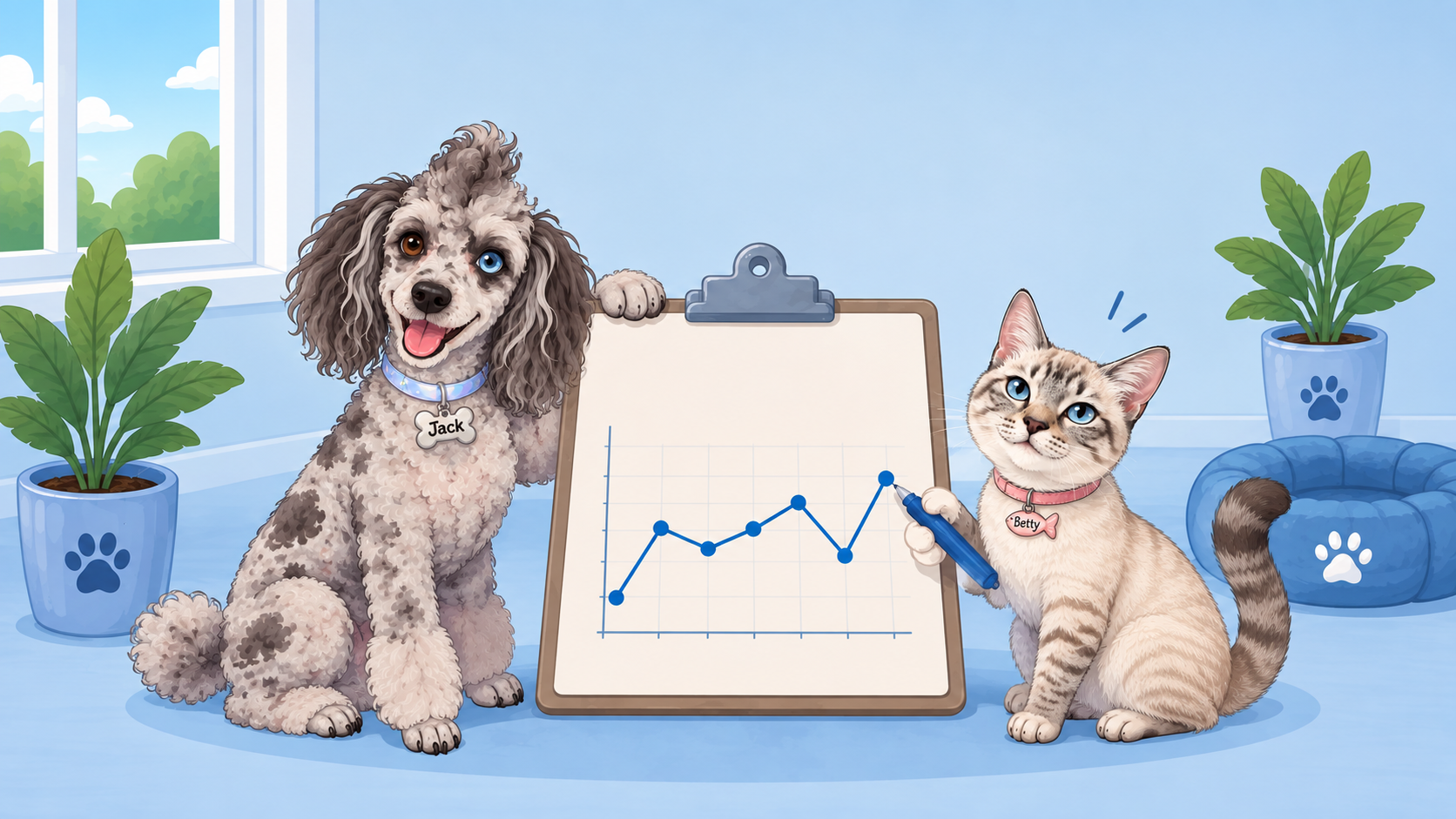
A blood glucose curve helps your veterinary team understand how your pet's blood sugar changes throughout the day, including how low their glucose gets and how well their insulin is working.
Instead of relying on a single glucose reading, a curve shows the pattern of glucose levels before and after insulin. This helps your veterinarian determine whether your pet's current insulin dose and schedule are providing appropriate diabetes control.
Performing a glucose curve at home also allows your pet to remain in a familiar environment and follow their normal feeding and insulin routine.
The goal is not to achieve a "perfect" glucose number. The goal is to keep your pet feeling good, maintain a healthy weight, and avoid dangerous high or low blood sugar.
🌐 This article is a continuation of our guide to Diabetes in Dogs & Cats.
⭐ WHY MONITOR BLOOD GLUCOSE AT HOME?
The goal of a home glucose curve is to see what your dog's blood glucose looks like during a normal day.
Your veterinarian looks at glucose trends together with your pet's clinical signs, including:
- Appetite
- Water consumption
- Urination
- Body weight
- Energy level
- Insulin doses and timing
- Vomiting or diarrhea
- Overall quality of life
Home monitoring provides valuable information about what is happening between veterinary visits and may reduce the stress of repeated hospital visits for glucose testing.
A glucose curve is one piece of the diabetes puzzle—not the whole picture.
Keep the day as normal as possible.
On the day of the curve:
- Feed your dog's usual food and usual amount.
- Follow their normal feeding schedule.
- Give their usual insulin dose, unless your veterinarian has instructed you otherwise.
- Keep their daily routine as normal as possible.
- Have your glucose-monitoring supplies and glucose curve sheet ready.
Stress, changes in food, unusual exercise, illness, or changes in the insulin schedule can all affect blood glucose and make the results more difficult to interpret.
Do not change your dog's insulin dose based on the glucose curve unless your veterinarian specifically instructs you to do so.
🩸HOW TO PERFORM A GLUCOSE CURVE
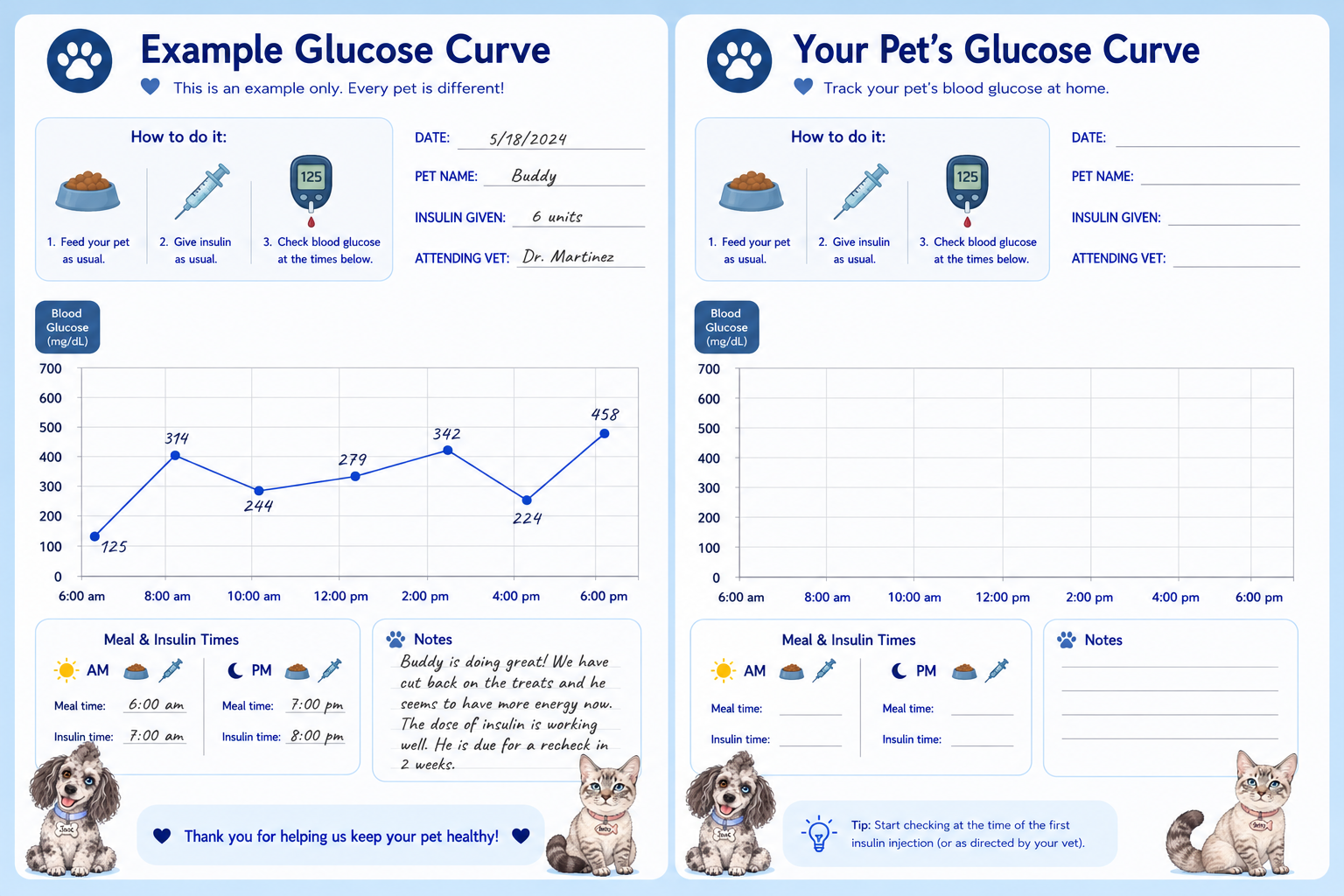
A traditional blood glucose curve involves measuring your pet's glucose repeatedly throughout the day.
1. Baseline Reading — Before Food & Insluin
The first glucose reading is usually taken before breakfast and before insulin is given.
This is your Time 0 or baseline glucose value.
Record:
- Exact time
- Blood glucose level
2. Feed & Give Insulin
After the baseline reading:
- Feed your pet their normal meal.
- Give insulin exactly as prescribed by your veterinarian.
3. Check Blood Glucose Throughout the Day
For many pets receiving insulin twice daily, glucose may be checked approximately every 2 hours for 12 hours.
Your veterinarian may recommend a different schedule depending on your pet's insulin, diabetes control, and individual needs.
Record the exact time and glucose value for every reading.
📱 WAYS TO MONITOR BLOOD GLUCOSE
There are two common ways to monitor your pet's blood glucose at home: continuous glucose monitors (CGMs) and blood glucose meters.
📱 Continuous Glucose Monitor (CGMs)
A continuous glucose monitor (CGM) uses a small sensor placed under the skin to measure glucose in the fluid surrounding the cells.
Rather than requiring repeated blood samples, a CGM provides frequent glucose readings and allows your veterinary team to see glucose trends throughout the day.
CGMs can be especially helpful when:
- Starting or adjusting insulin
- Investigating unexplained glucose fluctuations
- Monitoring pets that become stressed by blood sampling
- Collecting glucose information over several days
CGM options:
FreeStyle Libre
- By Abbott
- Was designed for human diabetes management but is commonly used off-label in veterinary patients.
- It can provide frequent glucose readings and show trends throughout the day. However, it may occasionally read falsely low in dogs and cats.
- If the Libre shows a low glucose reading, confirm it with a blood glucose meter recommended by your veterinarian before making any changes to insulin.

🌐 GluCurve Pet CGM
- By ALR Technologies
- Is specifically developed for diabetic dogs and cats.
🌐 Adapet CGM
- Is specifically designed for diabetic dogs and cats.
🌐 FurCarer – Pet Care
- Is specifically designed for diabetic dogs and cats.
CGMs provide valuable information about glucose trends, but the results should always be interpreted alongside your pet's clinical signs and overall diabetes management.
🩸 Blood Glucose Meters
A traditional glucometer uses a small blood sample to measure your pet's glucose directly.
Your veterinary team can teach you how to safely collect a sample and use the meter.
Common sampling locations may include:
- Ear
- Gum
- Non-weight-bearing paw pad
- Elbow callus
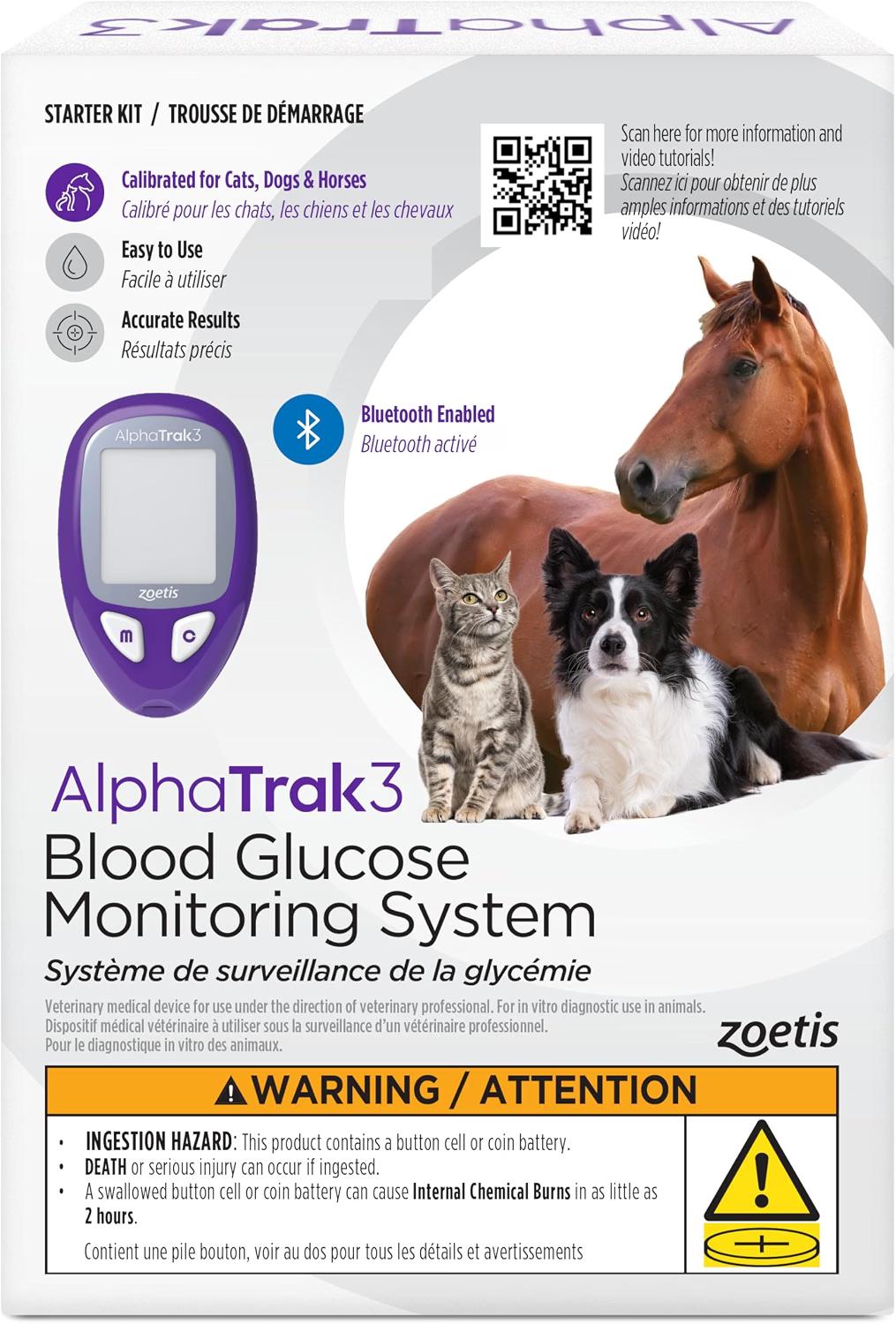
A veterinary-calibrated glucometer is preferred when available because human glucometers may produce less reliable results in dogs and cats.
Your veterinarian may recommend a pet-specific meter such as AlphaTrak 3.
💡 Tops For Success
Home blood glucose testing can take a little practice.
- Stay calm and patient.
- Use the same sampling location whenever possible.
- Have everything prepared before starting.
- Reward your pet after successful readings when appropriate.
- Record the exact time and glucose value.
- Avoid repeatedly poking your pet if you cannot obtain a sample.
- Contact your veterinary team if you are having difficulty.
The goal is to make diabetes monitoring as stress-free as possible for both you and your pet.
📝WHAT SHOULD I RECORD?
Along with glucose readings, record anything that could help your veterinarian understand changes in your pet's blood glucose.
Keep track of:
- Time of each reading
- Glucose level
- Food eaten and amount
- Insulin dose and time given
- Water consumption
- Appetite
- Urination
- Activity level
- Vomiting or diarrhea
- Any unusual behavior
- Any possible signs of low blood sugar
These details help your veterinarian understand why the glucose changed—not just what the number was.
📊 Look For Patterns, Not Just Numbers
Blood glucose can vary from day to day.
A single high or low reading does not necessarily mean that your pet's insulin dose needs to change.
Your veterinarian will evaluate the overall glucose pattern, along with your pet's clinical signs, insulin regimen, body weight, and other monitoring information before making treatment decisions.
Never increase, decrease, or give extra insulin based on a single glucose reading or without veterinary guidance.
🚨 WATCH FOR LOW BLOOD SUGAR
Hypoglycemia means that your pet's blood sugar is dangerously low.
This can happen if there is too much insulin relative to the amount of food or glucose available.
Signs of hypoglycemia may include:
- Weakness
- Extreme tiredness
- Shaking or trembling
- Unusual behavior
- Wobbliness or difficulty walking
- Confusion
- Seizures
- Collapse
- Loss of consciousness
Hypoglycemia is an emergency.
If you notice signs of low blood sugar, contact your veterinarian or an emergency veterinary hospital immediately.
If your veterinarian has provided specific instructions for treating hypoglycemia at home, follow those instructions.
If your pet is conscious and able to swallow, you may rub a small amount of Vetoquinol Nutri-Cal or Karo syrup/corn syrup on the gums while contacting an emergency veterinarian.

Never force anything into the mouth of a pet who is unconscious, having a seizure, or unable to swallow.
⚠️ NEVER CHANGE INSULIN BASED ON ONE READING
A high glucose reading does not automatically mean your pet needs more insulin.
Giving additional insulin without veterinary guidance can cause dangerous hypoglycemia.
Before making an insulin adjustment, your veterinarian may consider:
- Glucose trends
- Lowest glucose value during the curve
- Timing of glucose changes
- Appetite
- Water consumption
- Urination
- Body weight
- Energy level
- Insulin dose and timing
- Other medical conditions
- Fructosamine or other testing when appropriate
Always follow your veterinarian's instructions when adjusting insulin.
🩺WHEN SHOULD A GLUCOSE CURVE BE DONE?
Your veterinarian may recommend glucose monitoring:
- After starting insulin
- After changing the insulin dose
- When diabetes is not regulating as expected
- When your pet's clinical signs return
- When hypoglycemia is suspected
- When glucose readings are unexpectedly high or low
- Periodically during long-term diabetes management
The timing and frequency of monitoring will depend on your pet's individual needs.
❤️ TREAT THE PET, NOT JUST THE NUMBER
Diabetes management is not about making every glucose reading "normal."
The goal is to:
- Control excessive thirst and urination
- Maintain a healthy, stable weight
- Maintain a consistent appetite
- Avoid dangerous hypoglycemia
- Prevent complications of poorly controlled diabetes
- Help your pet feel good
- Maintain a good quality of life
A pet may occasionally have a higher-than-ideal glucose reading and still be doing well overall.
Your pet's quality of life matters just as much as the glucose number on the screen.
Consistent meals + consistent insulin + regular monitoring + close communication with your veterinarian = better diabetes management.
🛒 RECOMMENDED PET HEALTH PRODUCTS
There are many health-monitoring products available for pets, but not all products are appropriate for every situation. We’ve selected options that may be helpful tools for monitoring your pet’s health at home.
🌐 View Our Recommended Pet Health Products
Remember: Home monitoring can provide valuable information, but it does not replace veterinary supervision. Your veterinarian should guide your pet’s diabetes monitoring plan and help interpret glucose results when needed.
❓ HAVE MORE QUESTIONS?
We’re here to help you keep your furbaby happy, healthy, and thriving! ❤️
For additional pet health information, visit Veterinary Partner by VIN—a trusted resource with veterinarian-written articles.
🔎 Tip: Search “VIN + your question” on Google for easier results, as the website’s search feature can be a little tricky.
📞 CALLING US IS ALWAYS FREE
If you have questions or concerns about your pet, please don’t hesitate to reach out. We’re happy to help. 🐾