Nutrition & Healthy Treats for Dogs & Cats
Learn how to choose a complete and balanced diet for your dog or cat, safely introduce new foods, and choose healthy treats while avoiding foods that can be harmful to pets.
Dr. Sofia Raldiris
DVM
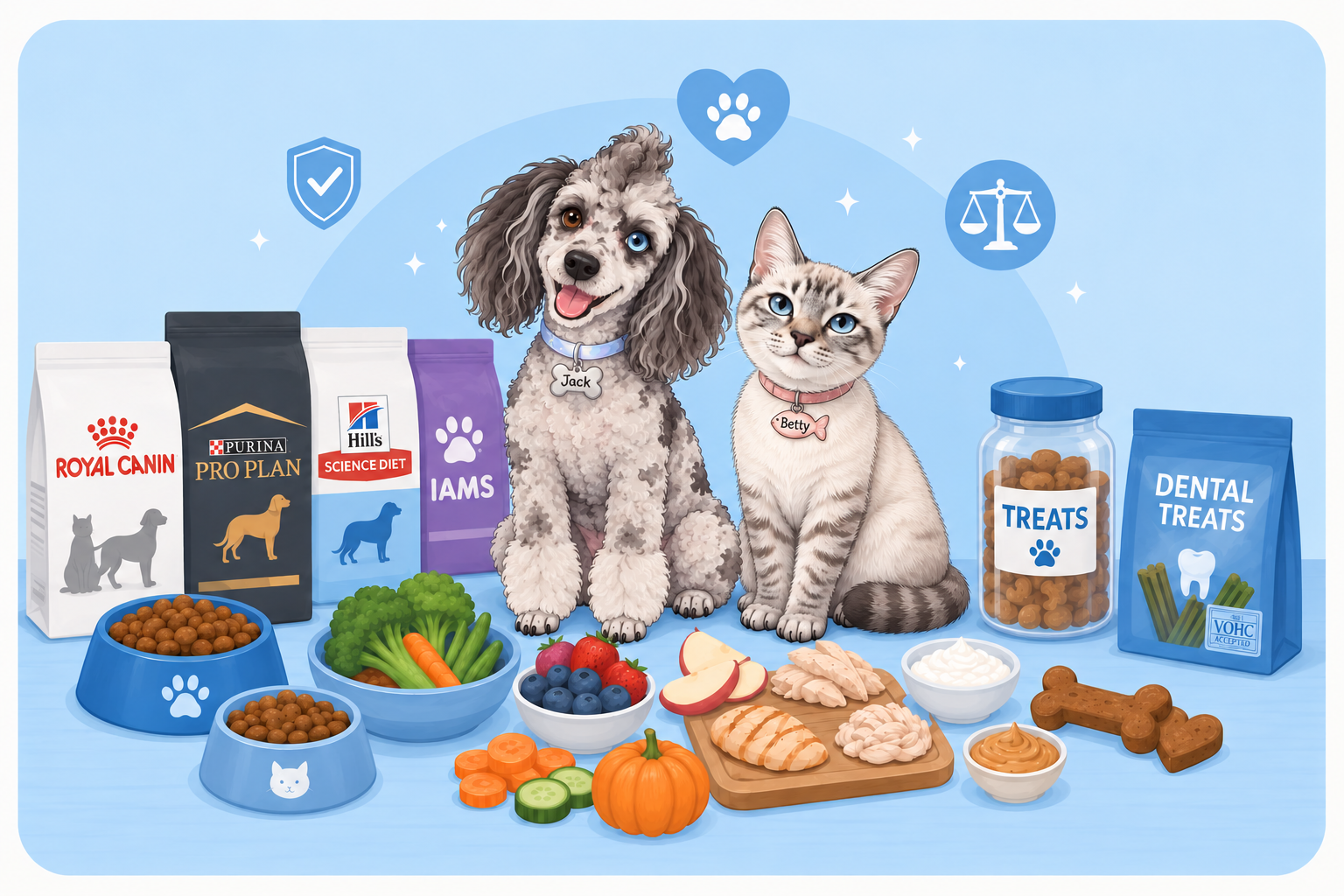
NUTRITION & HEALTHY TREATS FOR DOGS & CATS
A healthy diet is an important part of preventive care.
The right food depends on your pet's species, age, activity level, body condition, and medical needs.
🥣 CHOOSING THE RIGHT DIET
When choosing a pet food, look beyond the ingredient list.
One of the most important things to check is the AAFCO Nutritional Adequacy Statement.
🌐 AAFCO Nutritional Adequacy Statement
You can find this statement on the back or side of the package.
🔎 AAFCO: Look for “Complete & Balanced”
It should indicate that the food is:
- Appropriate for the correct species — dog or cat
- Appropriate for your pet's life stage
- Complete and balanced for that life stage
You may see one of these statements:
“Animal feeding tests using AAFCO procedures substantiate that…”
→ The food's nutritional adequacy was supported through AAFCO feeding trials.
“Formulated to meet the nutritional levels established by the AAFCO Dog/Cat Food Nutrient Profiles…”
→ The food was formulated to meet AAFCO's nutritional requirements.
“Intermittent or supplemental feeding only”
→ This food is not intended to be your pet's sole diet and is better suited as a treat, topper, or supplement.
Cats have unique nutritional requirements. Never use dog food as your cat's primary diet.
⭐ Over-the-Counter Foods
More expensive does not automatically mean better.
For healthy dogs and cats, brands I commonly recommend include:
These companies have extensive nutritional research and quality-control programs.
The specific formula should be chosen based on your pet's individual needs.
🛒 Looking for nutrition or treat products for your pet? Explore some of our recommended options below.
🚫 Why I Don't Recommend Grain-Free Diets For Dogs & Cats
For most healthy dogs and cats, there is no proven nutritional benefit to avoiding grains.
In dogs, the FDA has investigated a potential association between certain diets—many labeled grain-free and containing high amounts of peas, lentils, other legumes, and/or potatoes—and dilated cardiomyopathy (DCM).
For cats, taurine is an essential nutrient, and taurine deficiency can cause serious heart disease. A properly formulated, complete and balanced cat food should provide adequate taurine.
If your pet is currently eating a grain-free diet, talk with your veterinarian before making a diet change.
🥩 What About Raw Food?
Raw diets may seem more natural, and some owners report improvements in their pet’s coat or stool quality. However, these potential benefits do not outweigh the risks.
Raw meat can carry harmful bacteria and parasites such as Salmonella, E. coli, and Listeria, which can affect your pet and spread to people in your household.
Raw diets can also be nutritionally unbalanced, especially when prepared at home.
Our recommendation: We do not recommend raw diets because the infection and nutritional risks are not worth it when safe, complete, and balanced alternatives are available.
🍳 Home-Cooked Diets
Home-cooked diets can be appropriate for some pets, but recipes found online or in books are often not nutritionally complete and balanced.
If you want to feed a home-cooked diet, I recommend:
- Balance IT — a resource for creating balanced home-prepared diets
- JustFoodForDogs or ChiDog— home-prepared diet options
- A board-certified veterinary nutritionist, especially for pets with medical conditions
🌐 Balance It
🌐 JustFoodForDogs – Fresh Pet Food
🌐 Chi Dog – Fresh Pet Food
For guidance on creating nutritionally balanced homemade diets for dogs and cats, visit Balance It, a veterinary nutrition resource developed to help pet owners formulate complete and balanced recipes.
Once a recipe is formulated, follow it exactly, including all recommended supplements.
Changing ingredients or leaving out supplements can make the diet nutritionally incomplete.
🔄 CHANGING YOUR PET'S FOOD
Avoid changing your pet's food suddenly. A gradual transition can help reduce the risk vomiting, diarrhea, and food refusal.
Recommended Transition
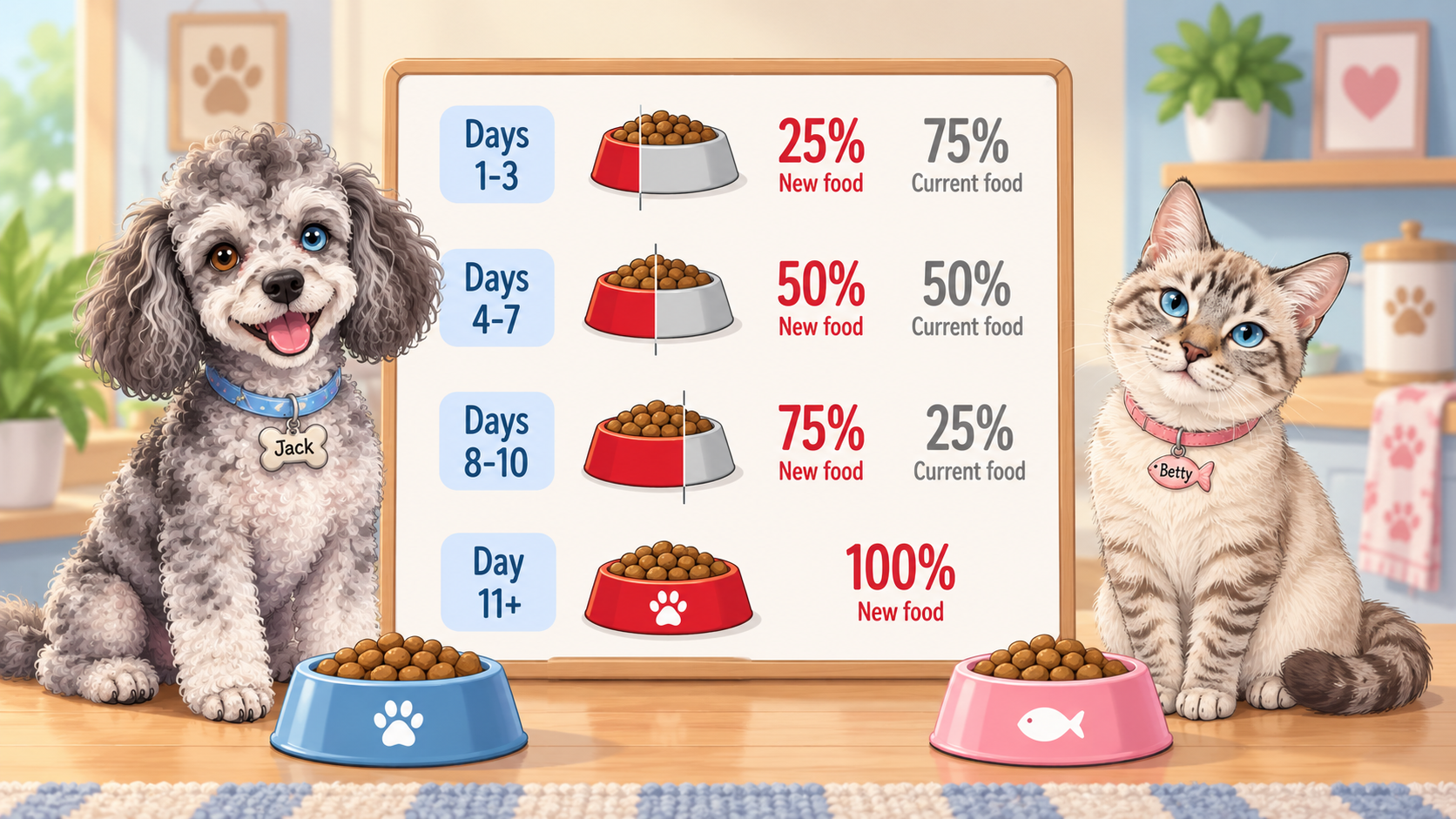
Some pets, especially those with sensitive stomachs, may need a slower transition.
If your pet develops significant vomiting or diarrhea, refuses to eat, or does not tolerate the new food, contact your veterinarian.
🐾 HEALTHY TREATS
Treats can be a great way to reward your pet, but they should be small and given in moderation.
As a general rule, treats and other extras should make up no more than 10% of your pet's daily calories.
🐶 Healthy Options for Dogs
Small amounts of:
- Apples — remove seeds and core
- Bananas
- Blueberries
- Strawberries
- Raspberries
- Watermelon — remove seeds and rind
- Carrots
- Green beans
- Broccoli
- Cucumber
- Zucchini
- Plain pumpkin
- Cooked sweet potato
- Cooked egg
- Plain cooked chicken or lean turkey
- Plain, unsweetened yogurt
- Peanut butter without xylitol
🐱 Healthy Options for Cats
Cats are obligate carnivores, so protein-based treats are generally the best choice.
Small amounts of:
- Plain cooked chicken
- Plain cooked turkey
- Cooked egg
- Plain cooked fish
- Low-calorie cat treats
Cats do not require fruits or vegetables in their diet.
🛍️ What About Packaged Treats?
Commercial treats can be a healthy part of your pet's diet when chosen carefully.
Look for treats that are:
- Low in calories
- Appropriate for your pet's species and size
- Not excessively high in fat, sugar, or sodium
- Made with simple, appropriate ingredients
Check the calories per treat when available—small treats can add up quickly.
Treats do not need to be “complete and balanced” because they are meant to supplement your pet's regular diet.
For dental treats, look for the VOHC seal when possible.
⭐ Remember
“Natural,” “premium,” and “human-grade” do not automatically mean healthier.
For pets with diabetes, obesity, food allergies, kidney disease, pancreatitis, urinary disease, or other medical conditions, ask your veterinarian which treats are appropriate.
🛒 Looking for nutrition or treat products for your pet? Explore some of our recommended options below.
⚖️ IS YOUR PET OVERWEIGHT?
If your pet is overweight, visit our Pet Obesity guide for helpful tips on healthy portions, weight loss, and reaching a healthier weight.
🌐 Pet Obesity guide
⚠️ FOODS YOU SHOULD NEVER GIVE YOUR PET
🚫 Chocolate
🚫 Grapes & raisins
🚫 Macadamia nuts
🚫 Onions, garlic, chives & leeks
🚫 Xylitol/birch sugar
🚫 Alcohol
🚫 Coffee, tea & caffeine
🚫 Raw yeast dough
🚫 Very salty, fatty, or heavily seasoned foods
Always check peanut butter and other products for xylitol before giving them to your dog.
🦴 What About Bones & Chews?
Avoid cooked or raw bones, antlers, hooves, and extremely hard chews, as they can cause broken teeth, choking, or intestinal obstruction.
A good rule: If you cannot bend or slightly dent it with your fingernail, it may be too hard for your pet's teeth.
For a harder chew option, Dogwood is a durable, non-splintering alternative to natural sticks and bones.
🛒 Looking for nutrition or treat products for your pet? Explore some of our recommended options below.
❤️ REMEMBER
The best diet is not necessarily the most expensive diet or the one with the longest ingredient list.
Choose a complete and balanced diet appropriate for your pet's species, life stage, body condition, and medical needs.
Healthy treats are still treats—not a replacement for a complete and balanced diet.
When in doubt, ask your veterinarian before changing your pet's diet or introducing new treats.
🛒 RECOMMENDED NUTRITION PRODUCTS
There are many nutrition products and supplements available for dogs and cats, but not all products provide the same benefits. We’ve selected products that we believe can be helpful additions to your pet’s nutrition and wellness routine.
🌐 View Our Recommended Nutrition Products
Remember: Supplements and other nutrition products should complement—not replace—a complete and balanced diet. If your pet has a medical condition or specific nutritional needs, consult your veterinarian before adding new supplements or changing their diet.
❓HAVE MORE QUESTIONS?
We’re here to help you keep your furbaby happy, healthy, and thriving! ❤️
For additional pet health information, visit Veterinary Partner by VIN—a trusted resource with veterinarian-written articles.
🔎 Tip: Search “VIN + your question” on Google for easier results, as the website’s search feature can be a little tricky.
📞 And remember, calling us is always free!
If you have questions or concerns about your pet, please don’t hesitate to reach out. We’re happy to help. 🐾