Recovery After a Dental Cleaning
Learn how to care for your pet after a professional dental cleaning, including feeding instructions, recovery after anesthesia, care following tooth extractions, and tips for maintaining healthy teeth and gums.
Dr. Sofia Raldiris
DVM
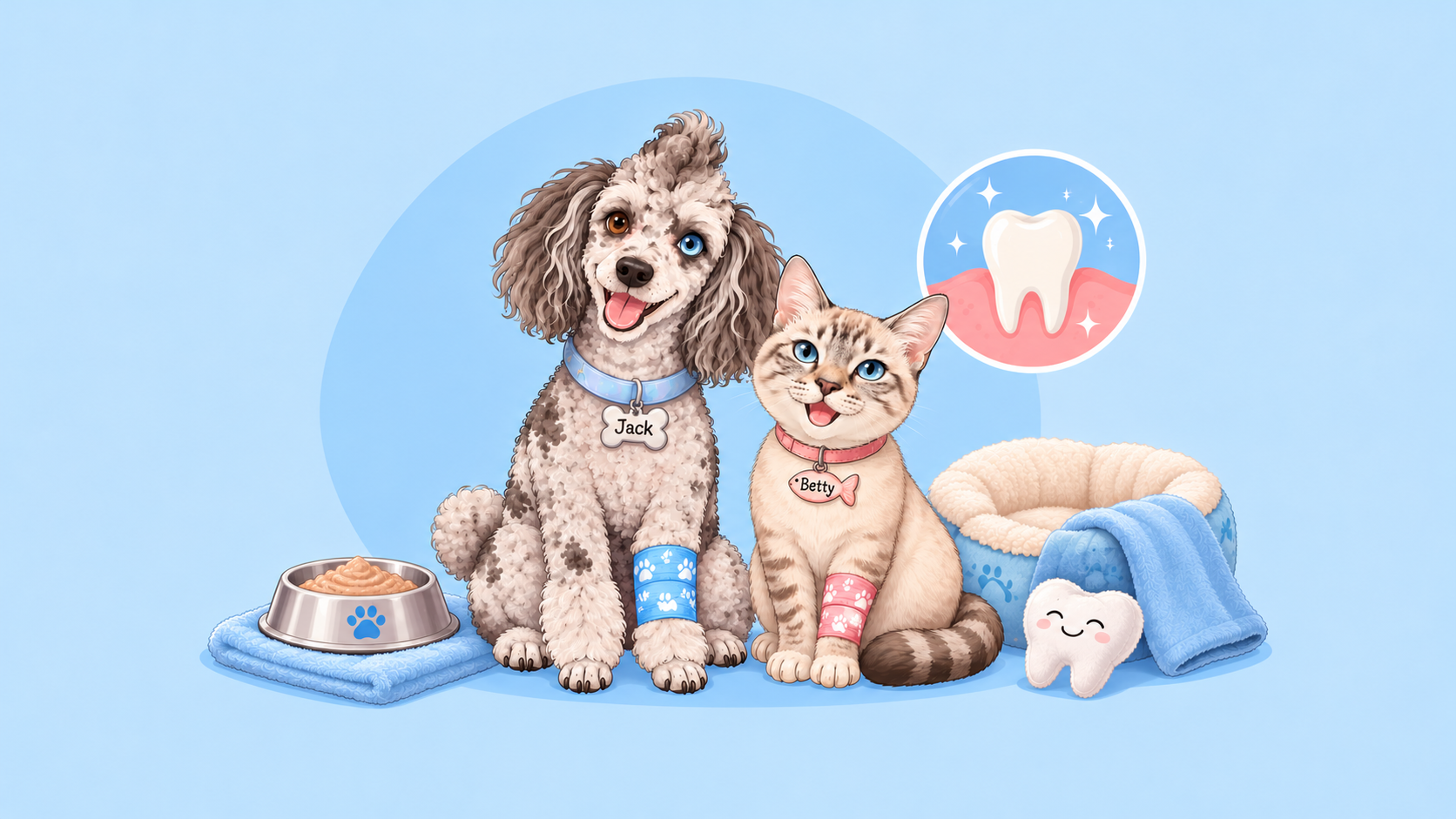
🦷 RECOVERY AFTER A DENTAL CLEANING
After a professional dental cleaning, your pet's gums may be sore for several hours or days. If your pet underwent anesthesia or had teeth extracted, additional care may be needed during recovery.
Follow your veterinarian's discharge instructions to help your pet recover comfortably and maintain good oral health.
🏡 HOME CARE INSTRUCTIONS
🛏️ Activity Restriction
Avoid running, jumping, and climbing for the first 24 hours after the procedure while your pet recovers from anesthesia.
🍽️ Feeding and Water
- Offer small amounts of food and water 2–3 times during the first 24–48 hours after your pet has recovered from anesthesia.
- If no teeth were extracted, your pet can generally return to their regular diet as tolerated.
- If teeth were extracted, offer canned food or moistened dry food for 3–7 days, depending on the severity of the dental disease and your veterinarian's recommendations.
- If most or all of your pet's teeth were removed, they may need to remain on a soft-food diet long-term. Many pets adjust very well to eating canned or softened food, even after losing all their teeth!
- Most pets can return to eating dry food after healing.
Follow any specific dietary instructions provided by your veterinary team.
🧸 Toys and Chews
If your pet had teeth extracted, avoid toys, chew treats, bones, and anything hard that requires chewing for 10–14 days after the procedure, or until your veterinarian confirms the extraction sites have healed.
This helps prevent irritation, bleeding, or disruption of the healing tissues.
💊 Medications
Give all prescribed medications exactly as directed.
If your pet experiences repeated or excessive vomiting, diarrhea, or refuses medication, contact your veterinarian.
⚠️ Never give human pain medications unless specifically instructed by your veterinarian.
🪥 MAINTAINING YOUR PET'S DENTAL HEALTH
Now that those pearly whites are clean and sparkling, let's keep them that way for as long as possible!
The goal is to maintain your pet's newly cleaned teeth and healthy gums, slow the buildup of plaque and tartar, and help prevent dental disease from returning.
Consistent home dental care can reduce the likelihood of needing another dental cleaning or procedure in the near future.
Daily dental care helps slow the progression of dental disease and maintain healthy teeth and gums.
🌐 Learn how to maintain your pet’s oral health, visit our Dental Health in Dogs and Cats article.
🚨 WHEN TO CONTACT YOUR VETERINARIAN
Contact your veterinarian if you notice:
- Persistent bleeding or red, inflamed gums.
- Bad breath that persists or worsens.
- Mouth sensitivity or signs of pain.
- Loose or missing teeth.
- Pawing at the mouth.
- Difficulty chewing or eating.
- Loss of appetite.
These signs may indicate dental disease or another oral health problem that requires evaluation.
🩺 FOLLOW-UP AND PREVENTIVE CARE
Schedule a follow-up appointment 10–14 days after the procedure, as recommended by your veterinary team.
Your pet should also have another dental assessment in approximately 6 months, according to your veterinarian's recommendation. Regular dental examinations and daily home care help identify problems early and maintain long-term oral health.
❓HAVE MORE QUESTIONS?
We’re here to help you keep your furbaby happy, healthy, and thriving! ❤️
For additional pet health information, visit Veterinary Partner by VIN—a trusted resource with veterinarian-written articles.
🔎 Tip: Search “VIN + your question” on Google for easier results, as the website’s search feature can be a little tricky.
📞 And remember, calling us is always free!
If you have questions or concerns about your pet, please don’t hesitate to reach out. We’re happy to help. 🐾