Urinary Blockage in Cats
Learn to recognize the warning signs of urinary blockage in cats and understand why prompt veterinary care can be lifesaving.
Dr. Sofia Raldiris
DVM
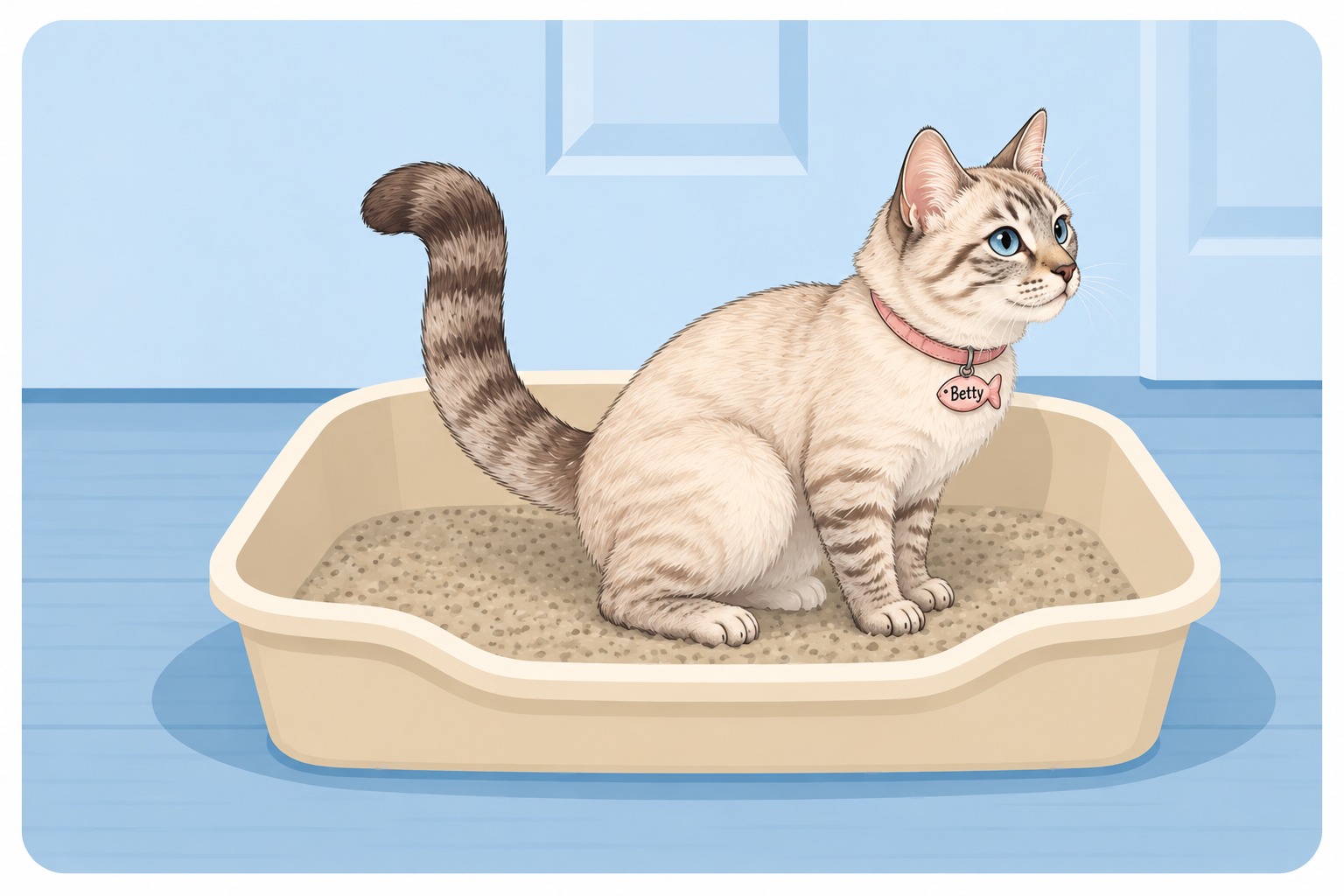
🐱 URINARY BLOCKAGE IN CATS
A urinary blockage occurs when a cat cannot pass urine through the urethra. This is a life-threatening emergency that requires immediate veterinary care.
Male cats are at higher risk because their urethra is narrower, but any cat can develop a urinary obstruction.
If your cat repeatedly tries to urinate and produces little or no urine, do not wait—seek veterinary care immediately.
🌐 Learn more: Urinary Tract Disease in Cats
🚨 WARNING SIGNS
A blocked cat may:
- Repeatedly visit the litter box or strain to urinate
- Producing only drops of urine or no urine
- Cry, appear painful, or excessively lick the urinary area
- Hvae blood in the urine
- Vomit, stop eating
- Hide, or become weak, lethargic or show unusual behavior
Straining with little or no urine is one of the most important warning signs.
Cats may appear constipated because they strain in the litter box. If you are unsure whether your cat is trying to urinate or defecate, have them evaluated immediately.
If you suspect a urinary blockage, do not wait until tomorrow. A blockage can become fatal.
Early treatment can make a critical difference.
🩺 WHY A BLOCKAGE IS SO DANGEROUS
When urine cannot leave the bladder, waste products and electrolytes begin to build up in the bloodstream. This can lead to:
- Kidney damage
- Severe dehydration
- Dangerous electrolyte abnormalities
- Abnormal heart rhythms
- Bladder rupture
- Death
The longer the obstruction remains, the greater the risk.
A blockage cannot be safely diagnosed at home. Veterinary examination and testing are needed.
🔍 WHAT CAN CAUSE A BLOCKAGE?
A blockage can occur when material prevents urine from passing through the urethra, including:
- Mucus and inflammatory material
- Crystals
- Urinary stones
- Urethral swelling or inflammation
- Other conditions that interfere with urine flow
Testing can help determine the underlying cause and how to reduce the risk of recurrence.
🏥 WHAT HAPPENS AT THE VETERINARY HOSPITAL?
The first priority is to restore urine flow and stabilize your cat.
Treatment may include:
Blood work & Testing
Blood work evaluates kidney function and electrolytes. Urinalysis, urine culture, and X-rays may also be recommended to identify crystals, stones, infection, or other contributing problems.
Relieving the blockage
A urinary catheter is typically placed under sedation or anesthesia to relieve the obstruction, empty the bladder, and restore urine flow.
Hospitalization
Approximately 48 hours of hospitalization with the catheter in place is often recommended.
During this time, your cat can receive IV fluids, pain control, and supportive care while urine production, kidney values, and electrolytes are monitored.
Cats can re-block shortly after the catheter is removed, making the first few days especially important.
Surgery
Some cats require surgery if catheterization cannot relieve the blockage or if stones need to be removed.
Cats with recurrent blockages may sometimes benefit from a perineal urethrostomy (PU) to create a wider urinary opening.
If Hospitalization Is Not Possible
We understand that emergency care can be expensive. The blockage still needs to be relieved, even when finances are a concern.
If your veterinarian determines that outpatient care is appropriate, your cat may continue treatment at home with medications and very close monitoring. However, going home without the recommended hospitalization carries a higher risk of re-blocking.
If your cat stops producing urine, strains again, vomits, becomes weak, or appears painful, return to a veterinary hospital immediately.
💛 PREVENTING ANOTHER BLOCKAGE
A previous urinary blockage increases the risk of future episodes, so prevention is an important part of treatment.
After going home:
- Monitor urine production closely.
- Give all medications exactly as prescribed.
- Encourage water intake.
- Keep litter boxes clean and easily accessible.
- Maintain a calm, predictable environment.
- Follow your veterinarian's recheck recommendations.
🍽️ Therapeutic Urinary Diets
For cats with urinary disease or a history of blockage, your veterinarian may recommend a therapeutic urinary diet to help manage urine concentration, mineral balance, and crystal or stone formation.
Common options include:
- Royal Canin Urinary SO or Urinary SO + Calm
- Hill's Prescription Diet c/d Multicare or c/d Multicare Stress
- Purina Pro Plan Veterinary Diets UR Urinary St/Ox
For cats prescribed a therapeutic diet, consistency matters. Switching to a regular diet may increase the risk of crystal or stone formation and another blockage.
Some cats may need a therapeutic urinary diet long-term or lifelong, depending on their individual condition. Preventing another blockage can also help avoid the significant cost and risks associated with repeat emergency treatment.
💧 Water & Environment
Encourage water intake through wet food, multiple water sources, or a water fountain when appropriate.
A clean litter-box environment and reducing stress can also support long-term urinary health.
The goal is not just to treat the blockage—it is to prevent the next one.
🛒 RECOMMENDED CAT CARE PRODUCTS
Small changes at home can help support a healthy litter-box routine and reduce environmental stress.
🌐 View Recommended Cat Essentials
🌐 View Recommended Anxiety & Stress Support Products
These products are intended to support your cat’s environment and daily care—they do not replace veterinary evaluation or treatment.
❓HAVE MORE QUESTIONS?
We’re here to help you keep your furbaby happy, healthy, and thriving! ❤️
For additional pet health information, visit Veterinary Partner by VIN—a trusted resource with veterinarian-written articles.
🔎 Tip: Search “VIN + your question” on Google for easier results, as the website’s search feature can be a little tricky.
📞 And remember, calling us is always free!
If you have questions or concerns about your pet, please don’t hesitate to reach out. We’re happy to help. 🐾