Urinary Tract Disease in Cats
Learn to recognize the signs of urinary tract disease in cats, understand common causes, and know when urinary problems require immediate veterinary care.
Dr. Sofia Raldiris
DVM
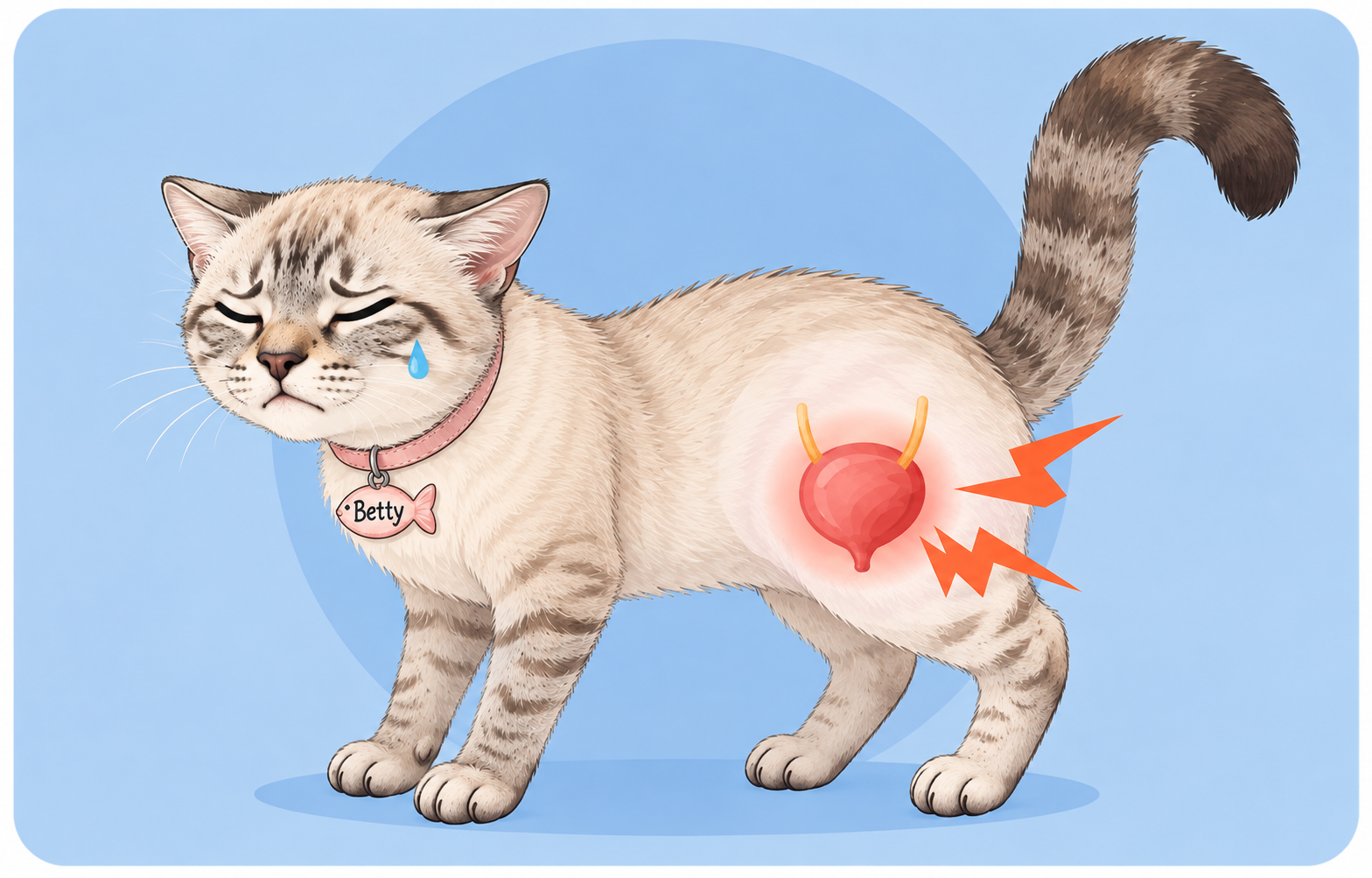
🐱 URINARY TRACT DISEASE IN CATS
Urinary problems are common in cats, but they can have many different causes.
Bladder inflammation, urinary stones, infections, kidney disease, stress, and other medical conditions can cause very similar signs. Because of this, testing is often needed to determine what is actually happening.
Most importantly, some urinary problems can become life-threatening emergencies, especially when a cat cannot pass urine.
🔍 SIGNS OF URINARY TRACT DISEASE
Watch for changes in your cat's normal litter box habits, including:
- Straining or repeatedly attempting to urinate
- Frequent trips to the litter box
- Producing only small amounts of urine
- Producing little to no urine
- Blood in the urine
- Urinating outside the litter box
- Excessive licking around the urinary opening
- Crying or vocalizing while urinating
- Vomiting, nausea, or decreased appetite
Straining in the litter box can sometimes be mistaken for constipation. If you are unsure whether your cat is trying to urinate or defecate, it is safest to have your cat evaluated by a veterinarian.
🩺 WHAT CAUSES URINARY PROBLEMS IN CATS?
Urinary signs can have several different causes, including:
🦠 Urinary Tract Infections
Bacterial urinary tract infections can cause inflammation and discomfort when urinating.
However, not every cat with urinary symptoms has a urinary tract infection. A urine culture may be recommended to determine whether bacteria are actually present and whether antibiotics are appropriate.
🔥 Bladder Inflammation
One of the most common causes of urinary signs is feline idiopathic cystitis (FIC). In many cats, no specific underlying cause can be identified even after extensive testing.
FIC causes painful bladder inflammation and can be associated with stress and changes in the home environment or routine. Household changes, other pets, and litter box issues may contribute to flare-ups.
🌐 Learn More About Inappropriate Urination in Cats
🪨 Bladder Stones or Crystals
Minerals can form crystals or stones within the urinary tract. These can irritate the bladder and, in some cases, contribute to a urinary blockage.
The two most common types of bladder stones in cats are struvite and calcium oxalate, and treatment depends on the type of stone present.
🩺 Other Medical Conditions
Kidney disease, tumors, anatomical abnormalities, and other conditions can also cause urinary changes.
This is why your cat's symptoms alone cannot tell us exactly what is wrong, which is why veterinary evaluation is important.
🧪 HOW IS URINARY TRACT DISEASE DIAGNOSED?
Your veterinarian may recommend different tests depending on your cat’s history, symptoms, physical examination, and overall health.
Urinalysis
A urinalysis can provide information about blood in the urine, crystals, inflammation, urine concentration, and other abnormalities.
Urine Culture & Susceptibility
A urine culture can determine whether bacteria are present and, when appropriate, identify which antibiotics are most effective against the specific bacteria.
Antibiotics should not automatically be given just because a cat is showing urinary symptoms.
X-Rays
Abdominal X-rays can help identify certain bladder stones and other abnormalities.
Blood Work
Blood work may be recommended to evaluate kidney function, hydration, electrolytes, and overall health.
Ultrasound
An abdominal ultrasound can provide a more detailed look at the bladder, kidneys, and other abdominal structures when needed.
🚨 WHEN IS IT AN EMERGENCY?
If your cat is repeatedly trying to urinate but producing little or no urine, seek veterinary care immediately.
A urinary blockage is a life-threatening emergency, especially in male cats.
🌐 Learn more: Urinary Blockage in Cats
💧 SUPPORTING URINARY HEALTH
Treatment and prevention depend on the underlying diagnosis. However, these simple habits can help support your cat’s urinary health:
- Provide fresh, clean water every day.
- Encourage adequate water intake.
- Keep litter boxes clean and easily accessible.
- Provide enough litter boxes for the number of cats in your household.
- Keep litter boxes in quiet, safe locations.
- Minimize unnecessary changes to your cat's routine.
- Provide environmental enrichment and safe places to rest, climb, hide, and play.
- Work with your veterinarian before making significant dietary changes.
For cats with a history of urinary disease, your veterinarian may recommend a therapeutic diet based on their individual needs, such as:
- Royal Canin Urinary SO or Urinary SO + Calm
- Hill’s Prescription Diet c/d Multicare or c/d Multicare Stress
- Purina Pro Plan Veterinary Diets UR Urinary St/Ox
❤️ THE TAKEAWAY
Urinary changes in cats should never be ignored.
Many different conditions can cause similar urinary signs, so finding the underlying problem is important for choosing the right treatment.
A cat that is repeatedly straining to urinate and producing little or no urine needs immediate veterinary attention.
If you notice changes in your cat’s urinary habits, contact your veterinarian rather than waiting for the symptoms to get worse.
🛒 RECOMMENDED CAT CARE PRODUCTS
Small changes at home can help support a healthy litter-box routine and reduce environmental stress.
🌐 View Recommended Cat Essentials
🌐 View Recommended Anxiety & Stress Support Products
These products are intended to support your cat’s environment and daily care—they do not replace veterinary evaluation or treatment.
❓HAVE MORE QUESTIONS?
We’re here to help you keep your furbaby happy, healthy, and thriving! ❤️
For additional pet health information, visit Veterinary Partner by VIN—a trusted resource with veterinarian-written articles.
🔎 Tip: Search “VIN + your question” on Google for easier results, as the website’s search feature can be a little tricky.
📞 And remember, calling us is always free!
If you have questions or concerns about your pet, please don’t hesitate to reach out. We’re happy to help. 🐾