Inappropriate Urination in Cats
Learn why your cat may be urinating outside the litter box and what you can do to help.
Dr. Sofia Raldiris
DVM
🐱INAPPROPRIATE URINATION IN CATS
Finding urine outside the litter box can be frustrating, but your cat is not doing this out of spite or revenge.
Inappropriate urination can be caused by medical problems, stress, environmental changes, or behavior. Medical causes should always be ruled out first.
🌐 Learn more: Urinary Tract Disease in Cats
🚨 KNOW WHEN IT'S AN EMERGENCY
If your cat is repeatedly trying to urinate but producing little or no urine, seek veterinary care immediately. A urinary blockage is a life-threatening emergency, especially in male cats.
🌐 Learn more: Urinary Blockage in Cats
🐾URINE MARKING & TERRITORIAL ANXIETY
Cats use urine as a form of communication. Urine marking is often associated with territorial anxiety, stress, or changes in the environment.
Marking may increase after:
- A new cat, pet, or person enters the household
- A prolonged or sudden absence of a family member
- Construction, remodeling, or unusual noises
- New furniture or changes to the home
- Changes in household routine
- Seeing or interacting with other cats
Cats may also communicate through facial rubbing and scratching.
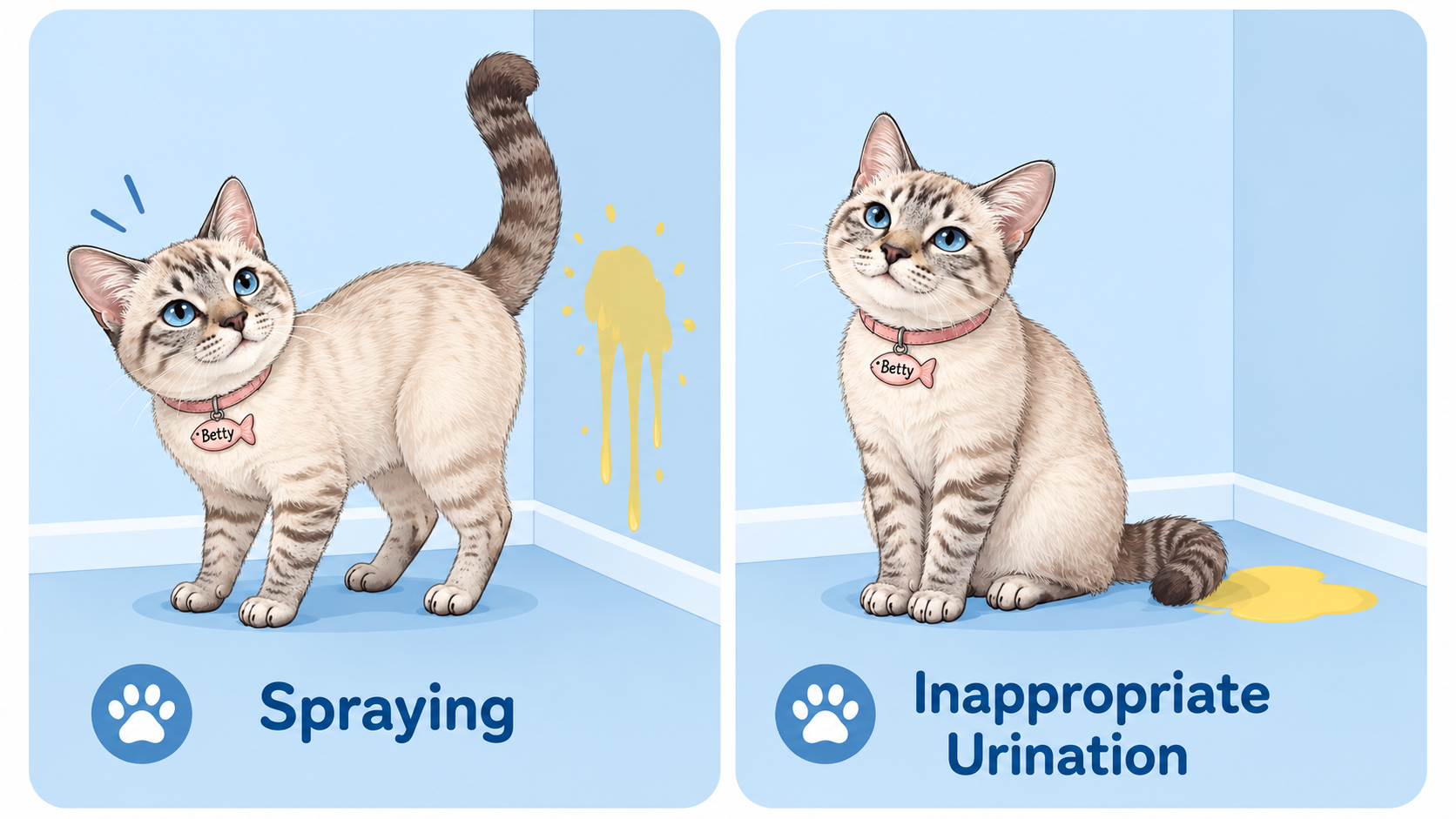
🔍 Signs of Urine Marking
- Urine is sprayed onto vertical surfaces
- The same areas are repeatedly marked
- Marking occurs near doors, windows, beds, or laundry
- Your cat continues to defecate in the litter box but urinates elsewhere
- Your cat is not spayed or neutered
- Marking started after a change or stressful event
LITTER BOX AVERSION
Sometimes, your cat simply does not like something about the litter, litter box, or location.
Common problems include:
- Too few litter boxes
- A new type or brand of litter
- A covered box
- An unclean box
- A box that is too small
- A noisy or high-traffic location
- A dog or child bothering your cat while using the box
- Another cat blocking access to the box or other resources
- A previous painful or negative experience with the litter box
Signs of Litter Box Aversion
- Urination occurs on horizontal surfaces rather than by spraying
- Both urination and defecation occur outside the litter box
- Two or more cats share the same litter box
- A new type or brand of litter was introduced
- A new litter box was introduced
- The litter box is covered and the cat does not like enclosed boxes
- The box is not cleaned frequently enough
- The cat had a negative or painful experience while using the box
- The box is located in a noisy or high-traffic area
- A dog or child bothers the cat while using the box
- Another cat is bullying the cat or controlling access to resources such as food, resting areas, or litter boxes
HOW TO HELP
Litter Boxes
Treatment depends on the underlying cause, but improving the litter-box environment and reducing stress can make a big difference.
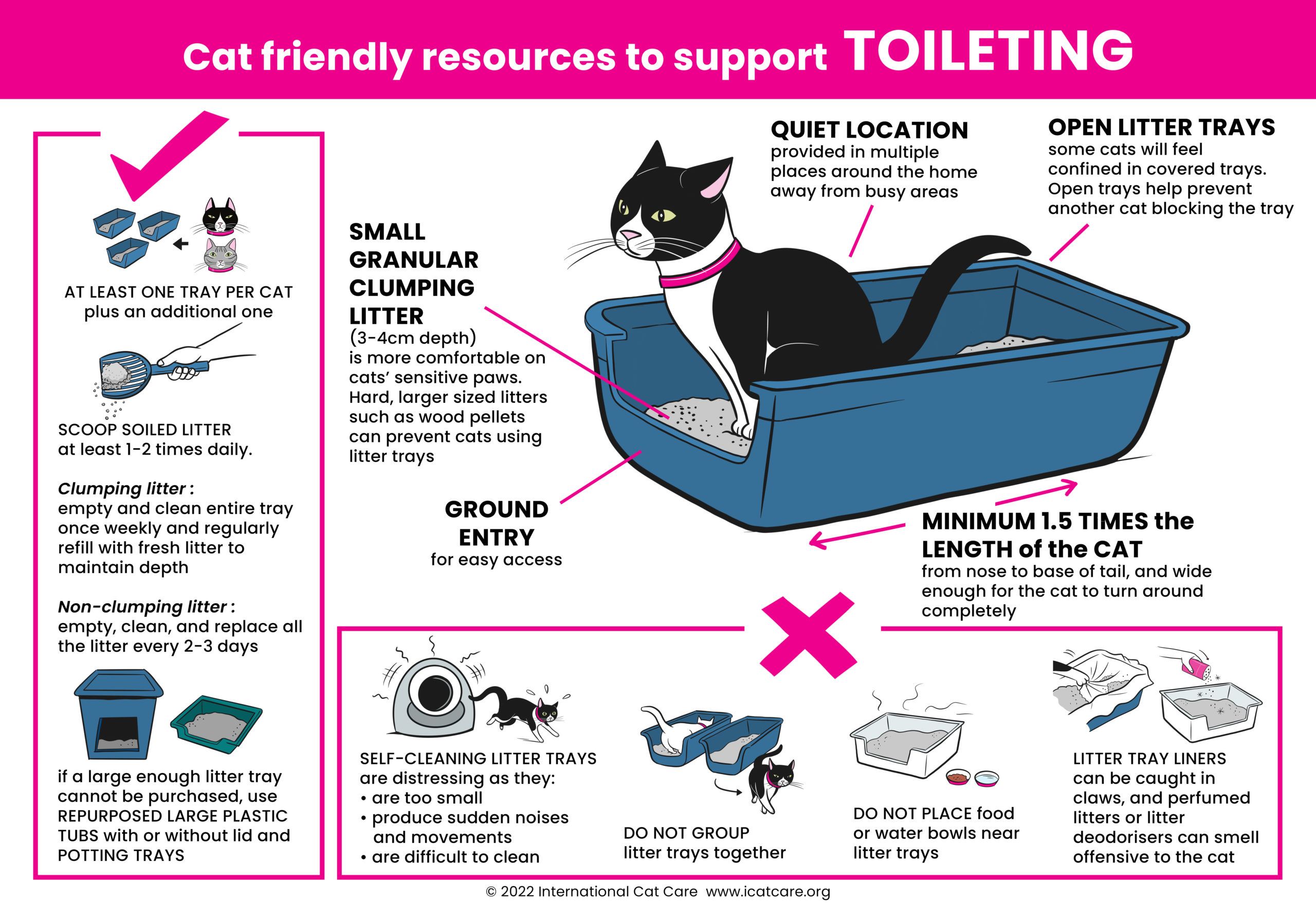
⭐ Remember: 1 litter box PER cat + 1 extra
For example, two cats should have at least three litter boxes.
Place them in quiet, easily accessible areas and avoid putting all of them together.
🐱 Litter
Most cats prefer soft, sand-like, unscented, clumping litter with low dust.
I commonly recommend Purina Tidy Cats or Fresh Step. Avoid strongly scented litters, as fragrances may discourage some cats from using the box.
📦 Litter Box Size
The box should be approximately 1.5 times your cat's body length, not including the tail.
Many cats prefer large, uncovered boxes. Cats with mobility problems may benefit from a lower entry.
🧼 Keep It Clean
Remove urine and feces frequently and clean the litter boxes regularly.
A clean litter box is more inviting to your cat.
Spay or neuter
Intact cats are more likely to urine mark. Spaying or neuteri
ng can significantly reduce this behavior.
Reduce stress
Identify and minimize sources of anxiety whenever possible.
Provide environmental enrichment such as scratching posts, hiding spaces, elevated resting areas, toys, and opportunities for play and mental stimulation
💚 Phermones
Feline pheromone products such as Feliway may help reduce stress and territorial behaviors in some cats.
🧘 Calmin Support
Some cats may benefit from calming supplements, such as:
- Purina Pro Plan Calming Care Probiotic
- VetriScience Composure Pro Chews
These can be helpful as part of a larger behavioral plan but are not a replacement for addressing the underlying cause.
🔄 Reverse recent changes
If inappropriate urination began after a change in the home, consider returning the environment to its previous setup when possible.
💊 Anti-Anxiety Medication
Some cats benefit from prescription medication when anxiety is significant or environmental changes alone are not enough.
🌐 Learn More About Anxiety in Cats
🚫 NEVER PUNISH YOUR CAT
Do not yell at, hit, or punish your cat for urinating outside the litter box.
Punishment can increase fear and anxiety and may make the problem worse.
Instead, focus on finding why your cat is avoiding the litter box.
🩺 THE BOTTOM LINE
Inappropriate urination is often your cat's way of telling you something isn't right.
RULE OUT MEDICAL PROBLEMS → IDENTIFY THE TRIGGER → IMPROVE THE LITTER BOX → REDUCE STRESS
If your cat suddenly starts urinating outside the litter box, talk with your veterinarian to determine the cause and create the right treatment plan.
🛒 RECOMMENDED CAT CARE & STRESS SUPPORT PRODUCTS
The right products can help support your cat’s litter-box routine, comfort, and home environment. We’ve selected options that may be helpful additions to your cat’s daily care and stress-management routine.
🌐 View Recommended Cat Essentials
🌐 View Recommended Anxiety & Stress Support Products
Remember: These products can support your cat’s environment and stress management, but they do not replace a veterinary evaluation. New or inappropriate urination should always be taken seriously, as medical conditions can cause or contribute to changes in urination.
❓HAVE MORE QUESTIONS?
We’re here to help you keep your furbaby happy, healthy, and thriving! ❤️
For additional pet health information, visit Veterinary Partner by VIN—a trusted resource with veterinarian-written articles.
🔎 Tip: Search “VIN + your question” on Google for easier results, as the website’s search feature can be a little tricky.
📞 And remember, calling us is always free!
If you have questions or concerns about your pet, please don’t hesitate to reach out. We’re happy to help. 🐾