Why You Should Spay Or Neuter Your Pet
Learn the benefits, potential risks, and recommended timing of spaying or neutering your dog or cat to make an informed decision about their health.
Dr. Sofia Raldiris
DVM
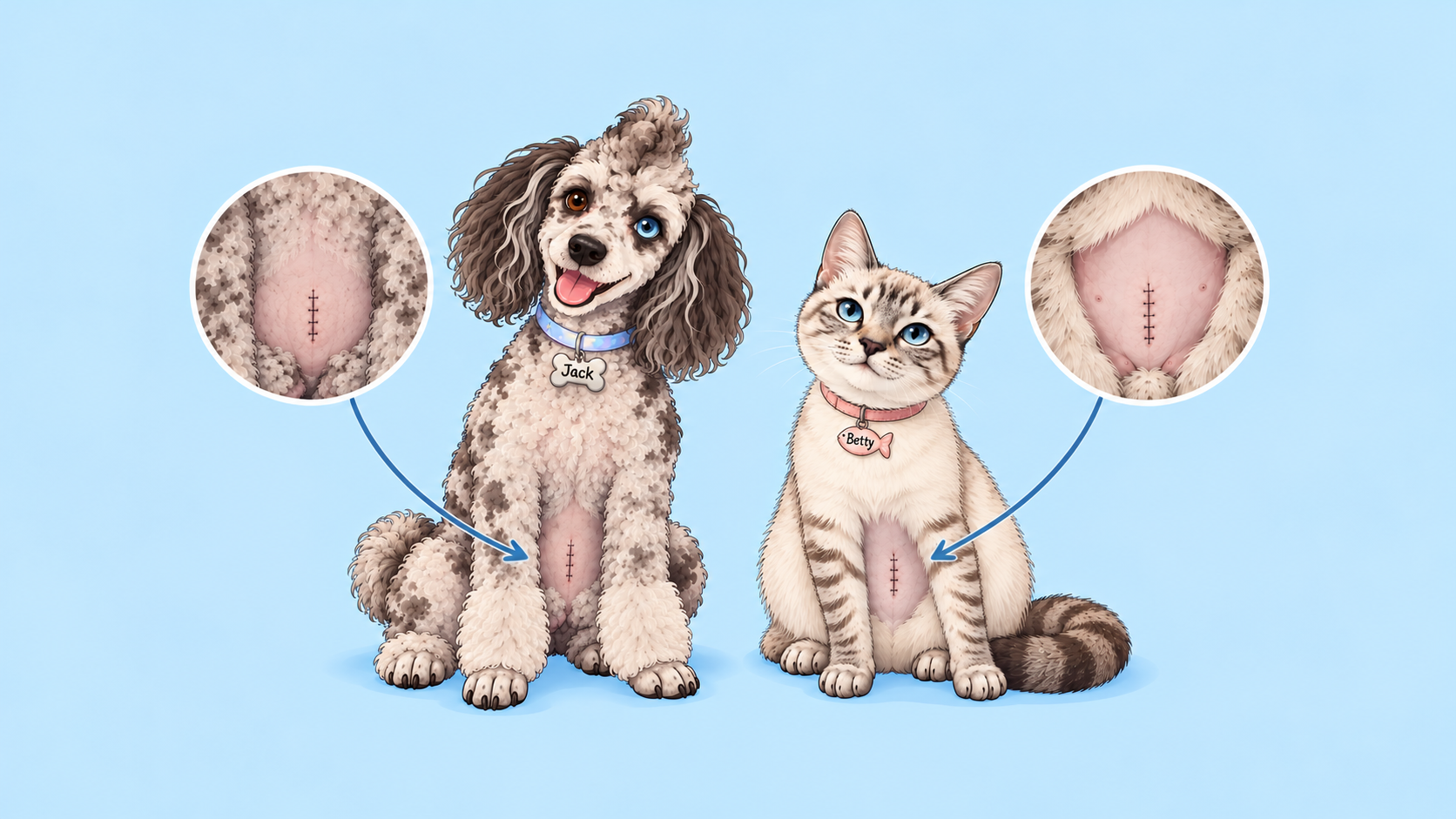
🐶🐱 WHY YOU SHOULD SPAY OR NEUTER YOUR PET
Spaying or neutering impacts your pet’s reproductive health, behavior, and long-term well-being. These procedures prevent unwanted pregnancies and reduce the risk of certain diseases, but removing reproductive hormones may also influence the risk of other health conditions.
The goal is to choose the right approach for each individual pet, not to automatically recommend the same age for every animal.
The best decision depends on species, breed, sex, expected adult size, health, lifestyle, and the ability to prevent unwanted breeding.
🏥 Preparing for Your Pet's Surgery?
Knowing what to expect on surgery day can help you feel more prepared and make the experience less stressful for both you and your pet.
🌐 Learn what to expect and how to prepare in our Surgery Day Drop-Off Guide.
⭐ HEALTH BENEFITS
🐾 Female Dogs and Cats
Spaying involves removing the ovaries and uterus.
- Prevents pyometra: A potentially life-threatening uterine infection. Removing the uterus prevents typical uterine pyometra.
- Prevents ovarian and uterine diseases: Including most diseases and tumors originating in these organs.
- Reduces mammary tumor risk: Spaying before the first heat is associated with a lower risk of mammary tumors.
- Prevents pregnancy and heat cycles: Removing both ovaries prevents future estrous cycles and pregnancy.
🐾 Male Dogs and Cats
Neutering, also called castration, involves removing the testicles.
- Prevents testicular cancer: Eliminates the risk of future tumors in the removed testicles.
- Reduces benign prostatic hyperplasia (BPH) in dogs: This hormone-dependent enlargement of the prostate becomes increasingly common in intact males as they age. Neutering effectively treats and prevents BPH.
- May reduce hormone-driven behaviors: Roaming, mounting, urine marking, and some forms of aggression may decrease, although results vary.
- Prevents reproduction: Eliminates the ability to father offspring.
📊 Mammary Tumor Risk In Female Dogs
The risk of mammary tumors, compared with intact dogs, is approximately:
- 0.5% if spayed before the first heat.
- 8% if spayed after one heat.
- 26% if spayed after two heat cycles.
Spaying before the first heat is associated with a lower risk of mammary tumors.
My priority is to reduce the risk of serious reproductive diseases while considering the potential benefits and risks of surgery timing for each individual dog.
❤️ Does Sterilization Help Pets Live Longer?
Large observational studies have found an association between sterilization and longer life expectancy in dogs.
One retrospective study involving 40,139 dogs reported an increase of approximately 26.3% in females and 13.8% in males.
These findings do not prove that sterilization itself causes a longer life. Veterinary care, lifestyle, owner behavior, and other factors may influence the results. Nevertheless, lifespan is an important consideration when evaluating the overall benefits and risks.
🌎 WHY IT MATTERS
Millions of unwanted dogs and cats contribute to shelter overcrowding and homelessness. Spaying and neutering help prevent unplanned litters, reduce shelter populations, and support responsible pet ownership.
A female dog or cat does not need to have a litter before being spayed.
There is no established medical benefit to pregnancy before sterilization. Pregnancy and delivery carry risks, including dystocia (difficulty giving birth), emergency cesarean section, and complications affecting the mother or offspring.
🩺 WHEN SHOULD YOUR PET BE SPAYED OR NEUTERED?
There is no single ideal age for every pet. Early sterilization can prevent unwanted pregnancies and certain diseases, but the timing of surgery may also influence orthopedic, urinary, and cancer risks, particularly in dogs.
Male Dogs
I generally recommend neutering at around 6 months of age or following breed-specific recommendations, particularly for larger breeds.
Waiting until physical maturity may benefit certain breeds by reducing the risk of some orthopedic conditions. However, the evidence varies by breed, sex, and condition, so delaying surgery is not necessary for every dog.
Female Dogs
I generally recommend spaying at around 6 months of age, ideally before the first heat cycle, or following breed-specific recommendations.
Spaying before the first heat is associated with a substantially lower risk of mammary tumors. The risk increases with additional heat cycles.
Waiting until physical maturity may benefit certain breeds by reducing some orthopedic risks. However, delaying surgery also means a longer period during which pregnancy and heat cycles can occur.
My recommendation balances these potential risks and benefits, with particular importance placed on preventing serious reproductive diseases and mammary tumors.
🌐 Learn More: UC Davis: How to Identify When a Dog Should Be Spayed or Neutered.
Cats
For most cats, spaying or neutering is recommended by approximately 4–6 months of age, before sexual maturity.
Cats can become pregnant as early as 4 months of age, sometimes earlier, and can become pregnant during their first heat cycle.
Early sterilization helps prevent unwanted litters, reproductive diseases, and hormone-driven behaviors.
Unlike dogs, cats generally do not require breed-specific delays to skeletal maturity before sterilization.
The individual cat's health and circumstances should still be considered, but preventing pregnancy before sexual maturity is a priority.
🔬 POTENTIAL RISKS OF SPAYING AND NEUTERING IN DOGS
Research has identified associations between gonadectomy (surgical removal of the ovaries or testicles) and certain health conditions.
An association does not necessarily prove that surgery directly causes a disease.
Findings vary by breed, sex, age at surgery, and other risk factors.
A higher relative risk also does not automatically mean an individual pet has a high absolute risk of developing a disease.
🦴 Orthopedic Disorders
Some studies associate early gonadectomy with an increased risk of:
- Cranial cruciate ligament disease.
- Hip dysplasia.
- Elbow dysplasia.
- Osteosarcoma, a type of bone cancer, in certain populations.
Reproductive hormones contribute to skeletal development, including growth-plate closure. Removing these hormones before skeletal maturity may affect musculoskeletal development in susceptible dogs.
These concerns are particularly relevant to certain medium-, large-, and giant-breed dogs.
🩺 Cancer Risks
Research has reported associations between gonadectomy and certain cancers, including osteosarcoma, lymphoma, hemangiosarcoma, and mast cell tumors, in particular populations.
These findings do not establish that spaying or neutering universally increases cancer risk.
Breed predisposition, study design, and other factors must be considered. Potential cancer risks must also be weighed against the benefits of sterilization, including preventing testicular tumors and reducing mammary tumor risk when females are spayed early.
🚽 Urinary Incontinence
Spayed female dogs, particularly medium- and large-breed dogs, have an increased risk of urethral sphincter mechanism incompetence, which causes urinary leakage.
Risk factors may include female sex, larger adult size, gonadectomy, and possibly age at surgery. Some studies suggest that very early spaying may increase the risk, although findings are not consistent across all studies.
This is an important consideration when discussing timing with owners of medium- and large-breed female dogs.
⚖️ Weight Gain and Obesity
Dogs and cats may be more prone to weight gain after sterilization because their energy requirements can change. Excess weight contributes to other health problems and increases stress on joints.
After surgery, owners should:
- Reassess calorie requirements.
- Monitor body weight and body condition.
- Adjust food portions as needed.
- Maintain regular exercise.
Weight management is an important part of long-term preventive care.
🧠 Behavioral Changes
Neutering may reduce roaming, mounting, urine marking, and some forms of aggression toward other males. However, results vary, and some studies have reported associations between early gonadectomy and undesirable behavioral outcomes.
Behavior is influenced by genetics, environment, socialization, training, and individual temperament.
Spaying and neutering are not substitutes for proper behavioral assessment and treatment.
A veterinarian can help determine whether a behavioral concern is likely to respond to sterilization.
🐈 POTENTIAL RISKS OF SPAYING AND NEUTERING IN CATS
⚖️ Weight Gain and Orthopedic Concerns
Cats may gain weight after sterilization, making calorie management and regular weight monitoring important.
Some studies have also associated gonadectomy with slipped capital physeal fractures, particularly in overweight, castrated male cats. Potential contributing factors include excess body weight and delayed growth-plate closure.
These concerns do not negate the benefits of sterilization, but they reinforce the importance of maintaining a healthy body condition.
🤰 SPAYING DURING PREGNANCY
A pregnant dog or cat can be spayed. The procedure removes the reproductive organs and ends the pregnancy.
Surgery becomes more complicated as pregnancy advances because the reproductive tract enlarges and its blood supply increases. Bleeding risk is greater, particularly later in pregnancy, and the procedure may take longer and cost more than a routine spay.
If your pet may be pregnant, contact your veterinarian promptly to discuss the options and risks associated with the stage of pregnancy.
🩺 WHAT IF YOUR DOG HAS ALREADY HAD HEAT CYCLES?
Spaying still offers important health benefits after a dog has experienced one or more heat cycles. It prevents future pregnancies and pyometra.
However, spaying later does not eliminate the mammary tumor risk associated with previous hormone exposure. Any existing mammary lumps should be evaluated by a veterinarian, regardless of whether the dog is spayed.
Ideally, elective spaying is performed approximately 1.5–2 months after a heat cycle.
Hormone levels and blood flow to the reproductive tract have generally decreased by then, which can reduce surgical bleeding and complications compared with operating during heat. The appropriate timing should be confirmed with your veterinarian.
🩺 RECOVERY AFTER SPAYING OR NEUTERING
Proper aftercare helps your pet heal safely and prevents complications. Learn how to care for your pet after surgery, including activity restrictions, incision care, e-collar use, and warning signs to watch for.
🌐 Recovery After Spay Surgery in Dogs and Cats
🌐 Recovery After Neuter Surgery in Dogs and Cats
⭐ THE BOTTOM LINE
Spaying and neutering offer important health and population-control benefits, but timing should be individualized.
- Female dogs: Early spaying is associated with a lower mammary tumor risk and prevents pyometra when the uterus is removed. Breed-specific orthopedic and urinary risks may influence timing.
- Male dogs: Neutering prevents testicular tumors, treats or prevents benign prostatic hyperplasia, and may reduce some hormone-driven behaviors. Breed, size, and individual health risks should guide timing.
- Cats: Early sterilization, generally by 4–6 months of age, helps prevent unwanted pregnancies and reproductive health problems.
- All pets: Weight management and individualized veterinary guidance are important after surgery.
My recommendations balance the benefits of preventing reproductive diseases and unwanted pregnancies against the potential risks associated with surgical timing.
Talk with your veterinarian about the best plan for your pet.
Together, you can make an informed decision based on your pet's breed, sex, age, health, and lifestyle.
❓HAVE MORE QUESTIONS?
We’re here to help you keep your furbaby happy, healthy, and thriving! ❤️
For additional pet health information, visit Veterinary Partner by VIN—a trusted resource with veterinarian-written articles.
🔎 Tip: Search “VIN + your question” on Google for easier results, as the website’s search feature can be a little tricky.
📞 And remember, calling us is always free!
If you have questions or concerns about your pet, please don’t hesitate to reach out. We’re happy to help. 🐾