Ruptured Cranial Cruciate Ligaments (CCL) in Dogs
Learn about the signs, diagnosis, and treatment of CCL tears in dogs and how to help your dog recover.
Dr. Sofia Raldiris
DVM
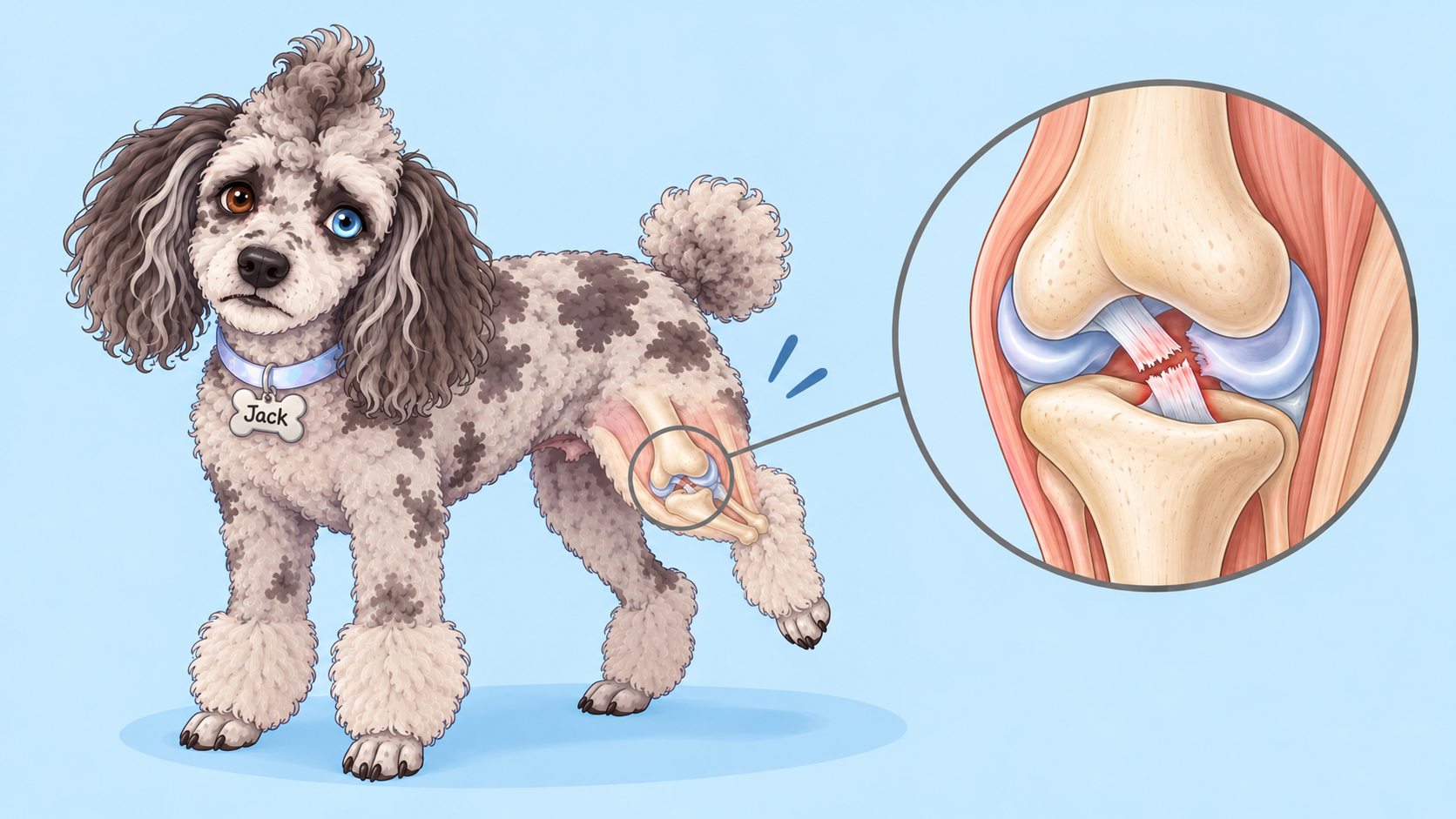
🐶 RUPTURED CRANIAL CRUCIATE LIGAMENTS (CCL) IN DOGS
A cranial cruciate ligament (CCL) tear is one of the most common causes of hindlimb lameness in dogs.
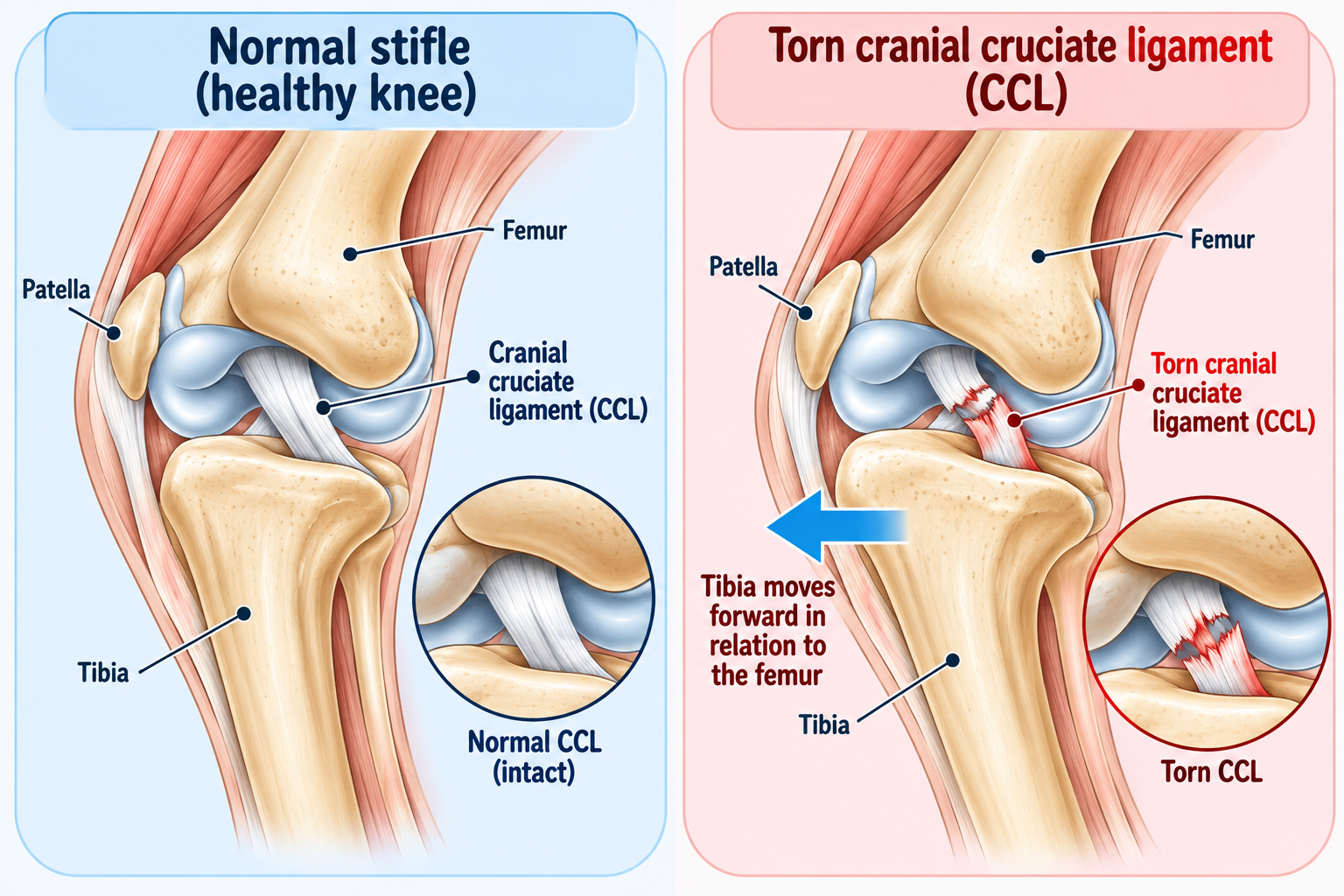
The CCL is a ligament inside the knee joint (stifle) that stabilizes the knee and prevents the shinbone (tibia) from sliding forward relative to the thighbone (femur). Similar to the anterior cruciate ligament (ACL) in humans, it plays an essential role in knee stability during walking, running, and jumping.
In dogs, CCL injuries often develop gradually as the ligament weakens over time, but they can also occur suddenly. The ligament may tear partially or completely.
When the CCL is damaged, the knee becomes unstable, causing inflammation and pain. This instability can also damage other structures inside the joint, particularly the meniscus, a cartilage structure that cushions the knee and absorbs impact between the femur and tibia.
Meniscal tears can accelerate the development of osteoarthritis compared with cases in which the meniscus remains intact.
🔍 SIGNS OF A CCL TEAR
Signs may develop suddenly or gradually and include:
- Limping or holding up a hind leg.
- Difficulty getting up, climbing stairs, or jumping.
- Stiffness, especially after resting.
- Swelling around the knee.
- Sitting with the affected leg extended to the side rather than tucked underneath the body.
- Decreased activity or muscle loss in the affected leg.
Even if your dog’s limp improves with rest, the injury may still be present. Partial tears can progress to complete ruptures.
Meniscal injury: The meniscus can tear alongside the CCL, causing additional pain and joint damage. A damaged meniscus may sometimes produce a palpable or audible clicking sound when the dog walks or when the knee is examined.
⚖️ Risk Factors
Factors that may increase a dog's risk of CCL disease include:
- Excess body weight.
- Breed and genetics.
- Age-related changes.
- Leg and joint conformation.
- Previous CCL injury.
🩺 DIAGNOSIS
Your veterinarian will perform an orthopedic examination to assess knee stability, pain, and swelling.
Two important tests help identify knee instability:
- Cranial drawer test: Evaluates whether the tibia can move abnormally forward relative to the femur.
- Tibial thrust test: Evaluates whether the tibia moves forward when forces similar to those experienced during weight-bearing are applied.
Partial tears and chronic injuries can be more difficult to diagnose because instability may be subtle.
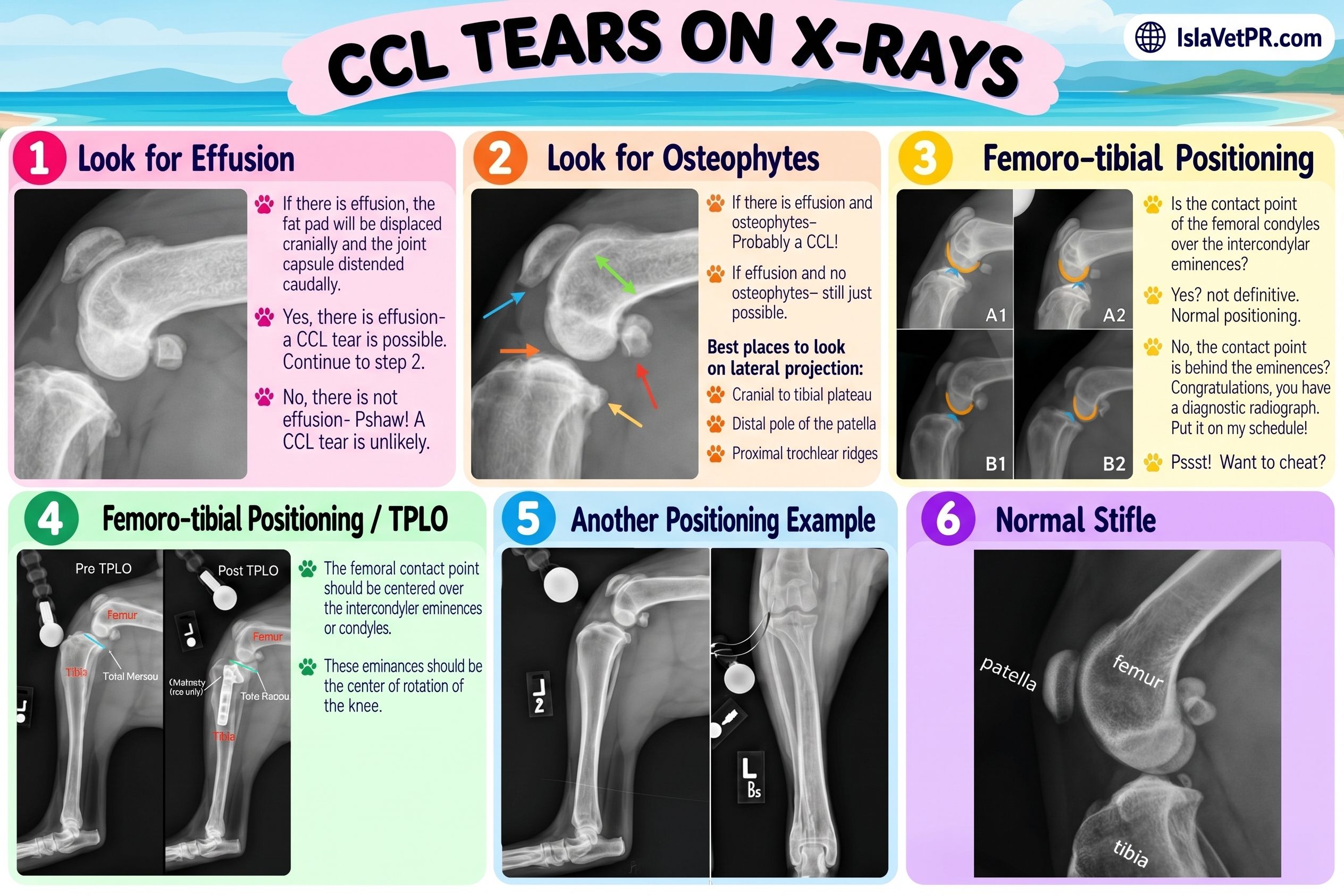
X-rays may be recommended to evaluate the joint, identify signs of arthritis, and rule out other abnormalities. Although X-rays do not directly show the CCL, they can reveal changes associated with the injury.
🦴 TREATMENT OPTIONS
Treatment aims to reduce pain, improve function, stabilize the knee, and minimize further joint damage. The best approach depends on your dog's size, activity level, degree of ligament damage, and overall health.
Surgery
Surgery is generally recommended for most dogs, particularly medium and large dogs, to improve knee stability and function. Referral to a veterinary orthopedic surgeon may be necessary.
The tibial plateau leveling osteotomy (TPLO) is one of the most commonly performed procedures for CCL tears. Rather than replacing the torn ligament, TPLO changes the angle of the tibial plateau to alter knee biomechanics and stabilize the joint during weight-bearing. With appropriate healing, most dogs experience improved comfort and hindlimb function.
Surgery does not eliminate the risk of osteoarthritis. Joint changes may continue to progress even after successful surgery.
Dogs can also develop meniscal tears months or even years after TPLO surgery, potentially requiring further treatment.
In most cases, the surgical implants remain in place for the rest of the dog's life. However, implant removal may be necessary if the plate causes complications. Implant failure, including screw loosening, screw breakage, or plate fracture, may require additional surgery.
Non-Surgical Management
Nonsurgical management may be appropriate for some smaller dogs and selected cases. It typically includes:
- Restricted activity and controlled leash walks.
- Veterinarian-prescribed pain medication.
- Weight management.
- Rehabilitation, when appropriate.
Nonsurgical management does not repair the torn ligament, and the knee may remain unstable. Some dogs develop persistent lameness or progressive arthritis despite conservative care.
Osteoarthritis
Osteoarthritis is common after a CCL tear, regardless of treatment. Joint instability and inflammation can cause progressive cartilage damage over time.
Treatment focuses on maintaining comfort and mobility while managing arthritis.
🌐Learn more about long-term joint care in our article on Arthritis in Dogs and Cats.
🐕 CAN A CCL TEAR HAPPEN IN THE OTHER LEG?
Yes. Dogs with a CCL tear in one knee have a 40–60% risk of tearing the ligament in the opposite knee.
This is partly because the underlying degenerative process may affect both ligaments. Changes in how a dog distributes weight after an injury may also place additional stress on the opposite hindlimb.
Monitor your dog for new limping, stiffness, difficulty rising, or reluctance to jump, even after the first knee has been successfully treated.
🐾 WHAT SHOULD YOU DO?
If your dog is limping or showing signs of knee pain, schedule a veterinary examination. Until evaluated, restrict running, jumping, and strenuous activity.
Early diagnosis and appropriate treatment can help reduce pain, improve mobility, and support a better long-term outcome.
❓HAVE MORE QUESTIONS?
We’re here to help you keep your furbaby happy, healthy, and thriving! ❤️
For additional pet health information, visit Veterinary Partner by VIN—a trusted resource with veterinarian-written articles.
🔎 Tip: Search “VIN + your question” on Google for easier results, as the website’s search feature can be a little tricky.
📞 And remember, calling us is always free!
If you have questions or concerns about your pet, please don’t hesitate to reach out. We’re happy to help. 🐾