The Coughing Dog
Learn about common causes of coughing in dogs, including kennel cough, bronchitis, collapsing trachea, reverse sneezing, pneumonia, canine influenza, heart disease, and more.
Dr. Sofia Raldiris
DVM
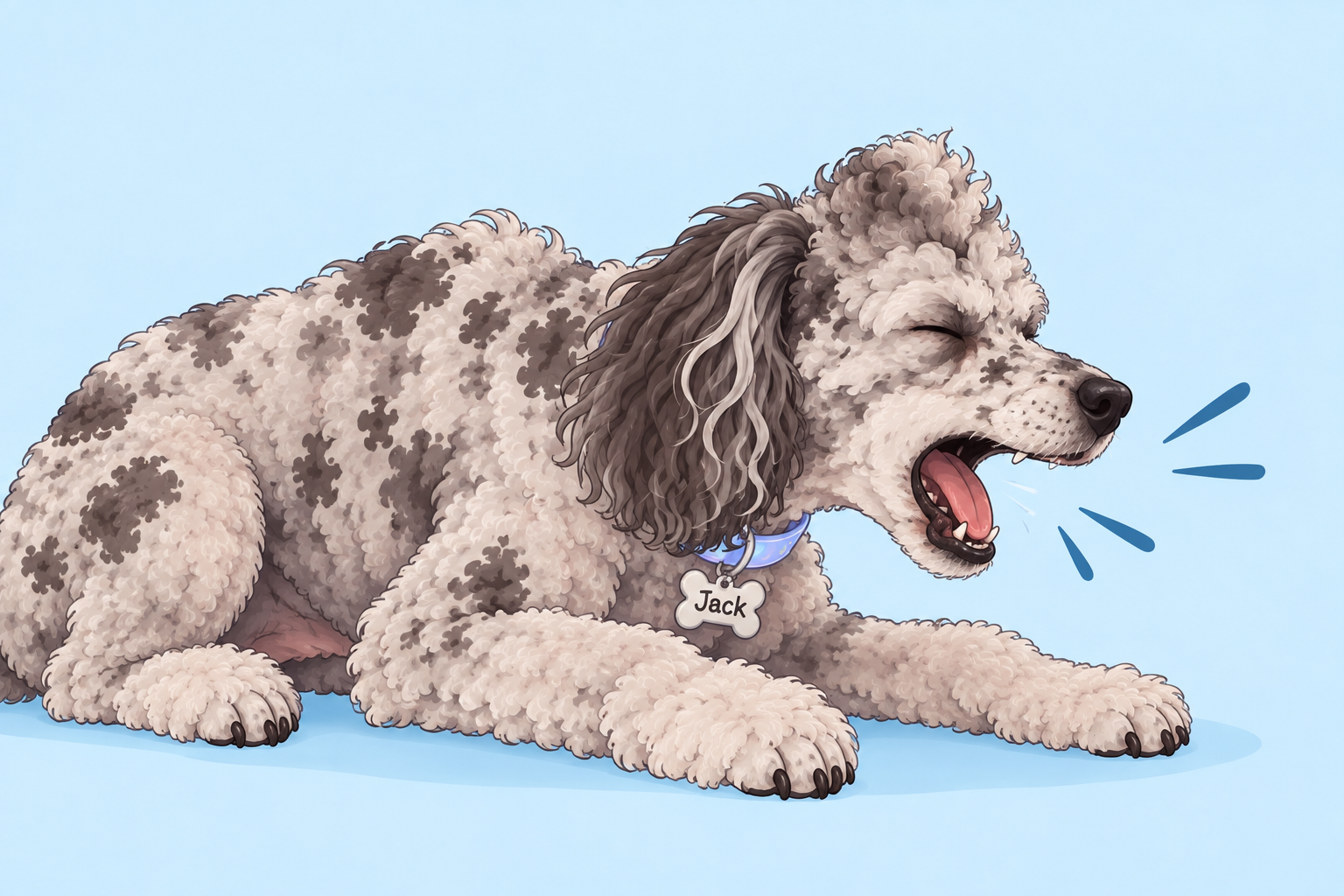
🐶 THE COUGHING DOG
A cough is one of the most common respiratory signs seen in dogs. It may be caused by something relatively minor, but it can also indicate a serious condition.
The sound of a cough alone cannot tell you exactly what is wrong. Several different conditions can cause similar-looking or sounding coughs, so your veterinarian will consider your dog's age, breed, medical history, exposure to other dogs, physical examination findings, and sometimes diagnostic testing.
Recording a video of the episode can be extremely helpful for your veterinarian.
🔍 COMMON CAUSES OF COUGHING IN DOGS
- Kennel cough
- Chronic bronchitis
- Collapsing trachea
- Reverse sneezing
- Pneumonia
- Canine influenza
- Heart disease
- Heartworm disease and other respiratory parasites
- Foreign material or aspiration
- Fungal respiratory disease
- Laryngeal or upper-airway disease
- Lung tumors or other cancers
- Environmental irritants
- Other chronic or inflammatory airway diseases
🦠 KENNEL COUGH
Kennel cough, also called canine infectious respiratory disease complex (CIRDC) or infectious tracheobronchitis, is one of the most common causes of an acute cough in dogs.
It is not caused by a single organism. Several viruses and bacteria can contribute to the disease. Infected dogs spread these organisms through respiratory secretions, making transmission more likely when dogs are in close contact.
Common exposure locations include boarding and grooming facilities, dog parks, daycare, training classes, shelters, and veterinary hospitals.
The incubation period is typically 2–14 days after exposure.
Clinical Signs
The classic cough is often harsh, dry, hacking, or honking, sometimes followed by gagging or swallowing. Many owners describe it as sounding like "something is stuck in my dog's throat."
Many dogs with uncomplicated kennel cough remain bright, active, and interested in food despite frequent coughing.
🌐Video: Example of a dog with kennel cough
When to Worry
Contact your veterinarian if your dog develops:
- Fever
- Poor appetite
- Significant lethargy
- Difficulty breathing
- A worsening or persistent cough
- Coughing with significant mucus or other abnormal discharge
Diagnosis
In uncomplicated cases, the diagnosis is often based on the history, recent exposure to other dogs, and physical examination. Your veterinarian may gently palpate the trachea during the examination to see if coughing can be elicited.
Chest X-rays are not always necessary for uncomplicated kennel cough, but they can be helpful when pneumonia or another underlying condition is suspected.
Treatment
Most uncomplicated cases resolve on their own within about 1–2 weeks, although the cough can sometimes persist longer.
Treatment is usually focused on keeping the dog comfortable. Depending on the individual patient, your veterinarian may recommend medications to reduce coughing or other supportive care.
Antibiotics are not routinely needed for uncomplicated kennel cough because many cases are caused by viruses. They may be appropriate when a bacterial infection or pneumonia is suspected.
Dogs with respiratory infections should be kept away from other dogs while they are contagious. Your veterinarian can recommend an appropriate isolation period, typically at least 10 days after the last cough, based on your dog's specific situation.
Prevention
Vaccination can help reduce the risk and severity of some causes of infectious respiratory disease, but no vaccine prevents every cause of kennel cough. A vaccinated dog can still develop a respiratory infection, but vaccination may help reduce the severity of disease.
🌿 CHRONIC BRONCHITIS
Chronic bronchitis is long-term inflammation of the larger airways (bronchi). Once established, it is generally a lifelong condition that can be managed but not completely cured.
Clinical Signs
The main sign is a persistent cough that may be dry or productive. The cough can become worse with exercise, excitement, or exposure to airway irritants.
Because several other diseases can cause chronic coughing, it is important not to assume that a persistent cough is simply bronchitis.
Diagnosis
Your veterinarian may recommend chest X-rays to look for characteristic airway changes and rule out other causes of coughing.
On X-rays, mucus and thickened airway walls may create patterns that look like parallel lines ("tram lines") when airways are seen from the side, or circular "doughnut" shapes when an airway is viewed end-on. Airways may also become dilated, particularly in more advanced disease.
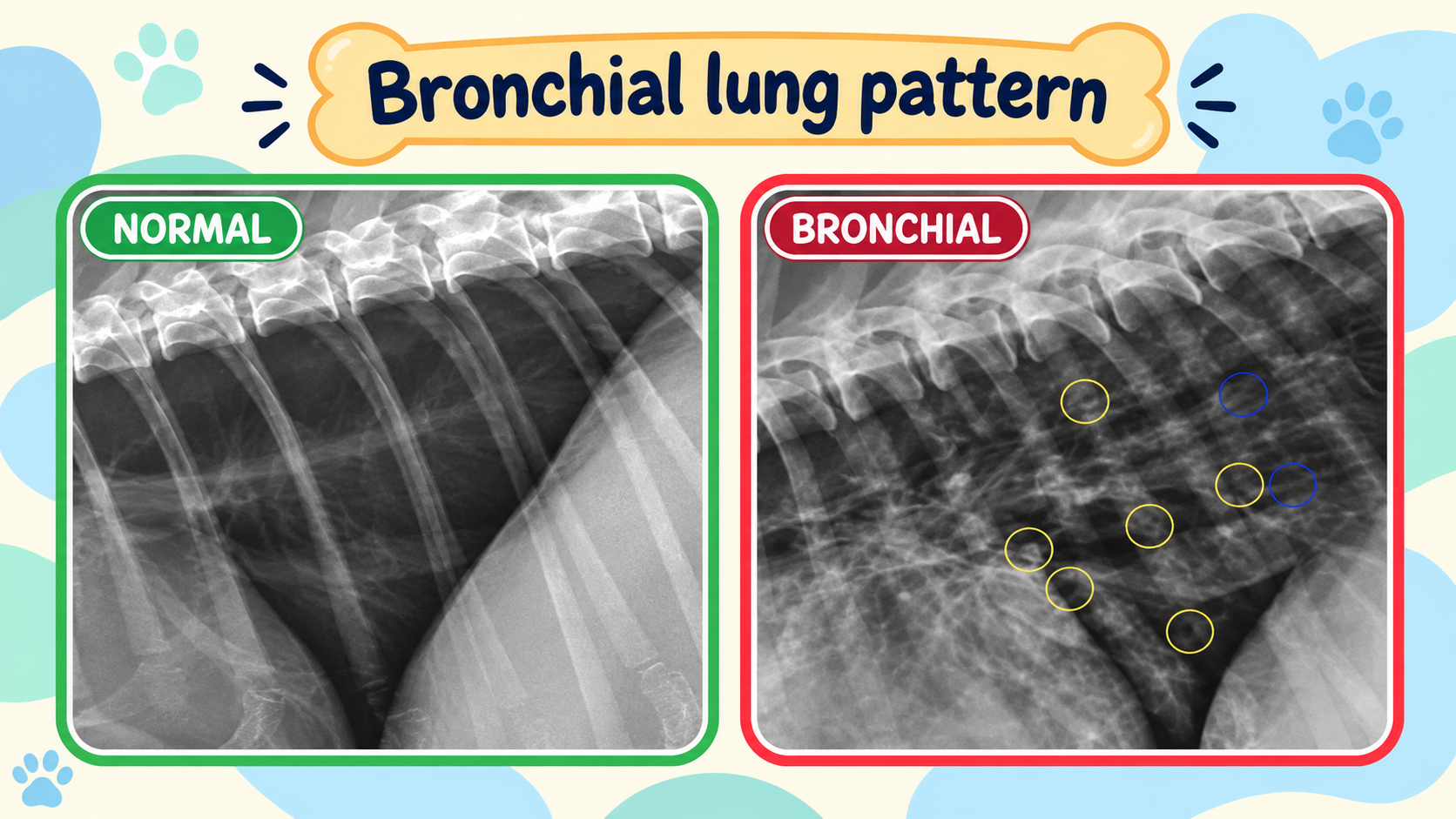
In selected cases, bronchoscopy or a tracheal wash can provide additional information and allow airway samples to be evaluated. However, these procedures require general anesthesia, and a dog with compromised lungs may have increased anesthetic risk. The potential diagnostic benefit must be weighed against the patient's risk.
Treatment
Treatment is individualized and may include medications to control inflammation, reduce excessive coughing, or manage airway secretions.
At home, you can help by minimizing airway irritants such as:
- Cigarette or cigar smoke
- Dust
- Strong fragrances
- Aerosol sprays
- Household cleaning products
- Essential oils
Maintaining a healthy body weight is also important.
🌐 Learn More About Pet Obesity
🫁 COLLAPSING TRACHEA
The trachea, or windpipe, is supported by cartilage rings that are not complete circles. Instead, they form a C shape, with the open end facing toward the animal's back. The muscle covering the open end of the C is called the tracheal membrane. Together, these structures help keep the airway open.
In dogs with tracheal collapse, these structures become weaker and the airway can narrow during breathing.
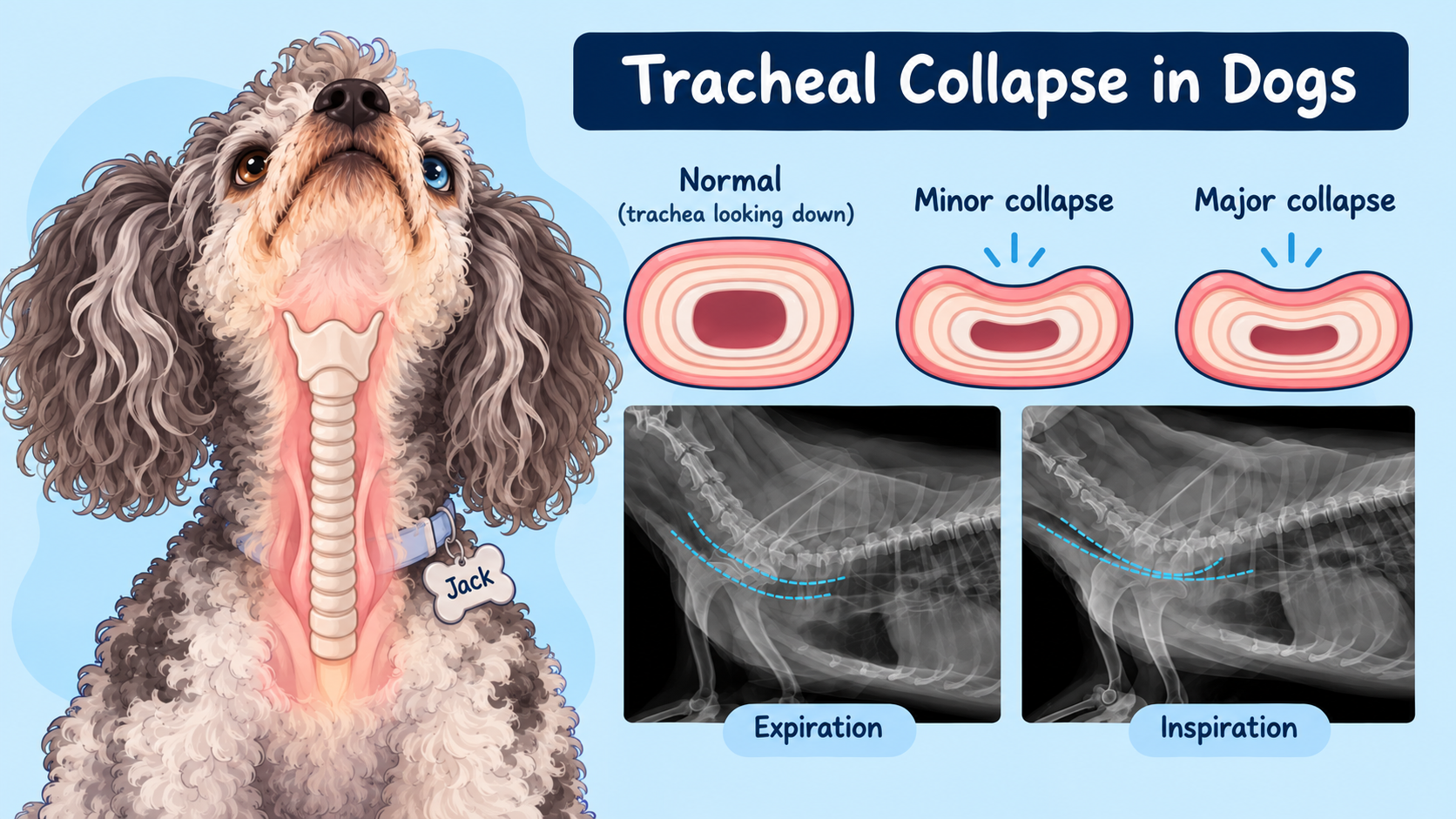
Tracheal collapse has a hereditary component and is especially common in small and toy breeds, including Yorkshire Terriers, Pomeranians, Chihuahuas, and Toy Poodles. However, any dog can be affected.
Many dogs with tracheal collapse have few or no symptoms until additional factors trigger inflammation and coughing. These may include obesity, anesthesia, kennel cough or other respiratory infections, increased exposure to respiratory irritants, and heart enlargement.
Clinical Signs
The classic sign is a dry, honking cough, which may become worse with:
- Excitement
- Exercise
- Pulling on a collar
- Heat or humidity
- Obesity
- Respiratory infections
- Smoke, dust, and other airway irritants
Panting, rapid breathing, or anxiety can make the collapse worse, creating a cycle of increased breathing, distress, and further airway narrowing.
Coughing itself also causes additional airway irritation, creating a cycle of coughing → inflammation → more coughing. Over time, this inflammation can cause further changes to the tracheal tissues and worsen the condition.
Diagnosis
Chest X-rays can help evaluate the trachea and look for other causes of coughing, but tracheal collapse can be dynamic, meaning the airway may collapse during certain phases of breathing and appear normal on a routine X-ray.
Treatment
Treatment focuses on reducing coughing and minimizing factors that worsen airway inflammation.
Maintaining a healthy weight, avoiding smoke, dust, and other airway irritants, and using a harness instead of a neck collar can significantly improve symptoms.
Cough suppression is an important part of treatment because coughing itself promotes additional airway inflammation. Some dogs may need cough medication long-term or even for life.
Steroids can help reduce inflammation and mucus production, but they are generally best used short-term because of potential side effects, including increased susceptibility to infections. Long-term steroid use may also contribute to weakening the cartilage.
Airway dilators are controversial because they primarily dilate the lower airways rather than the collapsed trachea.
In severe cases, surgical or airway-stent procedures may be considered. These procedures can improve clinical signs, but they carry potential complications and do not always eliminate the need for long-term medical management or cough control.
👃 REVERSE SNEEZING
Not every noisy respiratory episode is a cough.
During a reverse sneeze, a dog rapidly pulls air inward through the nose, often while extending the neck and making loud snorting or choking-like sounds.
🌐 Video: Example of a dog reverse sneezing
The episode can sound frightening, but most reverse-sneezing episodes are brief and harmless. Reverse sneezing itself is generally not a disease or sign of a serious problem and usually does not require treatment—it is simply annoying and sometimes alarming to watch.
Possible triggers include:
- Excitement
- Exercise
- Leash pressure
- Pollen
- Dust
- Perfumes and other fragrances
- Household chemicals
- Allergies
- Irritation or drainage from the nose and throat
During an episode, gently massaging the throat or holding the mouth closed and covering the nostrils for a few seconds to encourage swallowing may help stop the spasm.
Sometimes antihistamines can help, depending on the underlying trigger.
If episodes become frequent, prolonged, or severe, your veterinarian should evaluate your dog to look for an underlying cause.
❤️ HEART DISEASE
Heart disease can sometimes cause coughing, particularly when it progresses to congestive heart failure and fluid accumulation in the lungs.
Other signs may include increased breathing rate or effort, exercise intolerance, weakness, or fainting.
Heartworm disease can also cause coughing and respiratory signs.
🌐 Learn More About Heartworm Prevention
Not every coughing dog has heart disease. Your veterinarian will consider your dog's age, breed, heart sounds, breathing pattern, and other findings when deciding whether cardiac testing is appropriate.
🦠 PNEUMONIA
Pneumonia is inflammation and infection of the deeper tissues of the lungs and can be life-threatening.
It can be caused by bacterial, viral, fungal, or parasitic infections. It can also occur when a dog inhales food, liquid, vomit, or other material into the lungs.
Signs may include:
- Coughing
- Fever
- Decreased appetite
- Lethargy
- Increased breathing rate
- Increased breathing effort
- Nasal discharge
Some dogs may initially appear relatively normal, so the absence of fever or severe lethargy does not completely rule out pneumonia.
Chest X-rays are an important part of evaluating suspected pneumonia.
If your dog is showing difficulty breathing or significant illness, seek veterinary care promptly.
🤧 CANINE INFLUENZA
Canine influenza, or dog flu, is a contagious viral respiratory infection.
It can cause coughing, sneezing, nasal or eye discharge, fever, lethargy, and decreased appetite.
Most cases are mild to moderate, but some dogs can develop severe respiratory disease or secondary bacterial pneumonia.
Because canine influenza can look similar to other respiratory infections, testing may be recommended in certain situations, particularly during suspected outbreaks.
🩺 HOW DOES YOUR VETERINARIAN FIND THE CAUSE?
Your veterinarian will start with a thorough history and physical examination.
It is helpful to know:
- When the cough started
- Whether it is getting better or worse
- Whether the cough is dry or productive
- Whether your dog gags or vomits after coughing
- Whether coughing occurs during sleep, exercise, excitement, or eating
- Recent contact with other dogs
- Recent boarding, grooming, daycare, or dog-park visits
- Vaccination history
- Any nasal or eye discharge
- Changes in appetite or energy
- Any changes in breathing
Depending on the findings, your veterinarian may recommend chest X-rays, bloodwork, respiratory PCR testing, heartworm testing, parasite testing, or additional airway or cardiac diagnostics.
🚨 WHEN IS A COUGHING DOG AN EMERGENCY?
Not every cough requires an emergency visit, but difficulty breathing should always be taken seriously.
Seek urgent veterinary care if your dog has:
- Difficulty breathing or obvious increased breathing effort
- Blue, gray, or very pale gums or tongue
- Collapse or fainting
- Severe or uncontrollable coughing
- Extreme weakness or lethargy
- Repeated coughing with significant breathing difficulty
- A sudden cough after choking or potentially inhaling something
🐾 WHAT SHOULD YOU DO IF YOUR DOG IS COUGHING?
Don't assume every cough is kennel cough.
If your dog is otherwise acting normally and has recently been around other dogs, an infectious respiratory disease may be one possibility. However, a cough that persists, worsens, keeps returning, or occurs with other symptoms should be evaluated by your veterinarian.
If an infectious respiratory disease is possible, avoid close contact with other dogs until your veterinarian advises otherwise.
And whenever possible, take a video of the episode. It can help your veterinarian distinguish coughing from reverse sneezing, gagging, or respiratory distress.
A cough is a symptom—not a diagnosis. Finding the underlying cause is the key to getting your dog the right treatment.
❓HAVE MORE QUESTIONS?
We’re here to help you keep your furbaby happy, healthy, and thriving! ❤️
For additional pet health information, visit Veterinary Partner by VIN—a trusted resource with veterinarian-written articles.
🔎 Tip: Search “VIN + your question” on Google for easier results, as the website’s search feature can be a little tricky.
📞 And remember, calling us is always free!
If you have questions or concerns about your pet, please don’t hesitate to reach out. We’re happy to help. 🐾