Bringing Home a New Cat or Kitten
Learn how to prepare your home, establish healthy routines, provide proper nutrition and enrichment, and keep your new cat or kitten safe, healthy, and happy.
Dr. Sofia Raldiris
DVM
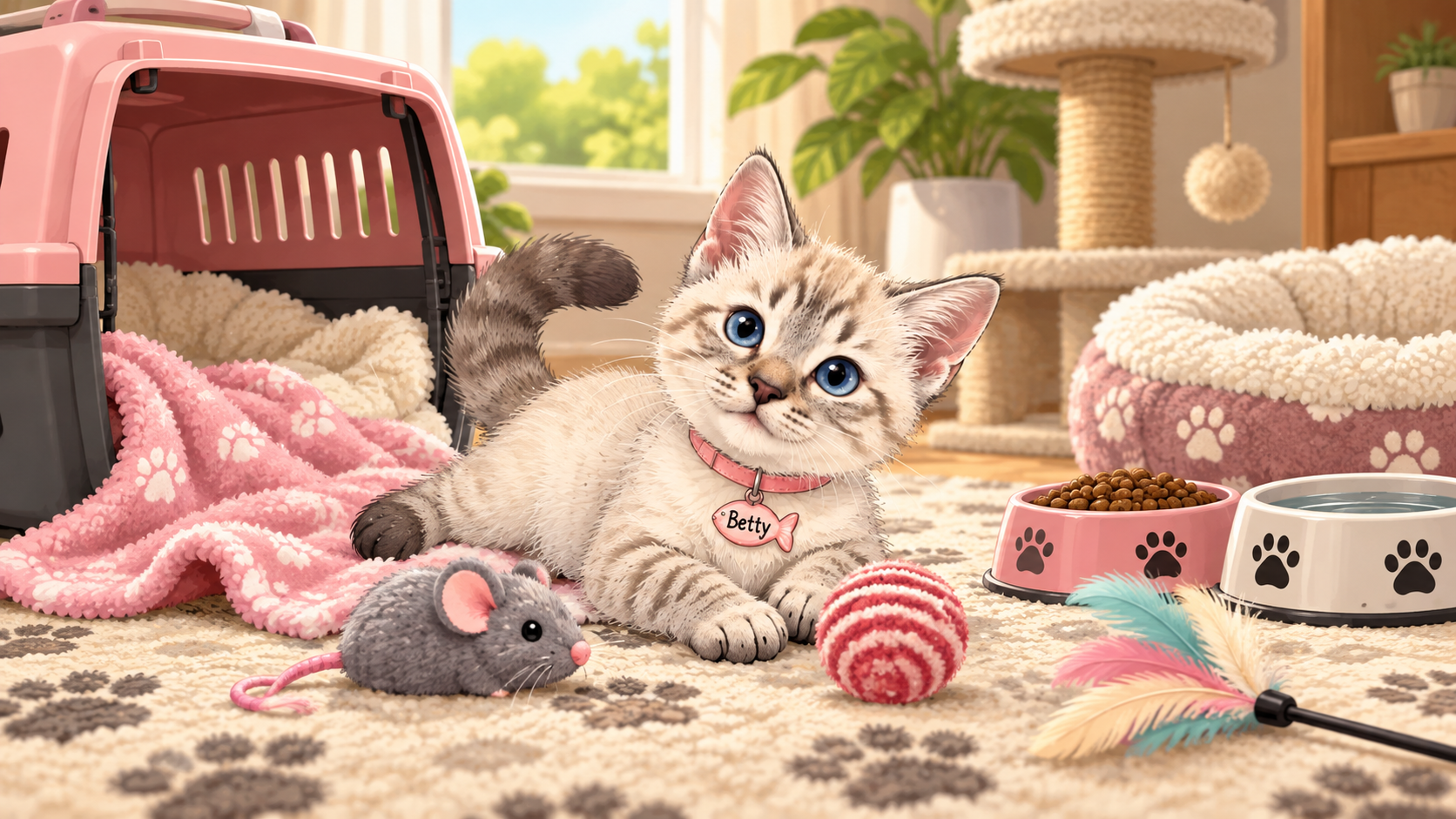
🐱 BRINGING HOME A NEW CAT OR KITTEN
❤️ Welcome to your new family member!
Bringing home a new cat or kitten is exciting! —but it also comes with a lot of responsibility.
Whether you are welcoming a kitten or adult cat, the first few weeks are the perfect time to establish routines, build trust, and create healthy habits.
Your new cat needs more than food and a litter box. They need patience, consistency, veterinary care, enrichment, appropriate scratching opportunities, and plenty of love.
⭐ BEFORE YOUR CAT COMES HOME
Have the essentials ready:
- Age-appropriate food and treats
- Food and water bowls
- Litter box and appropriate litter
- Comfortable bed or blanket
- Scratching post or scratching pad
- Safe toys
- Cat carrier
- Identification and microchip
- Grooming supplies
- Cat toothbrush and toothpaste
- Enzymatic cleaner
🏠 Cat-Proof Your Home
Cats are curious and excellent climbers. They can reach places you may not expect—and they love to investigate small spaces.
Keep medications, cleaning products, toxic foods, toxic plants, electrical cords, small objects, and other hazards safely out of reach.
Pay particular attention to:
- Open windows and balconies
- Electrical cords
- Strings, yarn, ribbon, and hair ties
- Small objects that can be swallowed
- Washers, dryers, and other appliances
- Toxic plants, especially lilies
- Medications and household chemicals
Use screens, barriers, and closed doors when needed to keep your cat away from unsafe areas.
🏠 Create a Safe Space
A new cat may feel overwhelmed by a new home.
Start with a quiet, comfortable room where your cat can safely adjust before having access to the entire house.
Include:
- Food and water
- A litter box
- A comfortable resting area
- A hiding place
- Scratching surfaces
- Safe toys
⭐ Let them adjust at their own pace.
Some cats explore immediately, while others may hide for several days. Never force interactions with people or other pets.
Give them time to learn:
This is safe → This is home → These are my people.
🍼 Orphaned Kittens
If you have found or are caring for an orphaned or unweaned kitten, their needs are very different from those of a typical kitten. For detailed, step-by-step guidance on feeding, warmth, elimination, and caring for orphaned kittens, visit Kitten Lady.
🌐 Learn More About Caring for Orphaned Kittens
🛡️ PET INSURANCE
If you are considering pet insurance, enroll your pet while they are young and healthy — ideally before their first veterinary visit.
It may help provide coverage for unexpected accidents and illnesses.
🌐 Learn More About Pet Insurance vs. Veterinary Wellness Plans
🩺 SCHEDULE A VETERINARY VISIT
Schedule your new cat's first veterinary visit soon after coming home.
Your veterinarian can:
- Perform a complete physical exam
- Review medical and vaccine records
- Discuss vaccines
- Check for parasites
- Start or continue flea, tick, and heartworm prevention when appropriate
- Discuss nutrition and feeding
- Discuss spay/neuter
- Discuss microchipping
- Address litter box, behavior, and socialization questions
❤️ Prevention is easier than treatment.
Heartworms, fleas, ticks, and intestinal parasites can cause serious health problems.
Your veterinarian can recommend the appropriate vaccines and parasite prevention based on your cat's age, lifestyle, health, and risk of exposure.
Kittens need a series of vaccines because they are not fully protected after their first vaccine.
🌐 Learn More About Year-Round Prevention for Pets
🌐 Learn More About Vaccines & Preventive Care for Dogs & Cats
🐾 SOCIALIZATION
Early positive experiences can help kittens become more confident and adaptable adult cats.
Gradually introduce your kitten to:
- Different people
- New sounds and environments
- Different surfaces
- Car rides
- Grooming and nail trims
- Veterinary handling
- Their carrier
- Calm, appropriate interactions with other pets
Never force an interaction if your cat is scared or overwhelmed.
Watch for signs of stress such as, hiding, flattened ears, dilated pupils, crouching, hissing or growling, swatting, or trying to escape.
Slow down → give them space → try again later.
🐾 DESENSITIZATION
Teaching your kitten to calmly accept handling can make grooming, nail trims, medication administration, and veterinary visits much easier.
Keep training sessions short and positive.
Gradually practice gentle handling of:
- Face and muzzle
- Mouth and teeth
- Ears
- Around the eyes
- Paws and nails
- Legs
- Body and belly
Touch → Treat → Repeat
If your cat pulls away or shows signs of stress, stop and make the next session easier.
The goal is not to force your cat to tolerate handling.
The goal is to teach them that handling predicts good things.
🐱 INTRODUCING YOUR CAT TO OTHER PETS
Go slowly and give each pet a safe space.
Start with:
- Separate areas where each pet can relax
- Separate food and water areas
- Cat-only spaces with food, water, and litter boxes
- Scent swapping before face-to-face introductions
- Feeding on opposite sides of a closed door
- Short visual sessions through a baby gate or other barrier
- Short, supervised interactions when everyone is calm
Never force an interaction or allow another pet to chase your cat.
Your cat should always have escape options, including elevated spaces that other pets cannot easily access.
Reward calm behavior and allow the relationship to develop gradually.
⭐ GOOD HABITS START DAY ONE
Your cat is learning from you from the moment they come home.
Focus on:
- Appropriate scratching
- Gentle play
- Positive handling
- Carrier comfort
- Nail care
- Grooming
- Litter box habits
- Calm interactions
- Appropriate play and biting behavior
❤️ Use Positive Reinforcement
Reward the behaviors you want to see with treats, praise, toys, or attention.
Avoid yelling, hitting, or harsh punishment.
If your kitten bites, scratches, or plays inappropriately, redirect them to an appropriate toy and reward the better choice.
🪵 Scratching Is Normal
Scratching is a normal and important feline behavior. It helps cats maintain their claws, stretch, mark territory, and release energy.
Provide several scratching surfaces, including vertical posts and horizontal pads.
⭐ Give them options!
Place scratching surfaces near favorite sleeping or resting areas.
🐱 LITTER BOX
Good litter box habits start with making the litter box easy and comfortable to use.
How Many Litter Boxes?
A good rule is: 1 litter box PER cat + 1 extra
For example, two cats should have at least three litter boxes in separate, quiet locations.
Keep litter boxes away from food and water bowls and away from loud appliances.
Keep Them Clean
Cats are naturally very clean animals.
- Scoop litter boxes at least once daily
- Clean the boxes regularly
- Avoid strong fragrances and harsh cleaners
- Keep boxes in quiet, easily accessible locations
If your cat suddenly stops using the litter box, do not assume it is simply a behavior problem. Medical problems, stress, and litter box preferences can all contribute
🌐 Learn More About Inappropriate Urination in Cats
🚨 KNOW THE SIGNS OF URINARY PROBLEMS
Watch for:
- Frequent litter box trips
- Straining or crying while urinating
- Blood in the urine
- Urinating outside the litter box
- Excessive genital licking
- Producing only small amounts of urine
🚨 Little or No Urine = EMERGENCY
If your cat is repeatedly straining in the litter box and producing little or no urine, seek veterinary care immediately.
A urinary obstruction can become life-threatening, particularly in male cats.
🌐 Learn more: Urinary Blockage in Cats
🍽️ FEED FOR HEALTHY GROWTH
Choose a diet appropriate for your cat's age, life stage, and nutritional needs.
Kittens need a complete and balanced diet formulated for growth.
If you know what food your new cat was eating previously, continuing that diet initially may help prevent digestive upset.
If changing foods, transition gradually to help prevent digestive upset.

Avoid overfeeding. Maintaining a healthy body condition from kittenhood can help reduce the risk of obesity and related health problems.
🌐 Learn More About Nutrition & Healthy Treats for Dogs & Cats
💧 WATER
Fresh, clean water should always be available.
Cats can be particular about where and how they drink.
Consider offering:
- Multiple water bowls
- Wide, shallow bowls
- A water fountain
- Wet or canned food
Keep water sources clean and refresh them regularly.
🏠 INDOOR CATS NEED ENRICHMENT
Keeping your cat indoors can reduce the risk of injuries, infectious diseases, parasites, toxin exposure, and becoming lost.
But indoor cats still need opportunities to to climb, scratch, hunt, explore, play, and rest.
Provide:
- Cat trees and window perches
- Scratching posts
- Hiding spaces
- Interactive toys
- Food puzzles
- Regular play
- Safe resting areas
🌿 Create Vertical Space
Cats naturally enjoy climbing and observing their surroundings from above.
Cat trees, shelves, window perches, and other safe elevated areas can provide exercise, enrichment, and a place to retreat when your cat needs space.
🐭 Let Them Hunt
Hunting is a natural feline behavior.
Interactive toys that allow your cat to stalk, chase, and pounce provide physical exercise and mental stimulation.
Rotate toys regularly and never use your hands or feet as toys.
⭐ PLAY → HUNT → EAT → REST
The goal is to create an environment where your cat can safely climb, scratch, explore, hunt, and play—even indoors.
🧸 CHOOSE SAFE TOYS
Choose toys appropriate for your cat's size, too large to swallow, and free of easily removable pieces.
Inspect toys regularly and replace damaged ones.
Be especially careful with toys containing strings, ribbons, feathers, or small detachable parts.
Never not leave string-like toys available for unsupervised play.
If your cat swallows string, ribbon, or another foreign object, contact your veterinarian promptly.
🌿 WHAT ABOUT OUTDOOR CATS?
Veterinarians generally recommend keeping cats indoors or providing controlled outdoor access because free-roaming outdoors comes with significant risks.
Outdoor cats are at increased risk of:
- 🚗 Vehicle injuries
- 🐕 Animal attacks and injuries
- 🐱 Cat fights and bite wounds
- 🦠 Infectious diseases
- 🪱 Fleas, ticks, and intestinal parasites
- ☠️ Toxins and chemicals
- 🐍 Wildlife encounters
- 🏠 Becoming lost or stolen
- 🌧️ Extreme weather
- 🐾 Unwanted breeding
From a veterinary perspective, the risks of free-roaming outdoors are generally not considered worth the potential benefits when safer alternatives are available.
❤️ But What If Your Cat Wants to Go Outside?
Some adult cats have spent years outdoors and may beg, cry, or become frustrated when suddenly kept inside.
The goal is to keep both you and your cat happy while reducing risk.
Instead, work toward safer outdoor access whenever possible.
Consider safer alternatives such as a catio or enclosed outdoor space, supervised outdoor time with a harness and leash, secure screened windows or perches, and plenty of indoor enrichment and interactive play.
If your cat continues to go outside, talk with your veterinarian about vaccines, parasite prevention, microchipping, and identification.
⭐ Keep your cat sfae while keeping everyone happy.
Every cat and household is different. If your adult cat is accustomed to going outside, transitioning to an indoor-only lifestyle may take time and patience.
The goal is to find the safest lifestyle that works for both you and your cat.
🦷 START DENTAL CARE EARLY
Get your kitten comfortable with having their mouth handled and gradually introduce a toothbrush and cat-specific toothpaste.
Starting dental care young can make maintaining good oral health much easier.
🌐 Learn More About Dental Health in Dogs & Cats
🧳 GET YOUR CAT COMFORTABLE WITH THEIR CARRIER
The carrier should not only appear when it is time to visit the veterinarian.
Leave it accessible and make it comfortable with treats, toys, and a familiar blanket.
Allow your cat to explore it voluntarily.
⭐ Make the carrier a safe place—not a signal that something scary is about to happen.
Positive carrier training can make veterinary visits, travel, and emergencies much less stressful.
🩺 KNOW WHAT IS NORMAL
One of the most important things you can do as a new pet owner is learn what is normal for your cat.
Pay attention to:
- Appetite and water intake
- Urination and bowel movements
- Energy and sleep
- Weight
- Breathing
- Grooming
- Behavior
Knowing what is normal makes it easier to recognize when something changes.
⚠️ When in doubt, call your veterinarian.
Kittens and newly adopted cats can become sick quickly, and early evaluation is often important.
☠️ KNOW WHAT'S TOXIC
Keep your cat away from:
- Lilies
- Human medications
- Chocolate
- Caffeine
- Alcohol
- Onions and garlic
- Grapes and raisins
- Rodenticides and pesticides
- Nicotine products
- Cannabis
- Antifreeze
- Certain essential oils and household products
- Dog flea and tick products that are not labeled for cats
Lilies deserve special attention. Even small exposures can cause life-threatening kidney injury.
If your cat eats or is exposed to something potentially toxic, do not wait for symptoms. Contact your veterinarian or a veterinary poison service immediately.
🌐 Pet Poison Helpline
🌐 ASPCA Animal Poison Control Center
🆔 KEEP YOUR CAT SAFE
Make sure your cat has:
- A registered microchip
- Current contact information
- Identification information when appropriate
- A secure carrier for travel and emergencies
Also know where your regular veterinarian and nearest emergency hospital are before you need them.
🏠 GIVE THEM TIME TO ADJUST
A new cat may be nervous, quiet, or spend a lot of time hiding at first.
As they become comfortable, their personality may change.
Be patient. Be consistent. Give them time.
Your new cat is learning:
You are safe → This is home → These are my people.
Building trust takes time.
❤️ ENJOY YOUR NEW CAT!
Your new cat doesn't need perfection.
They need patience, consistency, guidance, veterinary care, enrichment, and love.
The habits you establish now can help create a happy, healthy relationship for years to come.
Give them time. Respect their boundaries. Teach them gently. Take care of their health.
Enjoy the journey. 🐾
🛒 RECOMMENDED PRODUCTS FOR NEW CATS & KITTENS
Bringing home a new cat or kitten comes with plenty of preparation. We've selected practical essentials, enrichment products, and stress-support products that may help make the transition into your home more comfortable and enjoyable for both you and your new family member.
🌐 View Recommended Cat Essentials
🌐 View Recommended Anxiety & Stress Support Products
Remember: Every cat is different. Choose products based on your pet's age, size, individual needs, and lifestyle, and ask your veterinarian if you're unsure which options are appropriate.
❓HAVE MORE QUESTIONS?
We’re here to help you keep your furbaby happy, healthy, and thriving! ❤️
For additional pet health information, visit Veterinary Partner by VIN—a trusted resource with veterinarian-written articles.
🔎 Tip: Search “VIN + your question” on Google for easier results, as the website’s search feature can be a little tricky.
📞 And remember, calling us is always free!
If you have questions or concerns about your pet, please don’t hesitate to reach out. We’re happy to help. 🐾